
-
Trump pick for Fed Reserve chairman advances to final vote

Kevin Warsh, President Donald Trump's pick for chairman of the Federal Reserve, cleared another hurdle Wednesday as the Senate banking committee voted to send his nomination to a final confirmation vote. The vote came after Sen. Thom Tillis, R-N.C., Carolina, dropped his block of Warsh's nomination. Tillis said he'd block any nominee until the Justice Department ended its investigation of outgoing Chairman Jerome Powell. U.S. Attorney Jeanine Pirro announced Friday that she'd drop that investigation. The committee vote of 13-11 was fully along party lines and sends the nomination to the Republican-controlled Senate, ... (full story)
- Comments / Top
- Subscribe
- Expand Replies Collapse Replies

Polimini
Apr 30, 2026 3:08am
Permalink

jordanvic
Apr 30, 2026 3:12am
Permalink
View 0 more replies to Polimini
Hide replies to Polimini
Trader#0B85
Apr 29, 2026 11:38pm
Permalink
Trader#94C9
Apr 30, 2026 8:37pm
Permalink
-
Related Stories


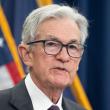
Federal Reserve Chair Jerome Powell on Wednesday said he will stay on the Board of Governors for an indefinite period while a probe into the renovation of the central bank’s headquarters continues. “I’ve said that I will not leave the board until this investigation is well and truly over with transparency and finality, and I stand by that. I’m encouraged by ...

Recent indicators suggest that economic activity has been expanding at a solid pace. Job gains have remained low, on average, and the unemployment rate has been little changed in recent months. Inflation is elevated, in part reflecting the recent increase in global energy prices. The Committee seeks to achieve maximum employment and inflation at the rate of 2 percent over the longer run. Developments in the Middle East are contributing to a high level of uncertainty about the economic outlook. The Committee is attentive to the risks to both sides of its dual mandate. In support of its goals, the Committee decided to maintain the target range for the federal funds rate at 3‑1/2 to 3‑3/4 percent. In considering the extent and timing of additional adjustments to the target range for the federal funds rate, the Committee will carefully assess incoming data, the evolving outlook, and the balance of risks. The Committee is strongly committed to supporting maximum employment and returning inflation to its 2 percent objective. In assessing the appropriate stance of monetary policy, the Committee will continue to monitor the implications of incoming information for the economic outlook. The Committee would be prepared to adjust the stance of monetary policy as appropriate if risks emerge that could impede the attainment of the Committee's goals. The Committee's assessments will take into account a wide range of information, including readings on labor market conditions, inflation pressures and inflation expectations, and financial and international developments. Voting for the monetary policy action were Jerome H. Powell, Chair; John C. Williams, Vice Chair; Michael S. Barr; Michelle W. Bowman; Lisa D. Cook; Philip N. Jefferson; Anna Paulson; and Christopher J. Waller. Voting against this action were Stephen I. Miran, who preferred to lower the target range for the federal funds rate by 1/4 percentage point at this meeting; and Beth M. Hammack, Neel Kashkari, and Lorie K. Logan, who supported maintaining the target range for the federal funds rate but did not support inclusion of an easing bias in the statement at this time. FED STATEMENT COMPARE: pic.twitter.com/mllHcAwtyT FED RATE DECISION AND POLICY STATEMENT DRAW MOST NUMBER OF DISSENTING VOTES SINCE OCTOBER 1992 *FED SAYS GOVERNOR STEPHEN MIRAN DISSENTS IN FAVOR OF RATE CUT *FED: HAMMACK, KASHKARI, LOGAN VOTED AGAINST EASING BIAS, BACKED *FED: MIDDLE EAST DEVELOPMENTS ADDING HIGH LEVEL OF UNCERTAINTY
The Federal Reserve System is the central bank of the United States. It performs five general functions to promote the effective operation of the U.S. economy and, more generally, the public interest. The Federal Reserve conducts the nation’s monetary policy to promote maximum employment, stable prices, and moderate long-term interest rates in the U.S. ...
