

Prop Firm DrawDown Protector : Prop Firm Capital Protection Expert MT5 | Forex Money Management: Forex Trade Management Expert MT5 | ICT Concepts Indicator MT5 |Smart Money Concepts Expert MT5 |Get a free Expert Advisor license via Telegram and WhatsApp
What is Risk Management?
Risk management is a structured process of evaluating and controlling potential losses. It encompasses a series of actions designed to prevent undesirable outcomes or minimize their impact should they occur, adhering to specific industry standards.
Types of Risk in Financial Markets
Financial market risks are broadly categorized into two primary groups:
- Systematic Risks
- Unsystematic Risks
This classification is fundamental for a comprehensive understanding of investment risk and forms the bedrock for professional portfolio management, hedging strategies, and effective loss control.
Systematic Risks
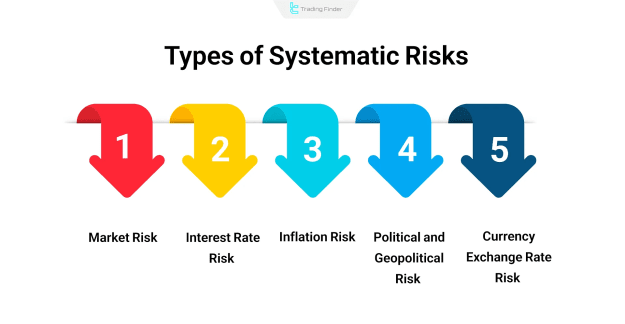
Systematic risk refers to threats that affect the entire market or significant segments of the economy. These risks are inherently unavoidable as they originate from macroeconomic or political factors.
Types of systematic risks in financial markets include:
- Market Risk: Pertains to overall price fluctuations across the market.
- Interest Rate Risk: Arises from central bank rate changes and their subsequent economic effects.
- Inflation Risk: Represents the declining value of currency, impacting investment profitability.
- Political/Geopolitical Risk: Encompasses risks such as sanctions, geopolitical conflicts, and shifts in political landscapes.
- Currency Rate Risk: Involves exchange rate volatility and its impact on asset values.
Systematic risks are generally uncontrollable and non-removable.
Unsystematic Risks
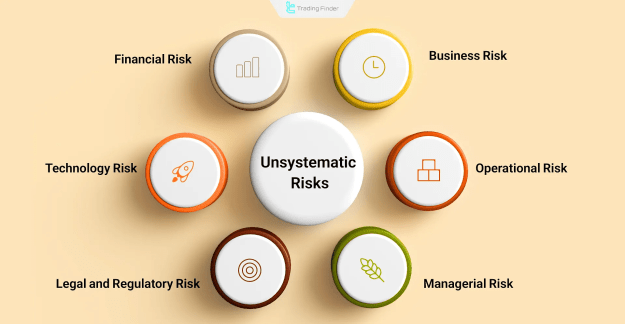
Unsystematic risks are specific to a particular company, industry, or sector. Unlike systematic risks, these can be managed or eliminated through strategic portfolio diversification.
Key unsystematic risks include:
- Business Risk: Relates to a company's operational performance and market-specific factors.
- Financial Risk: Concerns the capital structure and debt levels of a company.
- Managerial Risk: Stemming from leadership decisions and the efficiency of the management team.
- Operational Risk: Involves failures in internal processes and systems.
- Legal/Regulatory Risk: Arises from changes in laws or legal disputes.
- Technological Risk: Pertains to the use of outdated or inefficient technology.
Unsystematic risks are considered controllable or removable.
Liquidity Risk
Liquidity risk highlights an investor's potential inability to convert assets into cash promptly and at a reasonable price. This means difficulty in liquidating portfolio assets when needed.
Psychological Risks
Psychological risks in financial markets stem from emotional responses and cognitive biases that influence financial decision-making.
Examples of psychological risks include:
- Fear
- Greed
- OverTrading
- Herd Mentality
- Cognitive Biases
Differences Between Systematic and Unsystematic Risks
Systematic and unsystematic risks vary significantly in their scope of impact, controllability, and management approaches.
- Systematic Risk:
- Affects the entire market or economy.
- Cannot be eliminated.
- Example: Interest rate hikes.
- Managed through hedging, insurance, and macro analysis.
- Unsystematic Risk:
- Affects a specific company or industry.
- Can be eliminated via diversification.
- Example: Company bankruptcy.
- Managed through diversification.
Risk Management Strategies
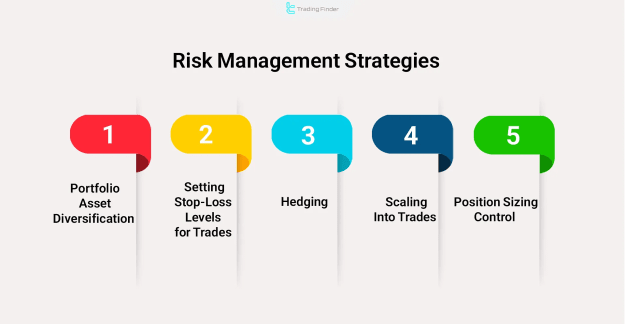
Effective risk management strategies are vital for professional trading, focusing on controlling losses amidst market volatility. The most impactful approaches to risk management include:
- Diversifying portfolio assets
- Setting stop-loss levels for trades
- Hedging
- Scaling into positions
- Managing position size
Portfolio Diversification
Portfolio diversification helps to mitigate the impact of volatility or losses from a single asset on an investor's overall portfolio. Allocating capital across diverse asset classes (e.g., stocks, currencies, gold, bonds) significantly reduces the negative effect of individual asset underperformance.
Stop-Loss Strategy
Employing a stop-loss is a fundamental principle for capital protection and controlling potential losses. Establishing a clear exit point is crucial for managing risk when market prices move unfavorably against a position.
Hedging
Hedging involves a set of techniques designed to reduce or neutralize potential risks arising from asset price fluctuations, typically by taking an opposing position to an existing asset. This strategy is widely adopted by financial institutions as a core method of managing asset-related risks.
Scaling Into Trades
To enhance risk control and reduce vulnerability to volatility, professional traders often utilize scaling into a trade. Instead of deploying full capital at once, they allocate investment in multiple stages at different price levels.
Position Sizing
Inappropriate position sizing can undermine even accurate market analyses, whereas controlled position sizing fosters consistent returns and profitability. Managing trade volume helps to reduce emotional and psychological pressure, promotes trading discipline, and enhances a trader's long-term market presence.
Steps of Risk Management
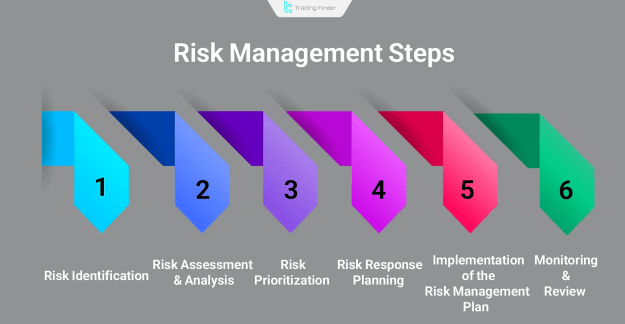
A systematic risk management process involves several crucial stages, with risk acceptance being a key component. The evaluation of risk typically progresses through six stages:
- Risk Identification
- Risk Assessment & Analysis
- Risk Prioritization
- Risk Response Planning
- Implementation of the Risk Management Plan
- Monitoring & Review
Risk Identification
This initial stage involves identifying all potential risks associated with an asset, market, or trading strategy, such as market risk, liquidity risk, psychological risk, or legal risk.
Risk Assessment & Analysis
Quantitative and qualitative analysis of risk severity and likelihood, along with their potential impact on capital, improves the precision of managing asset-related threats.
Risk Prioritization
Risks with higher probability and greater potential impact demand immediate attention and are prioritized within the risk management process, aiming to reduce the likelihood of short-term losses.
Risk Response Planning
This step focuses on selecting appropriate methods to control or reduce identified risks. Common risk response strategies include:
- Risk avoidance
- Risk reduction (through stop-loss, diversification, and hedging)
- Risk transfer (via insurance or contracts)
- Risk acceptance (if the risk level is minimal)
Implementation
The selected tools and strategies must be applied in real trades or portfolios. A well-executed risk management plan accelerates the achievement of consistent profits from a trading strategy.
Monitoring & Review
Continuous monitoring of the risk management system's performance and making adjustments based on new market conditions and past experiences are paramount for effective trade risk control.
- Monitoring involves the ongoing observation of market status, open positions, economic variables, and trade performance.
- Review entails the periodic reassessment and updating of risk management plans and strategies to reflect evolving conditions.
Risk Management vs. Capital Management
Risk management acts as a safeguard for individual trades, ensuring that losses remain controlled in case of failure. In contrast, capital management protects the trader’s overall financial structure from broader price fluctuations. The precise and simultaneous execution of both is fundamental for establishing a stable, intelligent, and structured trading system.
Risk Management:
- Main Objective: Reduces trade vulnerability to sudden losses.
- Point of Focus: Each trade individually.
- Key Tools: Stop-loss, risk analysis, hedging, risk identification.
- Timing of Execution: Before entry and during position holding.
- Type of Controlled Risk: Trade-specific and environmental risks.
Capital Management:
- Main Objective: Preserves capital and ensures long-term market presence.
- Point of Focus: Entire trading portfolio or investment account.
- Key Tools: Trade size, risk percentage, portfolio diversification, scaling in.
- Timing of Execution: Before entry and continuously throughout the investment process.
- Type of Controlled Risk: Overall account risk and loss accumulation.
Common Mistakes in Risk Management
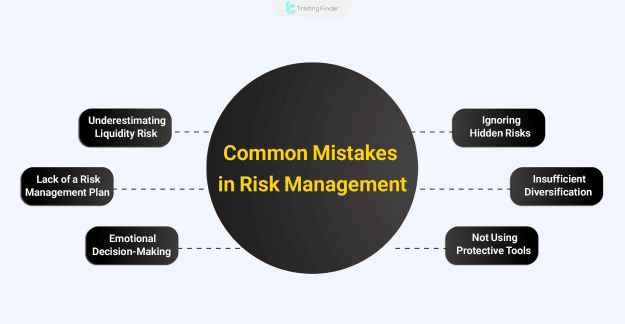
Traders in financial markets frequently make risk management errors that can lead to irreversible losses. Common mistakes include:
- Ignoring hidden risks: Focusing solely on obvious threats while neglecting underlying risks such as psychological or operational issues.
- Insufficient diversification: Concentrating investments in a few similar assets without proper portfolio spread.
- Not using protective tools: Overlooking essential tools like stop-loss orders, futures, or options contracts.
- Emotional decision-making: Allowing fear, greed, or market hype to dictate choices instead of relying on logical, data-driven analysis.
- Lack of a risk management plan: Failing to establish and adhere to a defined strategy for loss control and capital protection.
- Underestimating liquidity risk: Disregarding the ability to liquidate assets efficiently during critical market conditions.
Conclusion
Risk management in financial markets is a comprehensive process of identifying, assessing, and controlling both systematic and unsystematic risks. By utilizing tools such as diversification, hedging, and setting stop-loss orders, effective financial risk management minimizes losses and optimizes traders’ asset portfolios. Addressing psychological risks and avoiding emotional decisions are key components of effective risk management for sustained success in financial markets.