

Prop Firm DrawDown Protector : Prop Firm Capital Protection Expert MT5 | Forex Money Management: Forex Trade Management Expert MT5 | ICT Concepts Indicator MT5 |Smart Money Concepts Expert MT5 |Get a free Expert Advisor license via Telegram and WhatsApp
The Essence of Trading Strategy Refinement and Enhancement
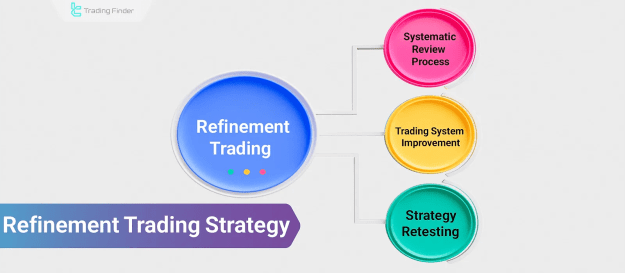
Refinement and enhancement of a trading strategy encompass a series of deliberate actions designed to elevate the efficiency, accuracy, and consistency of a trading system across diverse market environments. This meticulous process involves a comprehensive analysis of past trading outcomes, precise identification of deficiencies and areas ripe for improvement, the implementation of incremental modifications, and a thorough reassessment of the strategy's performance following each enhancement.
Analytical and Adjustment Methodologies in Refinement Trading
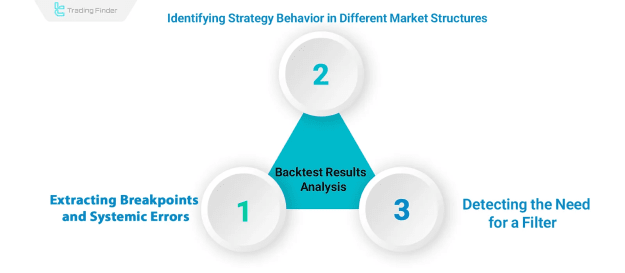
Improving the performance of a trading strategy necessitates a detailed analysis of its results. The refinement journey commences with the accurate identification and categorization of tested data, error patterns, and inefficiencies. Three core methodologies underpin this analytical and refinement process:
Backtest Results Analysis
Backtest analysis serves as the foundational practical step in the refinement process, meticulously evaluating the true efficiency of a strategy based on historical data and market behavior.
- Identifying Strategy Behavior Across Diverse Market Structures: It is crucial to assess a strategy's performance under various market conditions, including trending, ranging, or highly volatile environments. If the strategy demonstrates underperformance or experiences increased drawdowns during specific market phases, it signals a clear need for refinement.
- Extracting Failure Points and System Errors: This involves pinpointing specific instances where the strategy falters, such as entries occurring at short-term market tops, excessively delayed exits, or entries influenced by transient price noise.
- Detecting the Need for Filters: Filters become essential when a strategy exhibits poor performance in certain market conditions or generates a multitude of low-quality trades.
Integrating Filters and Optimizing Entry & Exit Zones
In the strategy refinement process, the strategic implementation of technical filters significantly enhances entry and exit accuracy.
- Utilizing Analytical Tools: Indicators such as the Relative Strength Index (RSI), Average True Range (ATR), and comprehensive volume analysis are instrumental in eliminating high-risk setups and confirming optimal trading conditions.
- Enhancing Decision-Making Precision: Candlestick patterns and advanced price action techniques further refine decision-making.
- Refining Timeliness: Employing lower timeframes or incorporating complementary signals allows for more precise entries and more timely exits, ensuring the strategy is activated only under high-quality trading conditions.
Capital Management Adjustment
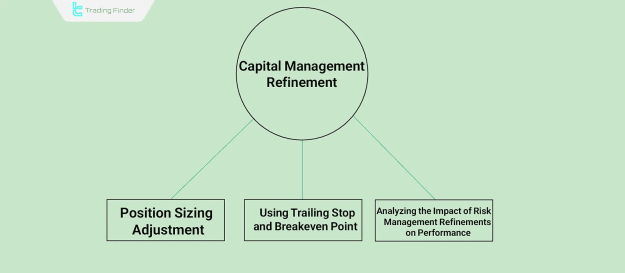
Capital management refinement constitutes a critical phase that directly influences risk control, profit preservation, and the enduring sustainability of trading performance. Three fundamental components define capital management refinement:
- Position Size Adjustment: Trade size must be dynamically proportional to signal strength, prevailing market risk levels, and the degree of analytical confidence. Strategies employing fixed position sizes frequently underperform during periods of high volatility or when signals are weak. Dynamic and adaptive position sizing is key to balancing risk and return effectively.
- Strategic Use of Trailing Stops and Break-even Points: The implementation of trailing stops is vital for securing open profits, particularly in robust trending markets. Shifting the stop-loss to the break-even point once the price reaches a predetermined level structurally eliminates initial trade risk.
- Analyzing the Impact of Risk Management Adjustments: Every modification to capital management must be substantiated by rigorous data and quantitative analysis. Indicators of effective adjustments include a reduction in drawdown, an improved profit-to-loss ratio, and sustained profitability even with a reduced number of trades. Changes that merely offer cosmetic improvements without genuinely enhancing quality are not considered true refinements.
The Role of Mental Improvement and Trader Psychology
Frequently, the failure to execute a trading strategy effectively stems not solely from technical weaknesses but also from a trader's emotional reactions and behavioral inconsistencies. Mental improvement extends beyond mere code or parameter optimization; it involves redesigning the human decision-making process at the point of execution.
Identifying Emotional Behaviors in Strategy Execution
Behaviors such as prematurely abandoning a strategy after a few losses, doubting valid entries, or impulsively entering trades without adhering to established rules are indicative of emotional decision-making. These behaviors often originate from fear, greed, or a lack of trust in the trading system. Recognizing these mental patterns is the initial step toward improving trader behavior.
Enhancing Trader Behavior
Strategy consistency demands psychological discipline, unwavering focus, and optimal physical readiness (e.g., adequate sleep and proper nutrition). Tools like a psychological journal, daily emotional monitoring, and meticulously tracking mental mistakes alongside trades empower the trader to refine their thought process. Successful trading is ultimately a synergy of mental fortitude and analytical acumen.
The Importance of Documentation and Journaling in Refinement Trading
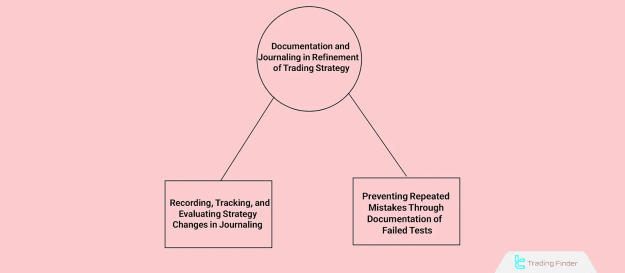
Accurate documentation is an indispensable component of the refinement process; without it, analyzing the effects of changes and replicating successes becomes impossible. Journaling enables traders to meticulously track, review, and refine their strategy optimization journey.
Creating a Comprehensive Journal
In the refinement process, journaling serves as the primary method for recording, tracking, and evaluating strategy modifications. Every alteration, from parameter adjustments to refinements in entry and exit criteria, should be documented with a clear rationale, date, and its observed impact on key metrics such as drawdown or win rate. A meticulously maintained journal acts not only as a record but also as a definitive learning path. Comparing performance before and after each change is crucial for determining the efficacy of a modification and whether it warrants reconsideration. This continuous documentation actively prevents the repetition of errors.
Leveraging Failures for System Improvement
Every unsuccessful test contributes invaluable insights to the learning curve. Negative results precisely highlight which approaches are inefficient and which market conditions should be avoided. Documenting failed tests assists traders in sidestepping similar mistakes and fosters a deeper understanding of strategy performance. In Refinement Trading, both successes and thoroughly documented failures possess significant analytical value.
Live Execution and Iterative Refinement
Live execution and iterative refinement represent the crucial stages where a strategy transitions from the testing environment to real market conditions, enabling the measurement and strengthening of its long-term reliability and practicality.
Gradual Execution in a Real Environment
Upon completion of the testing and improvement phases, live strategy execution should commence gradually. This typically begins in a demo account, followed by deployment with limited real capital. This controlled transition facilitates the evaluation of the strategy's performance under actual market conditions, including factors like slippage, execution speed, and the trader's psychological response, without exposing primary capital to significant risk.
Developing Adaptive Versions of the Strategy
To bolster a strategy's resilience against evolving market dynamics, it is essential to develop specialized versions of the core system. Creating separate versions tailored for trending, ranging, and volatile markets equips the trader with appropriate tools for each condition. This structural diversity transforms the trading system into a flexible and multi-purpose instrument.
Conclusion
Refinement Trading Strategy involves a meticulous, step-by-step review and modification of a trading system aimed at enhancing its real-market performance. This comprehensive process includes analyzing past results, strategically applying filters, adjusting position sizing, managing trader psychology, and thoroughly documenting all changes. Ultimately, the refined strategy must undergo live execution, with adaptive versions developed to seamlessly match various market scenarios. The overarching objective is to construct a trustworthy and resilient trading system for the ever-changing landscape of live financial markets.