

TP & SL Tool: Risk Reward Ratio Calculator RRR MT4 | Prop Firm Protector: Trade Assist Prop Firm Plus TF Expert MT4 | Money Management + DrawDown Protector: Trade Panel Prop Firm Drawdawn Limiter Pro MT4 |Get a free Expert Advisor license via Telegram and WhatsApp
Application of Price Gaps in Technical Analysis
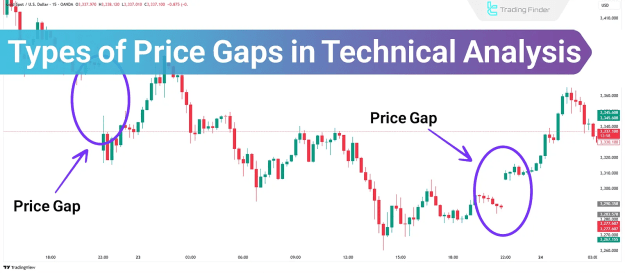
Price gaps are crucial for detecting sudden shifts in price action across financial markets. Traders utilize these gaps to anticipate market trends and identify potential reversal zones.
Types of Price Gaps in Trading
Each price gap type signals different aspects of market direction, reversal areas, and momentum. Price gaps are broadly categorized into four primary types:
- Common Gap
- Breakaway Gap
- Continuation Gap (Runaway Gap)
- Exhaustion Gap
Common Gap
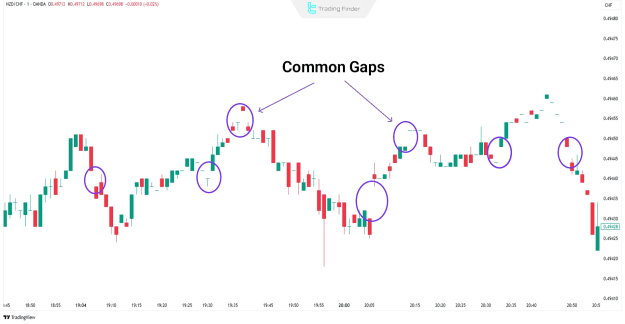
The common gap is one of the most frequently observed price gap types, often appearing in choppy or sideways markets with average trading volume.
Characteristics of Common Gaps
- Also known as "area gaps" or "trading gaps."
- Typically unrelated to major market events.
- Small in size.
- Filled quickly.
- Provide no strong market signals.
- Usually form within established price ranges.
Breakaway Gap
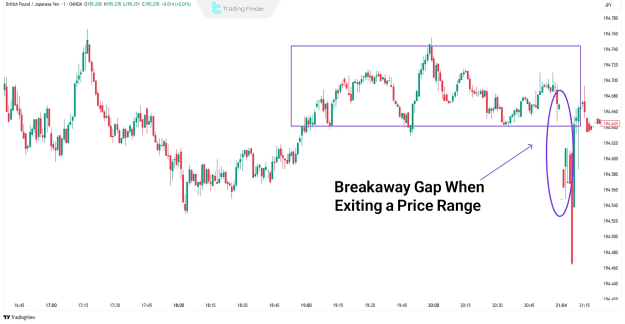
A breakaway gap occurs when the price breaks out from a significant support or resistance level. It reflects strong momentum, with the price typically continuing in the direction of the gap.
Characteristics of Breakaway Gaps
- Occur at the beginning of a new trend.
- Appear after the price exits a consolidation zone.
- Accompanied by high trading volume.
- Indicate significant trend direction changes.
- Followed by rapid price movement.
Continuation Gap (Runaway Gap)
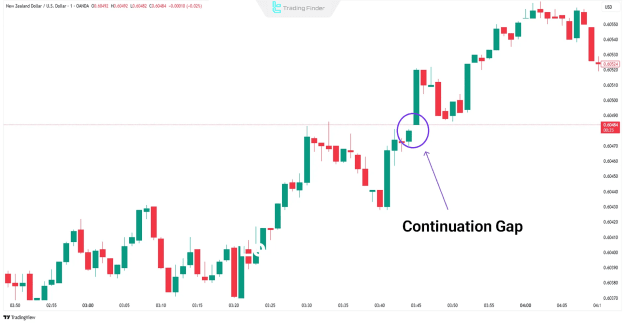
The continuation gap, also known as a runaway gap, forms when traders who missed the initial move enter aggressively, causing a surge in buying or selling pressure. These gaps often remain unfilled for extended periods, suggesting a strong continuation of the prevailing trend, whether bullish or bearish.
Characteristics of Continuation Gaps
- Form within strong, established trends.
- Driven by high volume.
- Indicate sustained trend strength.
- Rarely retrace to their origin.
- May be news-driven.
Exhaustion Gap
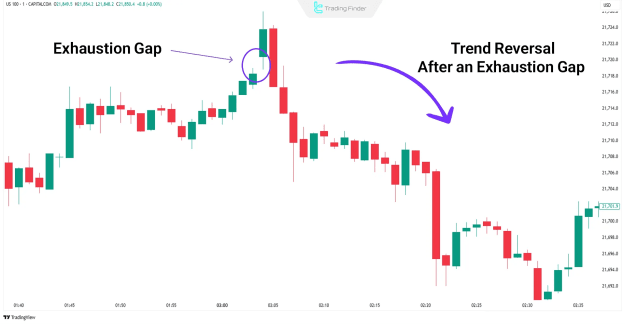
Exhaustion gaps typically appear near the end of a trend or around significant support and resistance levels. They may resemble continuation gaps but are usually filled quickly by subsequent candles, signaling a potential reversal.
Characteristics of Exhaustion Gaps
- Indicate the end of a trend.
- Signal weakening momentum.
- Follow prolonged price moves.
- Occur near major support/resistance levels.
- Accompanied by high volume.
Comparing Price Gaps in Technical Analysis
Different types of price gaps convey distinct insights into market direction, sentiment changes, support and resistance levels, and volume shifts. Interpreting each type effectively depends on these contextual elements.
Key Notes on Using Price Gaps
Despite being easy to spot, the correct usage of price gaps in trading requires considerable trader skill. Misinterpretation can lead to missed opportunities or financial losses.
- Timing matters: Different gaps carry different implications at various points in a trend.
- Strategic use: Gaps can serve as powerful entry or exit signals.
- Volume relevance: Trading volume accompanying the gap provides crucial clues about its strength and potential for continuation.
- Type identification: Accurately recognizing the specific type of gap is essential for sound technical analysis.
CME Gap in Cryptocurrency Markets
In cryptocurrency markets, the CME gap refers to the price difference between Bitcoin's closing and opening prices on the Chicago Mercantile Exchange (CME). These gaps typically occur because traditional crypto exchanges operate continuously, unlike the CME, which has set trading hours. Crypto traders often use the CME gap as a reference tool to assess potential price targets and identify optimal entry and exit points.
Monday Opening Gaps
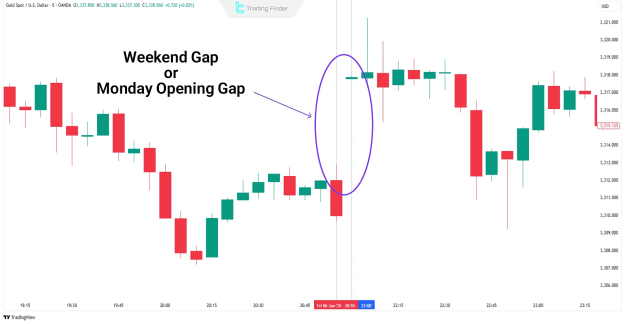
At the beginning of a new trading week, price gaps can form due to the release of significant macroeconomic news over the weekend. These are often breakaway or continuation gaps, depending on the nature and strength of the underlying market move.
Conclusion
Price gaps, appearing as discontinuities between candlesticks, provide various market insights based on their timing and location. Traders utilize them extensively for price analysis and to define optimal entry and exit levels. These gaps reveal vital information on trend strength, shifts in market sentiment, and key support/resistance levels. In the dynamic cryptocurrency market, the CME gap has emerged as a crucial tool for Bitcoin traders.