

TP & SL Tool: Risk Reward Ratio Calculator RRR MT5 | Prop Firm Protector: Trade Assist Prop Firm Plus TF Expert MT5 | Money Management + DrawDown Protector: Trade Panel Prop Firm Drawdawn Limiter Pro MT5 |Get a free Expert Advisor license via Telegram and WhatsApp
Prices Reflecting Expectations Before Data Releases
Market expectations in financial markets can stem from a variety of sources, including anticipated economic or political events, projected interest rate adjustments, or other influential factors.
Market Expectations Versus Actual Data
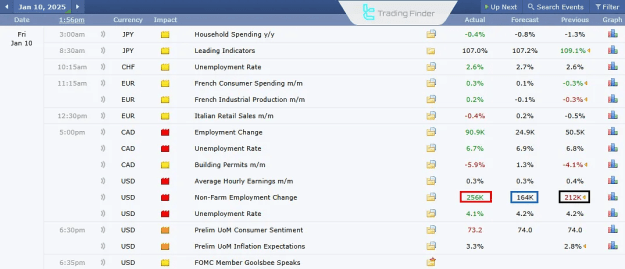
To discern market volatility subsequent to a data release, it is essential to analyze the congruence between forecasts and actual reported figures. Economic reports typically present three key parameters:
- Previous: This refers to the prior release of the same data, used for comparative analysis with the new figures. It can sometimes be revised upon the latest release.
- Forecast (Expectations): These are analysts' predictions. The market's movement is largely driven by this estimate before the official data becomes public.
- Actual: This is the official numerical value reported by the relevant institution.
Observing Expectations in Financial Markets
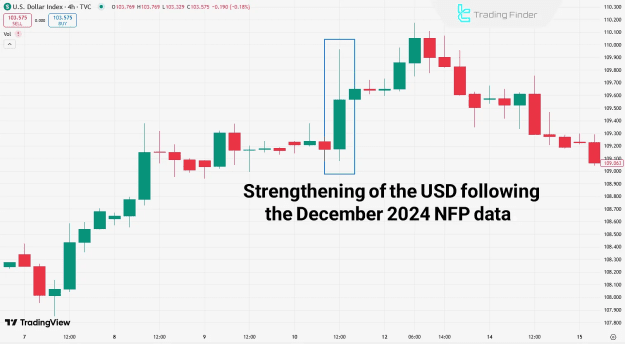
Consider the December 2024 Non-Farm Payroll (NFP) data as an illustration. If the actual NFP data significantly surpasses market expectations, as observed in a scenario where the US Dollar Index strengthened, the market reacts decisively with a strong rally in the corresponding currency.
The Significance of Expectations
The market's movements are consistently influenced by expectations surrounding specific data points or events. Consequently, comprehending and predicting these market expectations are paramount for effective trading strategies. For instance, the strengthening of the U.S. dollar ahead of the 2024 U.S. elections exemplifies this. Pre-election, the dollar appreciated due to anticipated policies, such as potential import tariffs, which raised concerns about inflation and disruptions to interest rate reductions, even before any actual policy implementation. This demonstrates how the market prices in anticipated future policies.
Understanding "Priced In" in Financial Markets
The term "priced in" or "price being priced in" describes the impact of expectations on asset prices. For example, if economic indicators suggest a high probability of the Federal Reserve implementing an interest rate cut at its subsequent meeting, traders may begin selling the U.S. dollar in the forex market before the rate cut officially occurs. In this scenario, it is said that "the interest rate cut is priced in." Since markets are inherently forward-looking, they are continuously pricing in expectations of future data.
The Impact of Data Revisions
Beyond newly released actual data, revisions to previously reported data (either upward or downward) can also trigger significant market volatility, depending on the deviation from earlier reports. For example, if Switzerland's inflation rate for May, initially reported as -0.2%, is revised upward to -0.1% alongside the June data release, the Swiss franc might experience a temporary strengthening. This occurs even if inflation remains negative and the central bank's dovish stance persists, because the revised figure indicates less negative inflation than initially anticipated, thereby influencing market expectations.
Expectations Regarding Interest Rate Changes
Market expectations extend beyond economic data to encompass major political-economic events, including speeches by key government officials, geopolitical developments, and central bank interest rate meetings. Ahead of central bank interest rate decisions, traders leverage available information to forecast the outcome (e.g., an increase, decrease, or no change). These predictions constitute market expectations. Economic data frequently shapes these expectations; for instance, evidence of disinflation or a sharp economic slowdown towards the end of a tightening cycle typically elevates expectations for rate cuts, which commonly weakens the currency. The opposite scenario also holds true.
Tracking Federal Reserve Rate Change Expectations
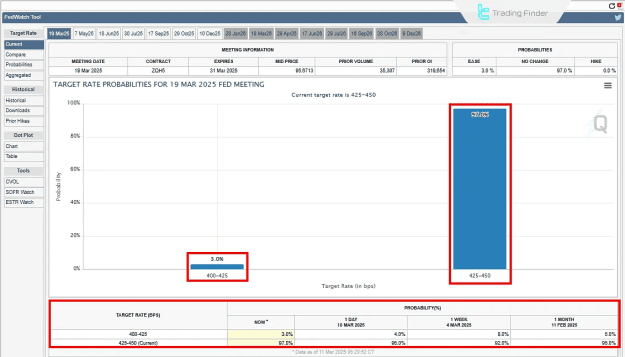
The CME FedWatch Tool serves as a reliable resource for monitoring market expectations concerning Federal Reserve interest rate adjustments. This tool provides a snapshot of the probability of various interest rate outcomes at upcoming Federal Open Market Committee (FOMC) meetings, often showing the percentage of market participants expecting a rate to remain unchanged, increase, or decrease. It also illustrates shifts in these expectations over different timeframes (e.g., daily, weekly, monthly).
Conclusion
Ultimately, expectations regarding future data are a crucial determinant of price fluctuations in financial markets. Traders consistently base their actions on their market expectations and forecasts. As upcoming data and events are continuously "priced in" by the market, traders must remain attentive to the profound impact of these expectations on price movements.