

TP & SL Tool: Risk Reward Ratio Calculator RRR MT4 | Prop Firm Protector: Trade Assist Prop Firm Plus TF Expert MT4 | Money Management + DrawDown Protector: Trade Panel Prop Firm Drawdawn Limiter Pro MT4 |Get a free Expert Advisor license via Telegram and WhatsApp
What is Fundamental Analysis?
Fundamental analysis seeks to determine the intrinsic value of an asset by studying macroeconomic variables and market drivers. It involves assessing economic indicators, central bank policies, corporate earnings, market sentiment, and geopolitical developments to predict future price movements.
This method is especially useful for identifying mid-term and long-term trends in diverse markets including currencies, equities, precious metals, and energy products.
Historical Context
The origins of fundamental analysis trace back to classical economic thought in the 18th and 19th centuries. Adam Smith’s The Wealth of Nations introduced the concept of intrinsic value and factors impacting the worth of goods and services.
The modern framework of fundamental analysis was formalized in 1934 by Benjamin Graham and David Dodd in their landmark book Security Analysis. Their research established systematic methods to evaluate stock values using financial and economic data.
Core Factors in Fundamental Analysis
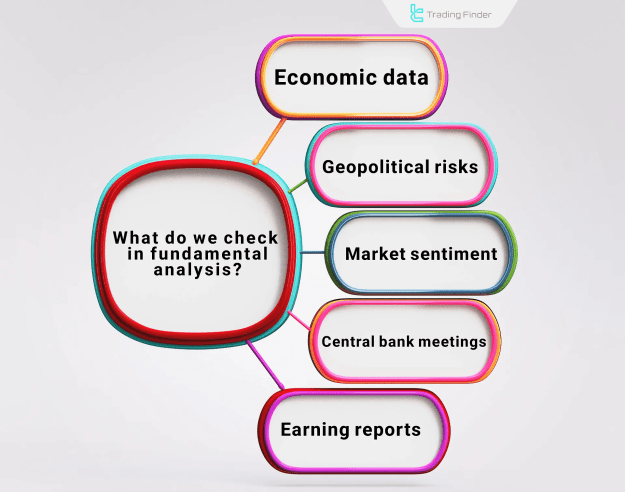
To analyze asset prices effectively, fundamental analysis incorporates several key elements:
- Economic Indicators: Reports covering production output, inflation rates, and employment figures offer insight into a nation’s economic health. Continuous monitoring of these releases (such as those published on Forex Factory) helps traders develop fundamental biases for currency pairs and other assets.
- Central Bank Meetings: Monetary policy decisions, especially interest rate changes and official statements from central banks, significantly impact market direction. Meetings occur roughly every six weeks, where traders examine not only rate adjustments but also forward guidance and rhetoric.
- Corporate Earnings and Financial Statements: Quarterly earnings announcements provide vital data on company performance. Comparing actual earnings per share (EPS) with market expectations can influence stock prices and broader market sentiment, particularly for large-cap firms.
- Market Sentiment: This reflects traders’ collective risk tolerance. In risk-averse (risk-off) periods, investors favor safe-haven assets like gold, government bonds, and stable currencies such as CHF, JPY, and USD. Conversely, in risk-on environments, appetite shifts towards equities, cryptocurrencies, and higher-yield currencies like AUD, NZD, and CAD.
- Geopolitical Risks: Political events, conflicts, and elections create uncertainty and can cause abrupt market shifts. Rising geopolitical tensions typically drive markets into risk-off mode, increasing demand for safe assets and reducing appetite for riskier investments.
Practical Use of Fundamental Analysis
By applying fundamental analysis, investors can:
- Identify the underlying bias of assets based on economic realities
- Avoid trading against prevailing market trends driven by fundamental forces
- Recognize opportunities when an asset’s market price deviates from its intrinsic value
If an asset trades below its intrinsic worth, it may represent a buying opportunity, while prices above intrinsic value might indicate a selling signal.
Fundamental Analysis Versus Technical Analysis
Fundamental analysis examines underlying economic and financial data to form a big-picture view of an asset’s value and future prospects. Technical analysis, in contrast, focuses on price charts, patterns, and market momentum for short-term trading decisions.
- Fundamental analysis is best suited for medium to long-term investment strategies.
- Technical analysis is more effective for short-term trade timing.
Case Study: EUR/USD Trend in Late 2024
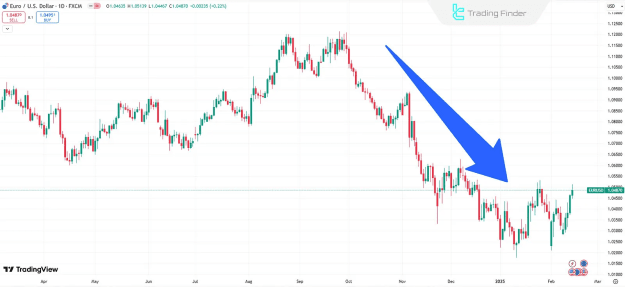
The EUR/USD currency pair’s decline in late 2024 exemplifies fundamental analysis in action. Diverging monetary policies and economic performances between Europe and the U.S. drove the trend:
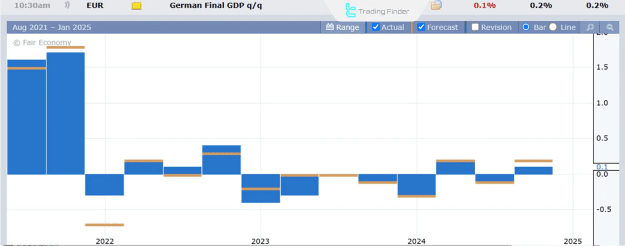
- Germany experienced sluggish economic growth from mid-2022 through 2024, influenced by contractionary fiscal policies.
- In response, the European Central Bank (ECB) cut interest rates by 1.5% (150 basis points) from a peak of 4.5%.
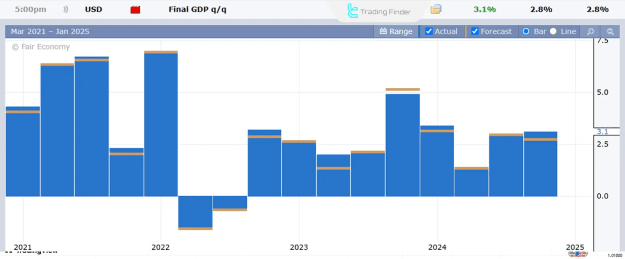
- Meanwhile, the U.S. economy demonstrated stronger growth, leading to persistent inflation and slower interest rate reductions.
This divergence led to a stronger U.S. dollar relative to the euro in the final months of 2024.
Conclusion
Fundamental analysis is an essential tool for traders and investors aiming to forecast price movements by understanding the economic, financial, and geopolitical forces affecting markets. It plays a crucial role in identifying intrinsic value and guiding decisions for medium- and long-term strategies across forex, stocks, and commodities.