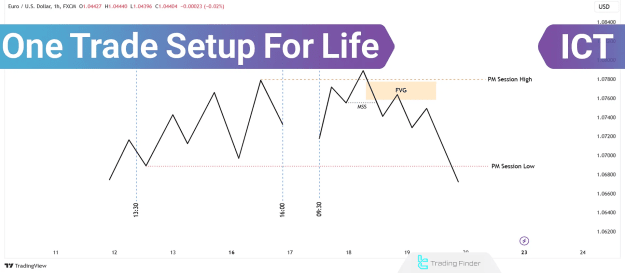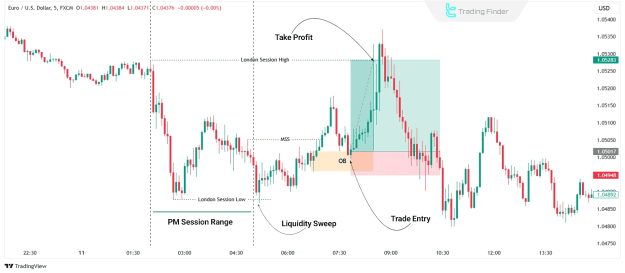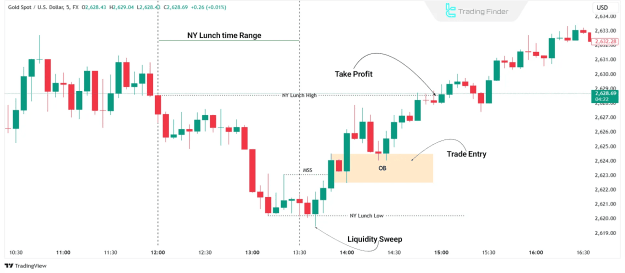


Unlike other trading methods, this model is self-sufficient—it does not require additional strategies or indicators. Instead, it relies on price action, liquidity zones, and session-based analysis to identify high-probability trade setups.
Key Components of the ICT One Trade Setup For Life
This trading framework incorporates several ICT concepts, including:
- ICT Daily Bias
- Draw on Liquidity (DOL)
- PM Session Liquidity Raid
- London Session Liquidity Raid
- Opening Range Gaps
- New York Lunch Liquidity Raid
- AM Session Liquidity Raid
Each component plays a crucial role in identifying market structure shifts (MSS) and liquidity grabs, which dictate potential trade entries and exits.
Understanding Draw on Liquidity (DOL)
Liquidity in Forex refers to the concentration of buy and sell orders in the market. Draw on Liquidity (DOL) is the process where price sweeps stop-loss orders or triggers pending orders (Buy Stop/Sell Stop) before reversing.
How DOL Works:
- Bullish Scenario: Price sweeps sell-side liquidity (SSL) below a key low before reversing upward.
- Bearish Scenario: Price sweeps buy-side liquidity (BSL) above a key high before reversing downward.
DOL is a critical factor in determining the direction and target of a price movement.
Step-by-Step Guide to Trading the ICT One Trade Setup
1. Identify Daily Bias & Draw on Liquidity (DOL)
- Determine the daily bias (bullish/bearish) using ICT’s methodology.
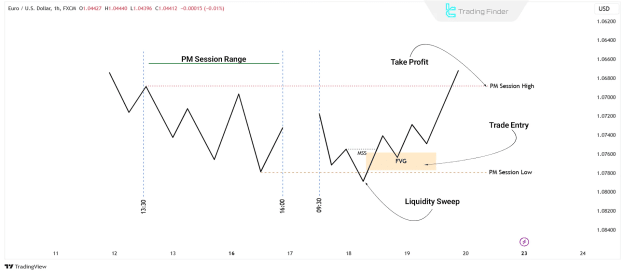
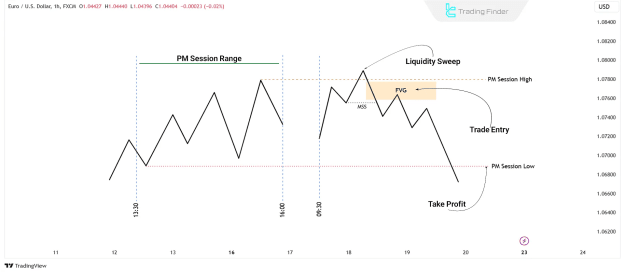
- Mark the highest high and lowest low of the PM session range (1:30 PM – 4:00 PM NY Time).
2. Wait for a Liquidity Sweep
- In a bullish bias, price should sweep the PM session low (SSL) before reversing.
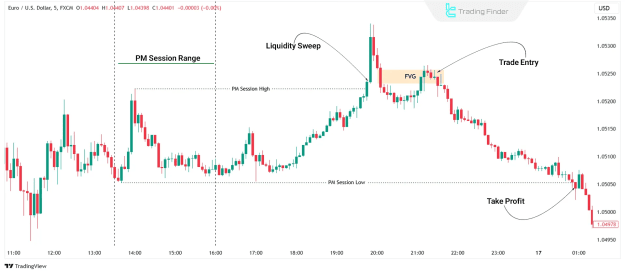
- In a bearish bias, price should sweep the PM session high (BSL) before reversing.
3. Look for Confirmation (FVG + MSS)
- After the liquidity sweep, identify a Fair Value Gap (FVG) with displacement.
- A Market Structure Shift (MSS) should confirm the reversal.
4. Enter the Trade & Target Liquidity Zones
- Entry: Between 9:30 AM – 11:00 AM NY Time (optimal entry window).
- Targets: Opposite-side liquidity levels (previous highs/lows).
Session-Based Liquidity Raids
1. PM Session Liquidity Raid (1:30 PM – 4:00 PM NY Time)
- Marks the previous day’s range.
- Bullish Setup: Sweeps SSL below the PM low, creating a Judas Swing.
- Bearish Setup: Sweeps BSL above the PM high.
2. London Session Liquidity Raid (2:00 AM – 5:00 AM NY Time)
- Used if the PM range is irrelevant.
- Bullish Scenario: Price sweeps below the London session low.
- Bearish Scenario: Price sweeps above the London session high.
3. Opening Range Gaps (8:30 AM Forex / 9:30 AM Indices)
- Liquidity is often swept at market open.
- Bearish Bias: Price targets the opening gap highs.
4. New York Lunch Liquidity Raid (12:00 PM – 1:30 PM NY Time)
- If no sweeps occur earlier, watch for:
- Bullish Move: Sweep of session low.
- Bearish Move: Sweep of session high.
5. AM Session Liquidity Raid (9:30 AM – 12:00 PM NY Time)
- Final target based on the previous day’s AM range.
- Bullish Target: Previous AM high.
- Bearish Target: Previous AM low.
Conclusion
The ICT One Trade Setup For Life provides a repeatable, disciplined, and structured approach to trading. By focusing on liquidity sweeps, session-based analysis, and market structure shifts, traders can improve their consistency and profitability.
This model is ideal for scalpers and day traders who want a clear, rules-based strategy without relying on excessive indicators.