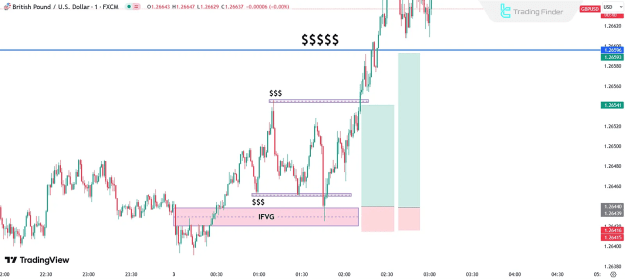


Turtle Soup Strategy Indicator:
Turtle Soup Strategy Indicator MT4
Turtle Soup Strategy Indicator MT5
What is the Turtle Soup Strategy?
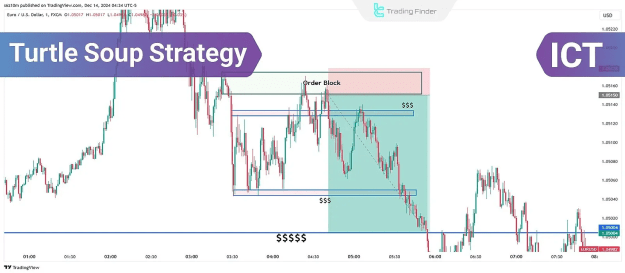
The Turtle Soup strategy is a precise trading approach aimed at hunting liquidity within the market and exploiting subsequent reversal points. It is typically employed when price action moves out of established ranges or identified liquidity zones, serving to attract additional market orders. The strategy's core principle revolves around the market's natural inclination to seek out areas of concentrated liquidity.
Why Does the Turtle Soup Strategy Focus on Liquidity?
Liquidity is the lifeblood of financial markets, and the Turtle Soup strategy fundamentally emphasizes two critical types:
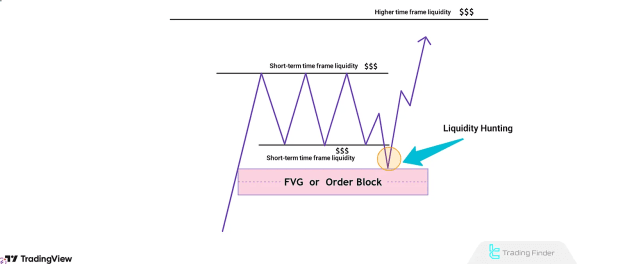
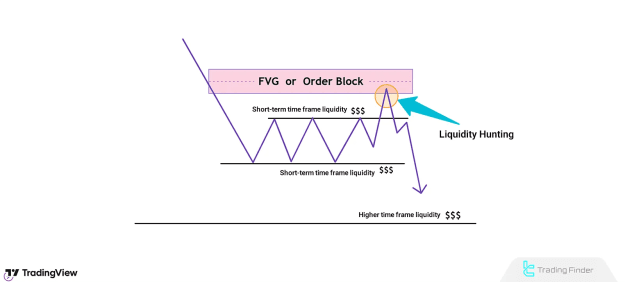
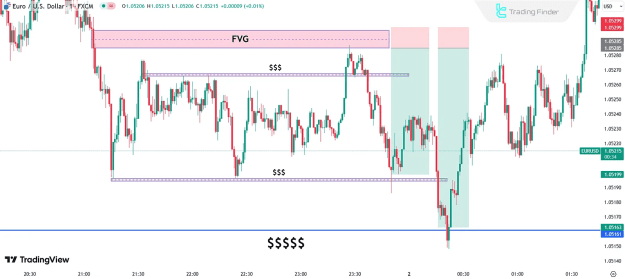
- Internal Liquidity: This refers to liquidity found within shorter-term price ranges, often characterized by Fair Value Gaps or short-term highs/lows.
- External Liquidity: This denotes liquidity located outside of shorter-term ranges, commonly represented by stop-loss orders or other imbalance zones.
The strategic flow often involves price first absorbing internal liquidity before extending its movement to target external liquidity, aligning with the prevailing higher-timeframe trend.
How Does the Turtle Soup Strategy Work?
Implementing the Turtle Soup strategy involves a systematic, prioritized approach:
1. Identify the Range
The initial step is to clearly define a price range using a specific high and low on the chart. Within this defined range, older highs and lows are recognized as significant zones of liquidity.
2. Identify Entry Points
Entry points are determined by the direction of the expected move:
- Uptrend: Price action should first absorb lower liquidity (e.g., Swing Lows) before initiating an upward movement.
- Downtrend: Price action should target and hunt higher liquidity (e.g., Swing Highs) prior to moving downward.
3. Align with the Higher Timeframe
A crucial step involves reviewing the market direction on higher timeframes (e.g., daily or hourly charts) to ensure proper alignment. On lower timeframes, traders should patiently wait for price to return to and interact with key areas, such as Order Blocks, which often serve as strong reversal or continuation points.
Pros and Cons of the Turtle Soup Strategy
As with any trading methodology, the Turtle Soup strategy presents distinct advantages and disadvantages:
Advantages:
- Clear Identification of Liquidity Points: The strategy provides a structured framework for precisely identifying critical liquidity levels.
- Usable Across Different Timeframes: Its principles can be applied effectively across various trading timeframes, offering flexibility.
- Higher-Timeframe Analysis Ensures Alignment: Integrating higher-timeframe analysis helps to confirm directional bias and improve trade conviction.
Disadvantages:
- Requires Patience for Price to Reach Key Zones: Successful application often demands patience as traders must wait for price to interact with specific liquidity areas.
- Demands Understanding of Liquidity and Market Behavior: A strong foundational understanding of liquidity concepts and overall market behavior is essential for mastery.
- Risk of Misidentifying All Components: Incorrect identification of any of the strategy's core components can lead to suboptimal trade outcomes.
Practical Steps for Using the Strategy
To effectively utilize the Turtle Soup strategy, consider these practical steps:
- Analyze the Higher Timeframe: Begin by identifying and clearly marking external liquidity points on your charts, leveraging a higher-timeframe perspective.
- Define the Range: Establish clear highs and lows within a specific price range to differentiate between internal and external liquidity.
- Wait for Internal Liquidity to Be Hunted: Patiently observe for price to absorb internal liquidity. Once this occurs, anticipate a move towards external liquidity.
- Enter the Position: Execute a trade entry after observing a clear reversal signal and confirmation within the identified key zones.
Conclusion
The Turtle Soup strategy stands as a potent tool for liquidity hunting and capitalizing on confirmed directional moves identified through higher-timeframe analysis. This strategy is particularly well-suited for traders who seek clear, definable market movements. Mastery of liquidity concepts and effective synchronization across multiple timeframes are paramount for achieving consistent success with this method.