
-
Mapping the Market: Copper's pause may be setting the stage for the next leg up

U.S. copper futures have been treading water since early May, but don't mistake stillness for stagnation. Beneath the surface, the chart is quietly building a case for a resumption of the metal's long-running rally. Copper has remained supported by longer-term demand themes tied to artificial intelligence and the energy transition, and U.S. policies have also affected the price. Those forces helped push futures to a trend high of $6.7160 per pound on May 13, according to data supplied by LSEG, but the market has since shifted into a lower gear. That pause is actually meaningful to chart watchers. The daily chart ... (full story)
- Comments / Top
- Subscribe
-
- Older Stories
 From europarl.europa.eu|8 hr ago|1 comment
video Date: 22/06/2026 • Reference: 20260622-1500-COMMITTEE-ECON • Category: Committees • Status: Planned • Location: ANTALL 2Q2
 From federalreserve.gov|8 hr ago
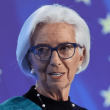
Thank you, Beth Anne, and I would like to welcome everyone to the fifth installment of this Conference on the International Roles of the U.S. Dollar.1 Over the years, this gathering has aimed to bring together different perspectives to better understand the forces shaping the dollar's central role in the global financial system. Last year's conference, for instance, focused on global investor allocation to U.S. safe assets and their liquidity in a time of geopolitical and technological change. This year, we are here to discuss the implications of financial innovations, especially digital assets such as stablecoins, for the international roles of the U.S. dollar. One striking feature of these discussions has been how rapidly the underlying questions have evolved since the first conference in the series. While the traditional drivers of the central role of the U.S. dollar in the global monetary system—from the size, strength, and depth of the U.S. economy and financial markets to trust in U.S. institutions and rule of law—remain critically important today, the environment around these drivers is changing rapidly. Technological innovation is increasingly altering how households and businesses interact with dollars, whether it is through holding new types of assets or through changes to the payment rails by which dollar-denominated assets are transferred, intermediated, and settled. Distributed ledger technologies and tokenized assets, such as stablecoins, are creating new channels for global dollar intermediation that operate alongside, or sometimes in conjunction with, traditional banking and payment systems. As a result, the dollar's international role is also evolving. The private sector is moving rapidly to expand access to dollar-denominated assets, innovate in new financial services, and explore potential business opportunities that perhaps did not make sense with legacy technologies. In doing so, there will be complements to the traditional financia Fed's Waller: Dollar’s global role changing with technology Fed Governor Waller did not comment on the economic or monetary policy outlook in his remarks.
 From ecb.europa.eu|8 hr ago|47 comments
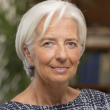
It is a pleasure to return to this Committee for our regular dialogue. When we last met in February, inflation had remained close to the ECB’s 2% target for over a year, and euro area economic activity was showing solid growth momentum. Only a few days later, war broke out in the Middle East, reminding us how quickly external shocks can reshape the economic outlook. The topic you have chosen for today’s exchange – how monetary policy should be conducted in an environment of heightened geopolitical tensions and frequent supply shocks – is therefore particularly timely. In my remarks, I will first review what the incoming data tell us about the euro area economy and outline our latest monetary policy decisions. I will then explain in more detail how our monetary policy strategy is guiding us in responding to shocks such as the one we face today. ECB's President Lagarde: No evidence yet of de-anchoring or second-round effects that warrant a more forceful policy action *LAGARDE SEES NO NEED FOR MORE FORCEFUL ECB RESPONSE TO IRAN WAR ECB'S LAGARDE: WE ARE CONFIDENT THAT, WITH APPROPRIATE MONETARY POLICY ACTION, INFLATION WILL RETURN TO TARGET ECB's President Lagarde: ECB is 'well positioned' to navigate the situation
-
- Newer Stories
 From @JavierBlas|7 hr ago|7 comments
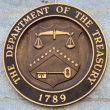
BREAKING: US Treasury issues a general license waiving key Iran oil sanctions until August 21, 2026. On a quick read, it’s a rather wide ranging license, covering exports, shipping and ancillary services, and covers crude, refined products and petrochemicals. pic.twitter.com/befoKlJuL6
 From economy-finance.ec.europa.eu|7 hr ago|2 comments
In June 2026, DG ECFIN’s flash estimate1 of the consumer confidence indicator2 continued its recovery in both the EU (+1.2 percentage points (pps) compared with May) and the euro ...
 From @financialjuice|7 hr ago|75 comments
Suspected Yen Intervention
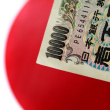
 USD/JPY makes a quick move lower. Eyes on intervention USD/JPY make a quick move lower after touching a session high. The pair briefly traded above 161.90 only to plunge promptly to 161.20. The dip has been bought though, with the pair back up to 161.65. Japanese officials have repeatedly warned that they're watching markets closely. On Friday, USD/JPY posted its highest weekly close in 40 years and the end of the Iran war doesn't appear to be helping. With today's earlier move higher, the June high of 161.80 broke but the July 2024 intraday high of 161.99 is still intact, albeit barely. These are going to be dicey times in yen trading as the Ministry of Finance is put to the test.
- Story Stats
- Jun 22, 8:47am | 7 hr ago Posted byFundamental Analysis53
- Instruments:
- 1 traders viewing now
