
-
Barr: The Case for Strong, Effective Banking Supervision
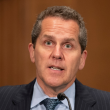
I am pleased to be here today to discuss a core part of the Federal Reserve's mission: banking supervision.1 Much of what the Fed does to conduct monetary policy, promote a stable financial system, provide a safe and efficient payments system, and support consumers and community development depends on a healthy banking system. Lending fuels entrepreneurship, helps families buy homes, and enables communities to thrive—all critical aspects of a healthy economy. Ensuring banks operate in a safe and sound manner is essential because the banking system sits at the center of the economy. That is why banks' risk-taking ... (full story)
Added at 9:31am


Added at 9:32am
- Comments / Top
- Subscribe
-
Related Stories


Governor Michael S. Barr from the Federal Reserve Board will discuss the harmful effects of weakening bank supervision for families, communities, and businesses, as well as the greater risks to the economy. Barr was previously vice chair for supervision at the Federal Reserve Board and has written extensively on bank regulatory and supervisory issues, and ...


Thank you for that kind introduction. I thought I would share my sense of the economy today and where it may be headed. These are my thoughts only and not those of anyone else on the Federal Open Market Committee or in the Federal Reserve System. I hope you will give me some grace as we have been operating with limited government data for almost seven weeks. I like analogies, so I’ve been describing operating with limited data as trying to bring a boat to shore in the pitch black and having the lighthouse go dark. You can assume you’re on the same course for a short while. You can try to navigate by lantern. But you can’t ignore the fact that you don’t have much visibility, you might lose your bearings and there may be hazards up ahead. The good news is that we aren’t navigating blind. We have other ways to keep a pulse on the economy. Private sector data help. For the most part, they aren't as definitive nor as calibrated, but they can highlight big shifts in economic conditions. In addition, the Fed benefits from collecting real-time information directly from the communities we serve. The Richmond Fed set up our extensive outreach efforts because we recognized that even government data has its drawbacks. It’s backward-looking. It’s revised multiple times. It’s aggregated, so it often doesn’t capture underlying nuance. To address these gaps, each year my outreach team connects with thousands of business and community leaders; this year, we are on track to meet with about 4,000. We get thousands more responses through our regional surveys of business activity, as well as The CFO Survey. This outreach helps us understand the economy better, as well as anticipate turning points we might otherwise miss. In 2020, businesses in Bristol told us of packed shopping malls across the Tennessee border where shutdown rules had lifted; pent-up demand was coming. In 2022, furniture manufacturers told us sales were slowing; the goods boom was cooling. In 2023, firms told us they’d keep testing price increases; pricing psychology had shifted from “no chance” before COVID-19 to “no crime in trying.” RICHMOND FED'S BARKIN/SHENANDOAH U: 'A LOT TO LEARN' BEFORE DEC FOMC; 'WILL WANT TO THROTTLE BACK UNTIL YOU GET MORE VISIBILITY' #Barkin #FederalReserve #economy Fed's Barkin: Inflation is above target, but it's not likely to accelerate. Fed's Barkin: The labor market is softening, but I don't think it will soften that much more. BARKIN SAYS POLICY IS STILL MODESTLY RESTRICTIVE
Members commenced their discussion of financial conditions by considering central bank policy settings in advanced economies. The US Federal Reserve (Fed) and the Bank of Canada (BoC) had both cut their official rate by 25 basis points at their October meetings, as expected, while the Reserve Bank of New Zealand (RBNZ) had cut its official rate by 50 basis points. Members noted that inflation remained above target in these economies. The BoC and RBNZ expected inflation to decline to their targets over the period ahead, given significant spare capacity in their economies. The Fed had responded to weaker labour market conditions, while noting that inflation was expected to moderate over time but with risks still tilted to the upside. In many advanced economies, market expectations were for policy rates to be cut further over the coming year as economic conditions weaken. However, policy rates were expected to be steady in Canada, where policy had already been eased significantly, and in the euro area, where the unemployment rate remained low and inflation was close to target. The Bank of Japan was expected to raise its policy rate further in response to persistent inflationary pressures, despite ongoing weak growth. Members noted that the Fed had announced in October that it would conclude its balance sheet runoff. This reflected a judgement that reserves were reaching ‘ample’ levels, given signs of pressure in a range of US money market rates. Sovereign bond yields had fallen noticeably in the United States, Canada and New Zealand over preceding months, as expectations for the future path of policy rates had declined. In the United States, market measures of short-term inflation compensation had also fallen, though longer term measures had remained relatively stable. Long-term government bond yields in Australia were little changed. RBA: It’s unclear if monetary policy is still restrictive, unlike the definitive signals in 2024. RBA: Australian dollar remains aligned with estimated fair value. RBA SAYS POLICY EASING COULD STILL OCCUR IF THE LABOR MARKET WEAKENS SIGNIFICANTLY OR GROWTH FALLS SHORT. ... RBA: CASH RATE COULD STAY AT PRESENT LEVEL IF ECONOMIC DEMAND RECOVERS FASTER THAN EXPECTED. ...
