
-
Bank Supervision | A conversation with Governor Michael S. Barr
Governor Michael S. Barr from the Federal Reserve Board will discuss the harmful effects of weakening bank supervision for families, communities, and businesses, as well as the greater risks to the economy. Barr was previously vice chair for supervision at the Federal Reserve Board and has written extensively on bank regulatory and supervisory issues, and was also significantly involved in the writing of the Dodd-Frank Act, the major legislative response to the 2008 financial crisis.
- Comments / Top
- Subscribe
-
Related Stories

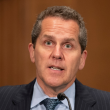

I am pleased to be here today to discuss a core part of the Federal Reserve's mission: banking supervision.1 Much of what the Fed does to conduct monetary policy, promote a stable financial system, provide a safe and efficient payments system, and support consumers and community development depends on a healthy banking system. Lending fuels entrepreneurship, helps families buy homes, and enables communities to thrive—all critical aspects of a healthy economy. Ensuring banks operate in a safe and sound manner is essential because the banking system sits at the center of the economy. That is why banks' risk-taking must always be guided by clear guardrails, underpinned by effective banking supervision. We need these guardrails because experience shows that market discipline alone does not prevent excessive risk-taking by banks.2 As I've noted before, time and again, periods of relative financial calm have led to efforts to weaken regulation and supervision.3 This has often had dire consequences, as we saw prominently during the Global Financial Crisis. In the midst of that crisis, I saw first-hand in my own community in Michigan what weak regulation and supervision could mean: foreclosed homes, shuttered businesses, and lost jobs. According to the Federal Reserve Bank of Chicago, Michigan's unemployment rate was 14.9 percent in 2009, meaning one in seven workers were out of jobs.4 Nationwide, the consequences were immense: nearly 9 million jobs lost, 8 million homes foreclosed upon, and a $17 trillion loss in household wealth.5 We are now, I believe, at a moment of inflection in the regulatory and supervisory approaches that help keep banks healthy. There are growing pressures to weaken supervision—to scale back examiner coverage, to dilute ratings systems, and to redefine "unsafe and unsound"—in ways that will make it harder for examiners to act before it is too late to prevent a build-up of excessive risk. These pressures present real dangers to the American people. The Mission of Banking Supervision Let me begin with the mission of bank supervision, which is to promote a safe, sound, and efficient banking system that supports a strong economy.6 Our banking system relies on trust. That trust is earned when banks behave responsibly and when supervisors effectively perform their statutory duties. These duties include verifying that banks are operating soundly and identifying and addressing weaknesses before they threaten the solvency of particular Fed's Barr: Bank supervision relies on credible ratings and strong staff. Fed's Barr: Moves to weaken bank supervision present real dangers.
Members commenced their discussion of financial conditions by considering central bank policy settings in advanced economies. The US Federal Reserve (Fed) and the Bank of Canada (BoC) had both cut their official rate by 25 basis points at their October meetings, as expected, while the Reserve Bank of New Zealand (RBNZ) had cut its official rate by 50 basis points. Members noted that inflation remained above target in these economies. The BoC and RBNZ expected inflation to decline to their targets over the period ahead, given significant spare capacity in their economies. The Fed had responded to weaker labour market conditions, while noting that inflation was expected to moderate over time but with risks still tilted to the upside. In many advanced economies, market expectations were for policy rates to be cut further over the coming year as economic conditions weaken. However, policy rates were expected to be steady in Canada, where policy had already been eased significantly, and in the euro area, where the unemployment rate remained low and inflation was close to target. The Bank of Japan was expected to raise its policy rate further in response to persistent inflationary pressures, despite ongoing weak growth. Members noted that the Fed had announced in October that it would conclude its balance sheet runoff. This reflected a judgement that reserves were reaching ‘ample’ levels, given signs of pressure in a range of US money market rates. Sovereign bond yields had fallen noticeably in the United States, Canada and New Zealand over preceding months, as expectations for the future path of policy rates had declined. In the United States, market measures of short-term inflation compensation had also fallen, though longer term measures had remained relatively stable. Long-term government bond yields in Australia were little changed. RBA: It’s unclear if monetary policy is still restrictive, unlike the definitive signals in 2024. RBA: Australian dollar remains aligned with estimated fair value. RBA SAYS POLICY EASING COULD STILL OCCUR IF THE LABOR MARKET WEAKENS SIGNIFICANTLY OR GROWTH FALLS SHORT. ... RBA: CASH RATE COULD STAY AT PRESENT LEVEL IF ECONOMIC DEMAND RECOVERS FASTER THAN EXPECTED. ...

From msn.com | Nov 17, 2025
China added an estimated 15 tons of gold to its foreign exchange reserves in September, and worldwide central bank purchases of the metal likely totaled 64 tons for September, more than tripling the 21 tons reached in August, as central banks accelerated their purchases of bullion following a seasonal summer lull, Goldman Sachs analysts said Monday. Central ...
