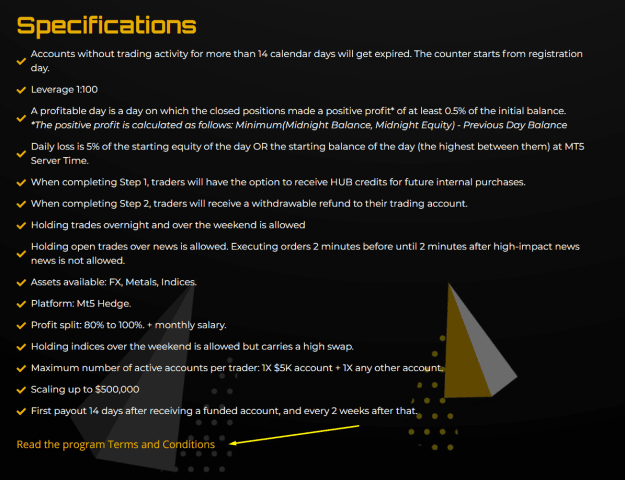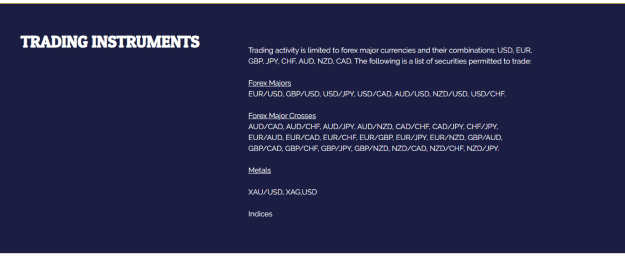


Received from Finotive:
How Finotive Operates
Dear xxxxx
In light of the recent CFTC involvement in the Retail Prop Firm industry, we have compiled the following FAQs to be fully transparent with our community about how Finotive Funding has and will continue to operate.
Hopefully these clarifications will not only show how we have and always will be fully transparent, but will also help you understand what goes on behind the scenes at a reputable prop firm.
1. Is Finotive Funding regulated?
-No, because there is no regulation required to run a retail prop firm.
2. Is Finotive Markets regulated?
-No, because the brokerage is based in SVG, which is a geographical location that does not require regulation to offer CFD products.
3. Are you ever trading the live companies money?
-No, due to regulations especially in Germany, we are unable to offer traders the ability to execute themselves directly to market. When trading with Finotive you are on a LIVE SERVER however this live server is non execute, thus meaning the trades are warehoused and they are NOT directly executed to the market.
4. Is there real liquidity?
-We use a data feed from Finotive Markets with no liquidity in itself, but rather a simulated price feed from what Finotive Markets receives from its pool of Liquidity Providers.
5. Do you A-Book all funded traders (Copy to Live accounts)?
-Not necessarily. Our risk team will perform a psychometric risk assessment on all accounts to determine the risk that Finotive wants to take on your trades. It is at our discretion how much we cover traders to our A Book account based on all previously mentioned factors.
6. How much do you cover traders to A-Book and how is this decided?
-Our risk team factors in the traders history, current positions across the book plus many other factors. This is all taken into account to decide the weight we want to cover your trades, and then we may choose to execute on your behalf directly from our live A-Book master account with Finotive Markets.
For a new instant funding trader who has not had any previous accounts with us and therefore we have no history to analyse, we may choose to cover them with a very low weight initially and readjust this as we accrue more data on them.
7. How do we profit and pay our traders?
-When traders purchase an account, the upfront fee goes into a pot. If a ‘funded’ trader were to be covered 100% on our A-Book account meaning that their trade is copied 100% and they generate profit, then their profit split would be paid fully from the trades profits, with finotive keeping our split of your profits.
Instead, if a trader is covered <100%, then any profits generated by them will be paid from profits from our A-Book covering, with any difference made up from the pot of challenge fees.
For example, a trader with a profit split of 75% makes $1,000, with their trades being covered at a 50% rate to our A-Book account. The trader then requests a payout of the $1,000 which equals a $750 split for the trader. In this case, $500 of their profits would have been generated from our A-Book account, and so Finotive would then pay the remaining $250 from the challenge fee pot.
Therefore, we benefit from successful traders if covered 100%, however we also benefit from the accumulation of challenge fees as this both covers the coverage difference, and contributes to our business profits.
8. Does Finotive Funding use 3rd party software to decrease the profitability of traders such as marking up spreads, add delays or worsen market conditions?
-By receiving our price feed from Finotive Markets, Finotive Funding has no control over the quotes, the spread fluctuations, the fill prices (slippage), or delays, but instead provides the trader with an exact simulation of Finotive Markets’ trading conditions as if they were trading their own funds with the brokerage.
We hope these answers are useful to you. Please, if you have any questions that hasn't been answered yet, make sure to join our Telegram or Discord community and ask our Team directly!
Ben Hardman
Chief Operating Officer
Finotive Funding
How Finotive Operates
Dear xxxxx
In light of the recent CFTC involvement in the Retail Prop Firm industry, we have compiled the following FAQs to be fully transparent with our community about how Finotive Funding has and will continue to operate.
Hopefully these clarifications will not only show how we have and always will be fully transparent, but will also help you understand what goes on behind the scenes at a reputable prop firm.
1. Is Finotive Funding regulated?
-No, because there is no regulation required to run a retail prop firm.
2. Is Finotive Markets regulated?
-No, because the brokerage is based in SVG, which is a geographical location that does not require regulation to offer CFD products.
3. Are you ever trading the live companies money?
-No, due to regulations especially in Germany, we are unable to offer traders the ability to execute themselves directly to market. When trading with Finotive you are on a LIVE SERVER however this live server is non execute, thus meaning the trades are warehoused and they are NOT directly executed to the market.
4. Is there real liquidity?
-We use a data feed from Finotive Markets with no liquidity in itself, but rather a simulated price feed from what Finotive Markets receives from its pool of Liquidity Providers.
5. Do you A-Book all funded traders (Copy to Live accounts)?
-Not necessarily. Our risk team will perform a psychometric risk assessment on all accounts to determine the risk that Finotive wants to take on your trades. It is at our discretion how much we cover traders to our A Book account based on all previously mentioned factors.
6. How much do you cover traders to A-Book and how is this decided?
-Our risk team factors in the traders history, current positions across the book plus many other factors. This is all taken into account to decide the weight we want to cover your trades, and then we may choose to execute on your behalf directly from our live A-Book master account with Finotive Markets.
For a new instant funding trader who has not had any previous accounts with us and therefore we have no history to analyse, we may choose to cover them with a very low weight initially and readjust this as we accrue more data on them.
7. How do we profit and pay our traders?
-When traders purchase an account, the upfront fee goes into a pot. If a ‘funded’ trader were to be covered 100% on our A-Book account meaning that their trade is copied 100% and they generate profit, then their profit split would be paid fully from the trades profits, with finotive keeping our split of your profits.
Instead, if a trader is covered <100%, then any profits generated by them will be paid from profits from our A-Book covering, with any difference made up from the pot of challenge fees.
For example, a trader with a profit split of 75% makes $1,000, with their trades being covered at a 50% rate to our A-Book account. The trader then requests a payout of the $1,000 which equals a $750 split for the trader. In this case, $500 of their profits would have been generated from our A-Book account, and so Finotive would then pay the remaining $250 from the challenge fee pot.
Therefore, we benefit from successful traders if covered 100%, however we also benefit from the accumulation of challenge fees as this both covers the coverage difference, and contributes to our business profits.
8. Does Finotive Funding use 3rd party software to decrease the profitability of traders such as marking up spreads, add delays or worsen market conditions?
-By receiving our price feed from Finotive Markets, Finotive Funding has no control over the quotes, the spread fluctuations, the fill prices (slippage), or delays, but instead provides the trader with an exact simulation of Finotive Markets’ trading conditions as if they were trading their own funds with the brokerage.
We hope these answers are useful to you. Please, if you have any questions that hasn't been answered yet, make sure to join our Telegram or Discord community and ask our Team directly!
Ben Hardman
Chief Operating Officer
Finotive Funding
5

 The market is very competitive. Just stay away from the USA and CAD-based ones.