

Prop Firm DrawDown Protector : Prop Firm Capital Protection Expert MT4 | Forex Money Management: Forex Trade Management Expert MT4 |ICT Concepts Indicator MT4 | Smart Money Concepts Expert MT4| Smart Money Trap Scanner | Get a free Expert Advisor license via Telegram and WhatsApp
The Four Primary Time-Based Trading Styles
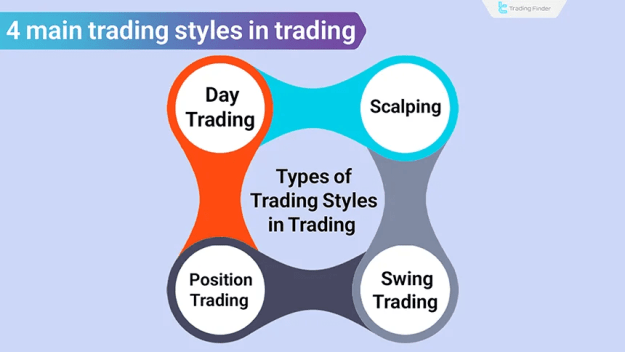
Forex trading styles are broadly categorized into four main types based on trade duration: Scalping, Day Trading, Swing Trading, and Position Trading. Each suits different trader profiles and market approaches.
Scalping: Mastering the Minute
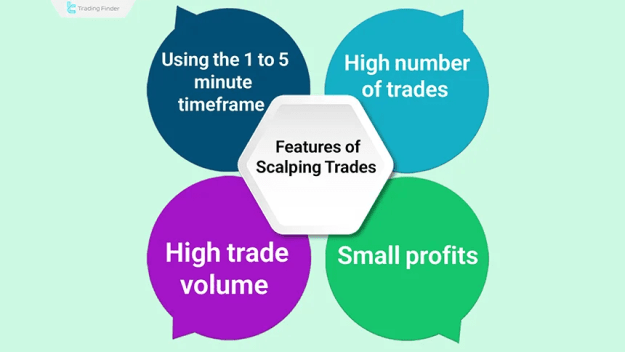
Scalping is a high-frequency style focused on profiting from minuscule price movements within seconds to minutes. It demands intense focus, real-time execution, and mastery of low-timeframe market structure and liquidity.
- Core Features: Extremely high trade frequency, small profit targets, minimal exposure to overnight risk, heavy reliance on Level 2 data and order flow.
- Pros: Numerous daily opportunities, quick trade outcome, independence from long-term market direction.
- Cons: Requires significant experience and emotional control, trading costs (spreads/commissions) heavily impact profitability, necessitates constant screen time.
Day Trading: Capitalizing on the Daily Session
Day Trading involves opening and closing all positions within a single trading day, avoiding overnight risk. Traders capitalize on intraday volatility using technical analysis on timeframes from minutes to hours.
- Core Features: Trades last minutes to hours, aligns with the intraday trend, utilizes multi-timeframe analysis, all positions are flat by the session close.
- Pros: No overnight swap or gap risk, reduced impact of spreads compared to scalping, follows clearer intraday momentum.
- Cons: Requires several hours of daily chart monitoring, success hinges on correctly identifying the session's trend, can be psychologically demanding.
Swing Trading: Riding the Market Waves
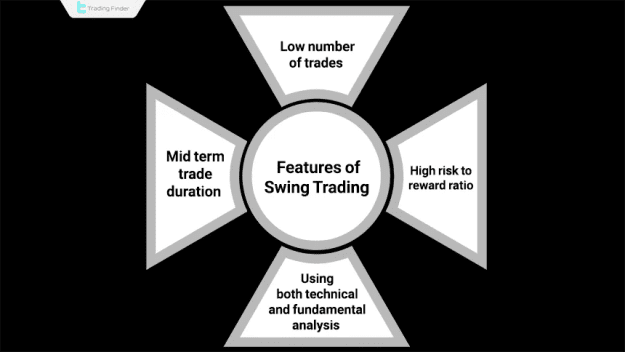
Swing Trading aims to capture gains from price "swings" or momentum shifts over several days to weeks. It blends technical and fundamental analysis to identify corrections within a larger trend.
- Core Features: Trade duration of days to weeks, targets higher risk-to-reward ratios, uses higher timeframes (4H, Daily), focuses on pivotal support/resistance levels.
- Pros: Does not require constant screen monitoring, potential for larger profits per trade, less affected by intraday market noise.
- Cons: Requires patience and commitment to a plan, involves overnight and weekend holding risk, necessitates a solid grasp of both technical and fundamental drivers.
Position Trading: The Long-Term Strategic Approach
Position Trading is a macro-style where trades are held for weeks, months, or even years. It is primarily driven by fundamental, economic, and geopolitical analysis, with technicals used mainly for entry refinement.
- Core Features: Longest trade duration, focuses on major economic trends, very high risk-to-reward ratio, minimal daily management required.
- Pros: Least time-intensive style, ignores short-term volatility and noise, aligns with powerful macroeconomic trends.
- Cons: Requires substantial capital to withstand large drawdowns, demands deep fundamental analysis skills, involves significant carrying costs (swaps) over time.
Analytical Methodologies: Technical, Fundamental & Price Action
Beyond time, styles are also defined by analytical approach:
- Technical Trading: Decisions based on charts, indicators, patterns, and historical price data.
- Fundamental Trading: Decisions driven by economic news, interest rates, geopolitical events, and financial statements.
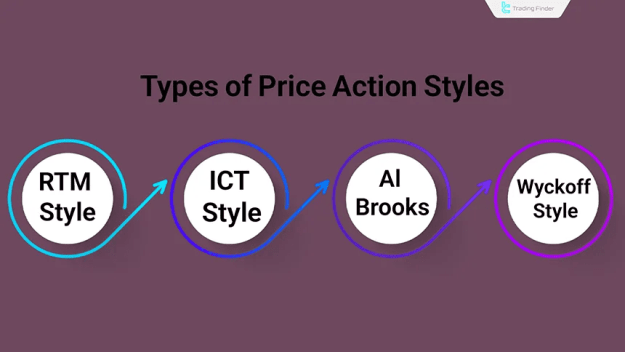
- Price Action Trading: A pure form of technical analysis focusing on raw price movement, candlestick patterns, and key support/resistance levels without clutter from indicators. Popular methodologies include ICT, Market Structure, and the Wyckoff Method.
How to Choose Your Optimal Trading Style: A Step-by-Step Guide
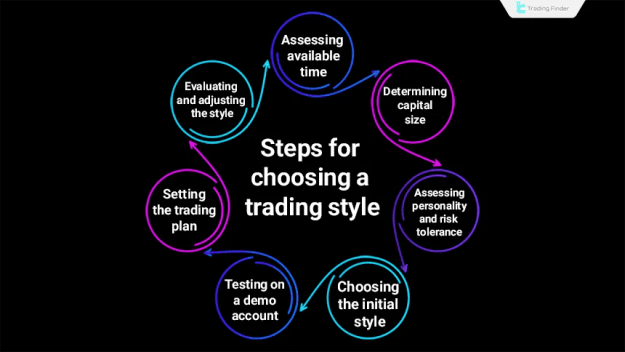
Selecting your style is a personal strategic decision. Follow this roadmap:
- Assess Your Personality: Are you patient or impulsive? Can you handle rapid stress or do you prefer deliberation? Your psychological makeup is the most critical filter.
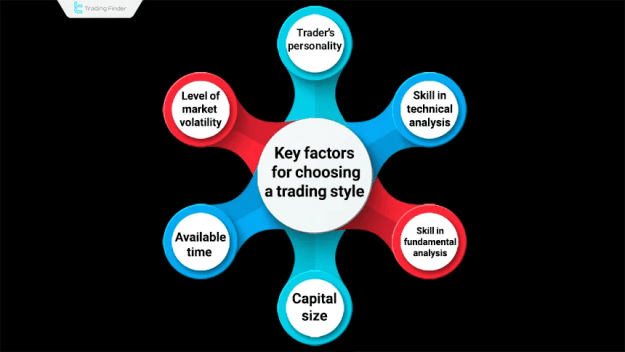
- Evaluate Your Resources: Honestly appraise your available time for screen watching, your capital size for appropriate position sizing, and your current skill level.
- Define Your Goals: Are you seeking supplemental income or long-term wealth building? Your goals dictate the realism of your chosen style's profit potential.
- Match Style to Market: While Forex is versatile, certain styles pair better with specific instruments. Scalping thrives on major currency pairs, while Position Trading may better suit indices or commodities.
- Test and Validate: Practice your chosen style extensively in a demo environment. Does it feel sustainable and suit your rhythm?
Common Pitfalls and Risk Management by Style
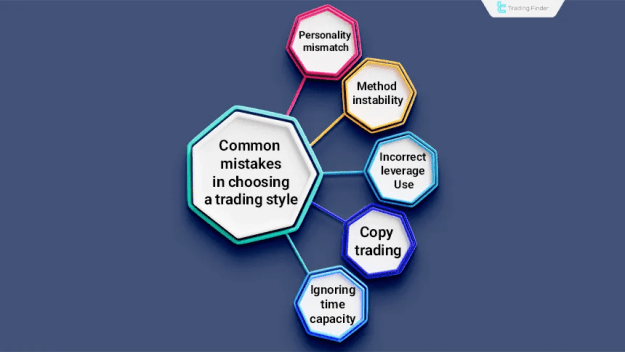
A major mistake is adopting a style incompatible with your life or psyche, leading to frustration and failure. Avoid constantly switching styles after losses. Crucially, tailor your risk management to your style:
- Scalping/Day Trading: Use tight stop-losses, manage position size meticulously, and be hyper-aware of transaction costs.
- Swing/Position Trading: Use wider, volatility-based stop-losses, size positions to account for larger drawdowns, and factor in carrying costs.
Conclusion
Your trading style is the cornerstone of your professional journey in the markets. It is the strategic lens through which you view volatility and opportunity. There is no single "best" style—only the one that is best for you. By carefully aligning a proven methodology with your personal traits and resources, you build the discipline and consistency required for long-term profitability. Choose wisely, master your method, and let your tailored trading style be the framework for your success.