

- This journal systematically records all relevant trade details, ranging from entry time and volume to the underlying reasoning for decisions and the trader's emotional reactions. This comprehensive data provides an accurate, holistic picture of the trader's behavior.
- Its key distinction from a standard trading journal is its focus beyond mere profit and loss (P&L). It meticulously tracks data related to compliance with firm rules, adherence to allowable risk percentages, and overall performance stability.
Prop Firm DrawDown Protector : Prop Firm Capital Protection Expert MT5 |Forex Money Management: Forex Trade Management Expert MT5 | ICT Concepts Indicator MT5 |Smart Money Concepts Expert MT5 | Smart Money Trap Scanner | Get a free Expert Advisor license via Telegram and WhatsApp
The Role of the Prop Journal in a Trader's Success
In the demanding and competitive environment of prop trading, true success requires not only profitability but also the maintenance of behavioral consistency and rigorous analytical discipline. The trading journal is an indispensable tool for achieving risk control and facilitating meticulous performance review.
- By precisely logging every trade detail, the trader can assess their strict adherence to the prop firm's mandates, such as the maximum daily drawdown, maximum account loss, and profit target. This function is critical for identifying and correcting behavioral or technical deviations before they result in rule violations.
- The consistent use of the journal helps cultivate a stable decision-making pattern, acting as a critical buffer against emotional impulses following sudden market volatility, losses, or substantial gains.
- This analytical process actively shifts the trader's mindset from one driven by emotion to one governed by data and logic, which significantly enhances the reliability and predictability of their performance during critical firm evaluations.
Specific Components of an Effective Prop Trade Journal
A trading journal used within proprietary accounts must be extensive, documenting more than simple transaction history. It must encompass detailed criteria for Trader performance evaluation, psychological behavior, and strict adherence to company rules.
- Trade Details: The quantitative foundation, including Symbol, trade type, timeframe, entry/exit points, lot size, risk amount, and final P&L.
- Prop Rules: Tracking fields such as Daily Drawdown, Max Loss limit, Profit Target, and the Allowed Risk Percentage per Trade to ensure compliance with firm limits.
- Decision Logic: Qualitative data recording the Entry Reason, Setup Type, multi-timeframe confirmations, and prevailing Market Conditions to evaluate the quality and strategic alignment of decisions.
- Trading Psychology: Analyzing the Mental State before entry, Emotional Reactions during market volatility, and feelings after trade closure to support long-term psychological stability.
- Performance Analysis: Metrics essential for professional evaluation, including Win Rate, average P&L, Risk-to-Reward Ratio (R:R), and Maximum Drawdown.
- Feedback and Improvement: An action-oriented section documenting Violated Rules, recurring mistakes, review outcomes, and a detailed Performance Improvement Plan.
Steps to Build a Prop Trading Journal
Designing a proprietary trading journal requires ensuring that all key performance indicators, adherence to company rules, and necessary analytical data are accurately traceable.
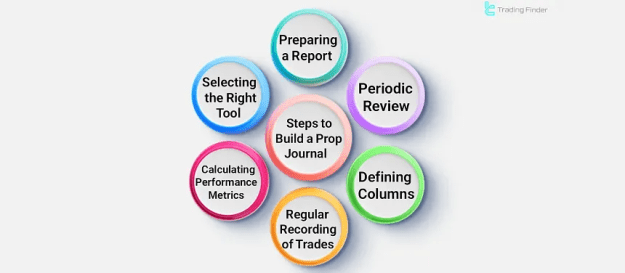
Selecting the Right Tool
The initial step is to choose a suitable data-recording platform.
- Beginners can utilize simple tools such as Excel or Google Sheets.
- For advanced analysis, specialized software like TradeZella, Edgewonk, and TraderSync offer automated analytics, performance charting, and sophisticated error tracking.
Defining Columns Based on Prop Rules
The journal’s structure must be intrinsically aligned with the prop firm’s requirements.
- Precisely define columns such as date, symbol, risk per trade, daily drawdown, profit target, and margin usage percentage. This setup is non-negotiable for accurately evaluating compliance with firm regulations.
Consistent Trade Logging
Data entry must be a disciplined, immediate process following each trade or trading session.
- Quick recording ensures accuracy and prevents the introduction of cognitive bias.
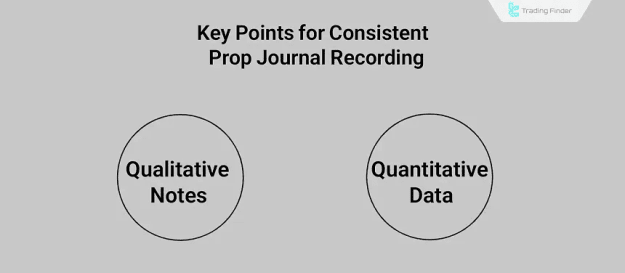
- Crucially, in addition to quantitative figures, include qualitative notes like the trade rationale or the trader's mental state.
Regular Prop Journal Logging: Calculating Performance Metrics
After closing trades, the next step involves calculating essential metrics.
- Use formulas to compute indicators like win rate, risk-to-reward ratio, total drawdown, and average daily profit. These are the core indicators for professional prop environment evaluations and reflect performance consistency.
Periodic Review and Data Analysis
At the close of each week or evaluation phase, a disciplined review is necessary.
- Traders must review their logged trades to identify profitable patterns or uncover recurring mistakes.
- This analysis must be strictly data-driven, moving beyond subjective impressions.
Preparing Reports for the Evaluation Phase
Given that prop firm evaluations are heavily reliant on performance data, the journal must be report-ready.
- The journal should be organized to facilitate the rapid extraction of analytical reports and summary performance charts. These reports are the fundamental criteria used by firms to decide on continued cooperation or capital allocation increases.
Benefits of Maintaining a Journal for Prop Accounts
In the proprietary trading context, the journal functions as a critical performance control tool and a mechanism to enforce adherence to technical and risk limitations.
Benefits of Prop Journal: Using a Prop Trade Journal as a Performance Control Tool
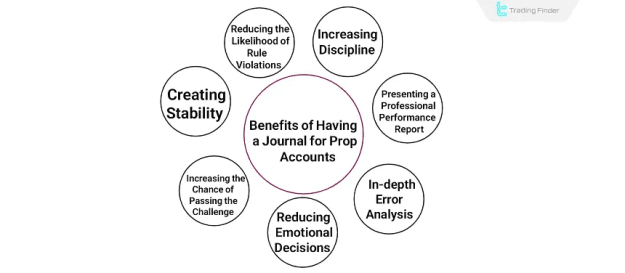
- Increasing the Chances of Passing the Challenge Phase: Consistent recording aligns trading behavior with company standards, detects weaknesses in strategy and risk management, and identifies mistakes before rule violations occur.
- Creating Stability in Trading Performance: Continuous data analysis fosters consistency in decision-making and significantly reduces behavioral volatility, promoting rational outlook and psychological discipline.
- Reducing Emotional Decisions and Mental Errors: Reviewing recorded trades allows traders to recognize emotional patterns, enabling decisions to be made based on logic, data, and predefined strategies.
- In-Depth Error Analysis and Profit Pattern Recognition: Statistical evaluation of trade history objectively exposes both strategic weaknesses and strengths, allowing for the optimization of the trading method based on numerical evidence.
- Providing Professional Performance Reports to the Prop Firm: A well-structured journal presents a clear, professional image of a trader's discipline, helping account managers or investors assess the trader's reliability and decision-making quality.
- Enhancing Discipline and Self-Control in Trading: The requirement to log every trade discourages impulsive actions and enforces stricter risk management.
- Reducing the Likelihood of Rule Violations: Daily monitoring of stop-losses and performance metrics prevents accidental breaches of firm limitations, allowing for prompt corrective action when risk thresholds are approached.
- Building the Firm’s Trust and Credibility Toward the Trader: Accurate recording, continuous analysis, and regular reporting demonstrate discipline, transparency, and accountability, thereby building trust in capital management.
Common Mistakes Traders Make When Using Prop Journals
The effectiveness of a prop trading journal is heavily reliant on its proper, continuous, and analytical use.
Common Prop Journal Mistakes: Reduced Effectiveness of a Prop Trading Journal Due to Common Errors
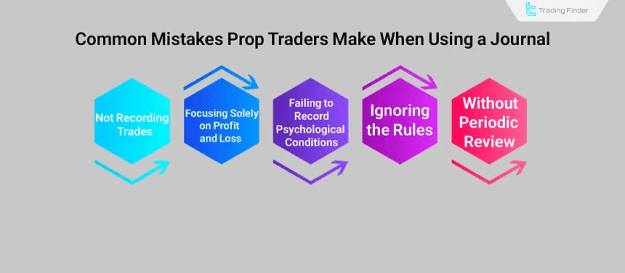
- Not Recording Trades Out of Fear of Mistakes: Omitting losing trades introduces a cognitive bias, preventing the critical recognition of recurring errors in the data analysis.
- Focusing Only on Profit and Loss and Ignoring Entry Reasons: An effective journal must include the logical reasoning behind entry and exit. Neglecting this hinders the learning process and leads to the repetition of past errors.
- Failing to Record Psychological and Behavioral Conditions: Ignoring pre- and post-trade emotions results in an incomplete psychological analysis, obscuring the critical link between the trader's mental state and trading outcomes.
- Disregarding Firm Rules When Analyzing Data: Journal review must include assessment against company policies (e.g., maximum drawdown, daily loss limit). Analysis without these constraints is irrelevant to the reality of a proprietary account.
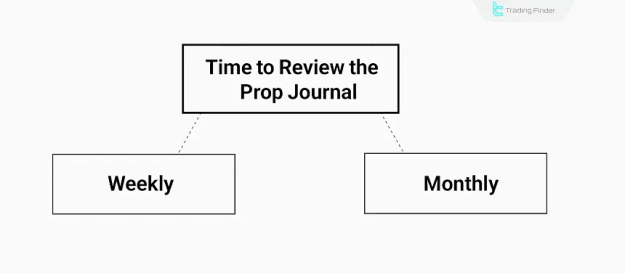
- Using the Journal Without Periodic Review: A journal is only valuable when its data is regularly reviewed and analyzed. Failure to conduct weekly or monthly reviews halts the identification of patterns, errors, and points for improvement.
Conclusion
In the proprietary trading landscape, success transcends strategy or simple profitability; it fundamentally relies on the trader's ability to utilize trading data analysis and maintain behavioral control. The precise recording and analysis within a prop journal establish robust decision-making rules and actively prevent the repetition of costly mistakes. Regular journal use is the foundation for building order, consistency, and mental discipline, ultimately forging a stable performance pattern. This process ensures traders manage their data analytically and take full responsibility for their continuous trading evolution.