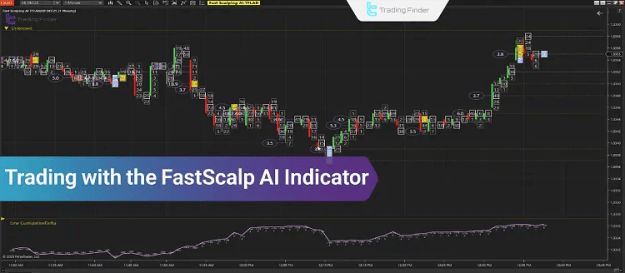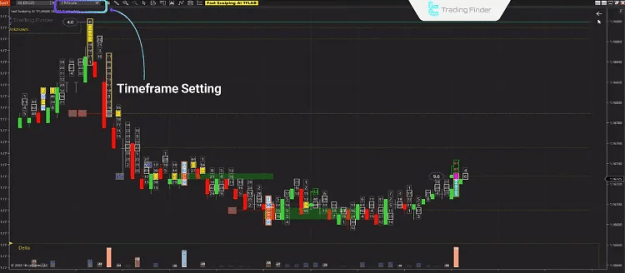


Utilizing adaptive computational models, the indicator pinpoints precise entry and exit opportunities on ultra-short timeframes—most effectively on 1- to 5-minute charts—where immediate decision-making is crucial.
Prop Firm DrawDown Protector : Prop Firm Capital Protection Expert MT5 |Forex Money Management: Forex Trade Management Expert MT5 | ICT Concepts Indicator MT5 |Smart Money Concepts Expert MT5 | Smart Money Trap Scanner | Get a free Expert Advisor license via Telegram and WhatsApp
What Is the Fast Scalping AI Indicator?
The Fast Scalping AI Indicator is an advanced analytical module developed for NinjaTrader 8, engineered to identify short-term momentum shifts, order-flow transitions, and micro-volume movements. Instead of relying on lagging metrics, it evaluates live tick data, Level 2 market depth, and real-time volume patterns to estimate immediate price direction with high accuracy.
Core Functionalities
- Processes real-time price and volume flow
- Compares candle-to-candle behavior to detect potential reversals or continuations
- Identifies liquidity spikes that indicate active buying or selling pressure
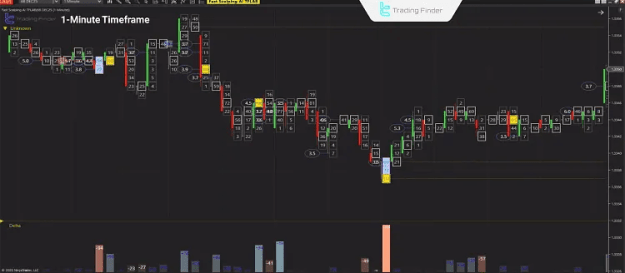
- Operates optimally on 1-minute and 5-minute charts
- Utilizes Level 2 depth data to assess liquidity distribution
Platform Compatibility
The indicator is specifically designed for NinjaTrader 8, fully aligned with its native data architecture.
Correct entry of license credentials is required to activate the computational engine and prevent authorization errors.
Installation & Setup
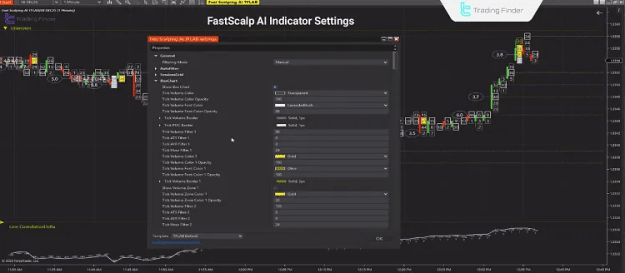
After adding the indicator file to NinjaTrader and validating licensing details, it becomes accessible in the platform’s indicator list.
Users may customize parameters such as:
- Session display
- Volume sensitivity
- Filtering intensity
- Signal responsiveness
Proper configuration ensures stable real-time performance and accurate signal visualization.
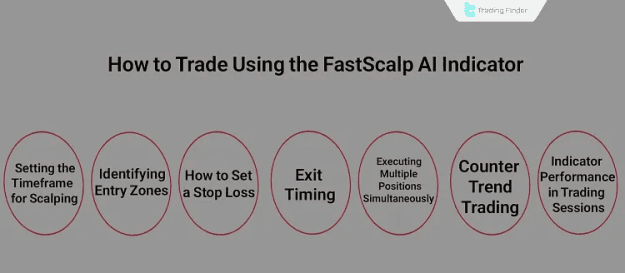
How to Trade with the Fast Scalping AI Indicator
Principles of Use
Effective trading with FastScalpingAI focuses on:
- Identifying momentum surges
- Monitoring order-flow dynamics
- Filtering out market noise
- Executing exits as momentum decays
Signal confirmation through volume validation is essential to reduce premature entries.
Timeframe Selection
The 1-minute chart offers the highest responsiveness, where:
- Signal frequency is elevated
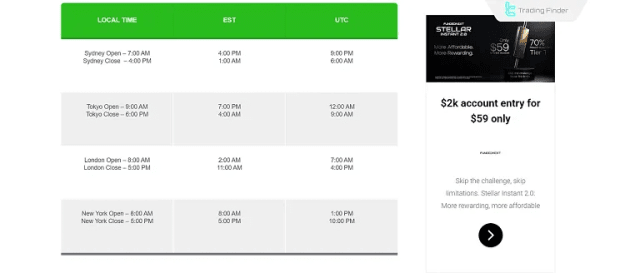
- Liquidity is concentrated during the London and New York sessions
- Price reacts sharply to volume accumulation zones
Identifying Entry Zones
The indicator determines entry zones by integrating:
- Momentum direction
- Real-time volume expansion
- Order-flow bias
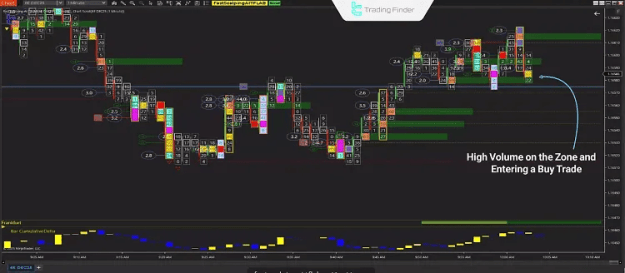
High volume readings indicate strong buying or selling pressure.
A valid entry generally requires:
- A noticeable increase in volume
- A confirming candle reacting constructively within the identified zone
This combination signals fresh liquidity and structured market participation.
Stop Loss Placement
Stop levels are dynamic and follow momentum structure:
- Long positions: place below the nearest bullish reversal or low-volume area
- Short positions: place above the latest bearish reversal zone
This approach tailors risk to signal strength instead of fixed pip distances.
Exit Strategy
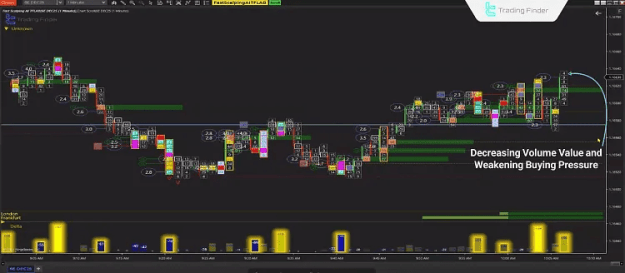
Exits are recommended when:
- Momentum begins to weaken
- Indicator values decline
- Candles demonstrate reduced volume
Remaining in a trade after momentum fades raises the probability of reversal.
Trading Multiple Sequential Signals
During strong trends, the indicator may issue consecutive signals in the same direction.
In such scenarios, traders may employ position scaling by adding entries as momentum persists.
A trailing stop based on the most recent active zone helps unify risk and manage multiple positions efficiently.
Counter-Trend Usage
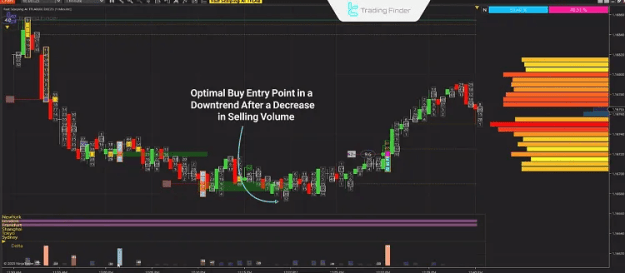
Counter-trend opportunities arise when:
- Price continues trending
- Indicator momentum begins to decline
These setups typically appear near exhaustion zones and should be managed with:
- Reduced position sizes
- Shorter profit targets
Optimizing Performance Across Trading Sessions
The indicator’s responsiveness varies with session-based liquidity:
London Session
- High volume and rapid price movement
- Increase filter sensitivity for sharper detection
New York Session
- High volatility due to London overlap
- Use stronger volume filters to reduce noise
Asian Session
- Lower volume and slower structure
- Decrease sensitivity to avoid false signals
Modes of Operation
The Fast Scalping AI Indicator supports three operational modes:
Manual Mode
- Full control over filters, volume thresholds, and responsiveness
Auto Mode
- Automated adjustments based on real-time liquidity and volatility
AI Mode
- Predictive analysis using historical patterns and Level 2 depth
A comprehensive report for all modes can be found under the Report section, where results may also be exported to Excel.
Risk Management
Scalping requires strict risk management. The indicator supports this through dynamic evaluation of volume and momentum to guide:
- Position sizing
- Adaptive stop placement
- Fixed risk-per-trade limits (e.g., 0.5%–1%)
Consistency in risk control is essential to prevent cumulative drawdowns in rapid markets.
Advantages and Limitations
Advantages
- Real-time order-flow and volume interpretation
- High responsiveness to momentum fluctuations
- Strong reversal detection on low timeframes
- Native integration with NinjaTrader 8
- Suitable for backtesting and optimization
Limitations
- Strong dependence on high-quality data
- Excessive signals during extreme volatility
- Lower effectiveness on higher timeframes
- Requires experience for correct interpretation
- Reduced accuracy in low-volume environments
Professional Tips for Optimal Use
- Combine with confirmation tools (VWAP, EMA, Volume Profile)
- Avoid trading during high-impact news events
- Review logs regularly to refine filter settings
- Test multiple timeframes across asset classes
- Adjust sensitivity according to session liquidity
- Match position size to signal strength and stop-loss structure
Conclusion
The Fast Scalping AI Indicator offers a fast, reactive, and data-driven framework for NinjaTrader users seeking precision in short-term trading.
Its primary advantage lies in converting real-time order flow and volume information into actionable, low-latency signals.
Optimal performance requires session-based sensitivity adjustments, disciplined risk control, and proper integration with supporting volume-based tools.