

Prop Firm DrawDown Protector : Prop Firm Capital Protection Expert MT5 |Forex Money Management: Forex Trade Management Expert MT5 | ICT Concepts Indicator MT5 |Smart Money Concepts Expert MT5 | Smart Money Trap Scanner | Get a free Expert Advisor license via Telegram and WhatsApp
What Is a Trading Journal?
A trading journal serves as a personalized database for recording every position executed in the market.
It includes key elements such as:
- Trade date and instrument symbol
- Position type (buy/sell)
- Entry and exit prices
- Position size and risk-to-reward ratio
- Strategy used and result achieved
For more in-depth analysis, traders often record additional parameters such as R-Multiple, MAE/MFE, or even notes about emotional states during trades.
Adding details like the market session (Asian, European, or American), timeframe, and holding duration allows for a more comprehensive assessment of the system’s overall performance.
Advantages and Disadvantages of Journaling
Advantages
- Helps identify strengths and weaknesses in trading strategies
- Improves emotional control and reduces impulsive decisions
- Provides reliable data for performance metrics (e.g., win rate, expectancy)
- Increases discipline and accountability in trading routines
- Enables objective performance reviews over time
Disadvantages
- Requires time and discipline for consistent updates
- Incomplete data reduces analytical value
- Less practical for high-frequency or scalping strategies
- Dependent on software tools or manual documentation
Purpose and Application of a Trading Journal
The primary goal of maintaining a trading journal is to analyze trading behavior and enhance decision-making accuracy.
In forex education, journaling helps traders:
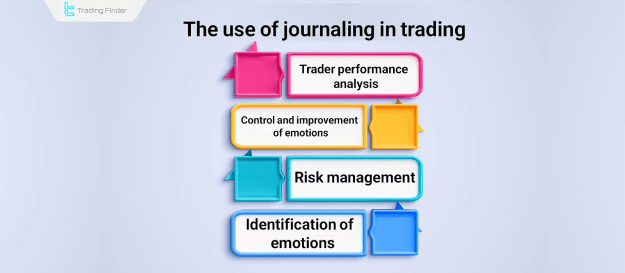
- Evaluate performance: Measure strategy success across various market conditions.
- Manage risk: Monitor exposure and ensure consistent application of risk limits.
- Control emotions: Track psychological reactions such as fear, greed, or overconfidence.
- Detect errors: Identify repeating mistakes and refine strategy execution.
A disciplined journaling process turns raw trade data into actionable insights that improve performance and psychological stability.
How to Identify Mistakes Using a Trading Journal
To identify weaknesses, traders should review their journals regularly—preferably weekly or monthly.
By marking trades that resulted in losses and noting their causes, patterns begin to emerge.
Over time, traders can recognize behavioral or analytical flaws that lead to repeated mistakes, allowing them to adjust strategies and reduce errors.
Emotional Management in a Trading Journal
Many trading failures result not from poor analysis, but from emotional interference. Fear, greed, and impatience often lead to irrational decisions.
Documenting emotional states before, during, and after trades helps traders detect how emotions influence outcomes and develop emotional resilience.
Emotion Labeling Method
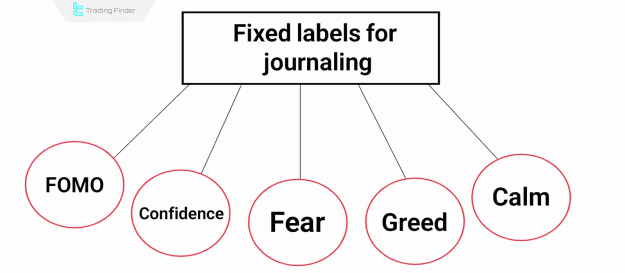
Using consistent labels for emotions makes it easier to identify behavioral patterns. Common examples include:
- FOMO (Fear of Missing Out)
- Greed
- Fear
- Confidence
- Calmness
This structured emotional labeling builds awareness and enhances decision-making discipline.
What Should Be Recorded in a Trading Journal?
A complete trading journal should include both quantitative and qualitative data. Essential fields include:
- Date and time of trade
- Instrument or asset symbol
- Direction (long/short)
- Entry, stop-loss, and target prices
- Position size and risk level
- Reason for entry (technical, fundamental, or sentiment-based)
- Result in pips, percentage, or monetary value
- Emotions and notes for improvement
This blend of numerical and psychological data ensures a 360° analysis of performance.
Importing Trade History from MT4/MT5
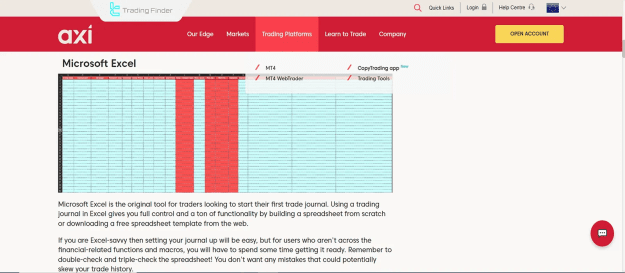
To ensure precision and save time, traders can import their historical trades directly from MetaTrader 4 (MT4) or MetaTrader 5 (MT5) into Excel or Google Sheets.
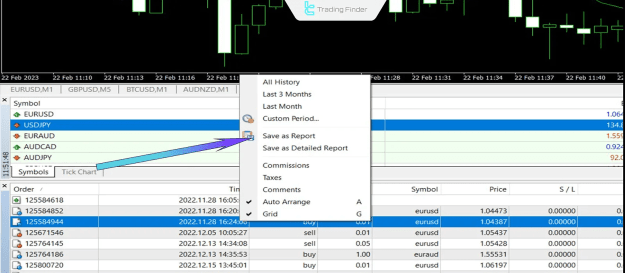
For MetaTrader 4 (MT4):
- Open the Account History tab.
- Right-click → Save as Report or Save as Detailed Report.
- Export as HTML.
- Import into Excel using Data → From Web, or open in a browser and copy the data.
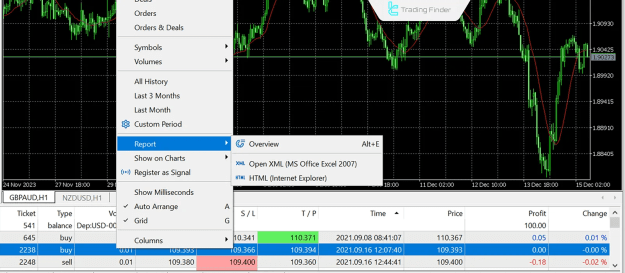
For MetaTrader 5 (MT5):
- Open the History tab.
- Right-click → Save as Report.
- Export as HTML or CSV.
- If CSV, open directly in Excel or Google Sheets.
This automation keeps trade records accurate and avoids manual input errors.
Example Trading Journal Entry
Date: 25/01/29
Symbol: EUR/USD
Direction: Short
Entry: 1.0437
Exit: 1.0213
Volume: 0.01
Risk: 0.25
Reason: Monetary policy divergence
Result: +224 pips / +$22.4 profit
Emotion: Anxiety
Note: First trade based on fundamental data—good learning experience.
Conclusion
A trading journal is one of the most powerful tools for continuous growth and self-assessment in trading.
Within the framework of forex education, journaling enhances discipline, emotional awareness, and strategic accuracy.
By systematically recording every trade, tracking emotions, and analyzing performance, traders can:
- Strengthen risk management
- Detect recurring errors
- Improve consistency
- Enhance profitability over time
Success in trading is built on consistency—and consistency begins with documentation.