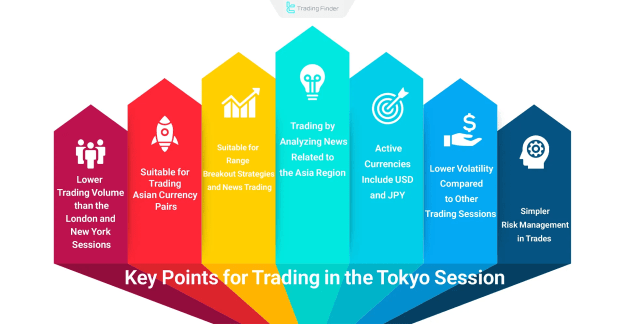


The session’s prominence is largely due to the Japanese Yen (JPY), the world's third most-traded currency. This early activity provides an environment conducive to lower-risk trading and careful volatility control, serving as a crucial prelude to the highly active London overlap.
The official Tokyo session time in GMT (UTC) is 00:00 to 09:00 (12:00 AM to 9:00 AM UTC). Japan does not observe daylight saving time, ensuring the hours remain fixed.
Prop Firm DrawDown Protector : Prop Firm Capital Protection Expert MT4 | Forex Money Management: Forex Trade Management Expert MT4 |ICT Concepts Indicator MT4 | Smart Money Concepts Expert MT4| Smart Money Trap Scanner | Get a free Expert Advisor license via Telegram and WhatsApp
Introduction to the Tokyo Trading Session (Asian Session)
While often called the "Tokyo session," the term "Asian session" is more accurate. Despite Tokyo’s status, other regional hubs like Hong Kong and Singapore collectively account for a larger share of the forex volume than Japan alone.
The early hours of the session see an increase in liquidity from bank orders and corporate hedging, which ultimately helps form the Asian range. This range is fundamental to common forex strategies, acting as the basis for anticipated breakouts or reversals later in the day.
The primary catalysts for volatility during this time are the release of key macro data, including:
- Interest rates and policy decisions from the Bank of Japan (BoJ).
- Japan’s trade balance.
- Economic data from major regional players like Australia and China.
Advantages and Disadvantages of the Tokyo Session (Asia)
The Asian session is characterized by generally moderate volatility and more stable market conditions, making it an ideal choice for traders who favor technical analysis and smaller, more predictable movements. However, it presents limitations for those who thrive on high volatility and large price swings.
Advantages of the Tokyo Session
- Regular and Predictable Price Movements: Market behavior is often well-defined, making technical patterns more reliable.
- Suitability for Scalping and Short-Term Trades: Tighter ranges and stable conditions are favorable for quick entries and exits.
- Least Impact from Sudden News: Major global news events are less frequent during these hours compared to the European and U.S. sessions.
- Overlaps with Key Markets: It overlaps with the Sydney session at the open and the London session at the close, providing spikes in liquidity.
- Focus on Specific Pairs: High liquidity in Asian-centric pairs like USD/JPY, AUD/USD, and NZD/USD allows for concentrated trading strategies.
Disadvantages of the Tokyo Session
- Limited Volatility: Traders seeking strong, explosive price moves may find the session lacking.
- Lower Liquidity in Major Pairs: Currency pairs like EUR/USD or GBP/USD often trade with thinner volume.
- Market Lethargy: The middle hours can experience a significant drop in activity, sometimes referred to as "market lethargy."
- Less Influence on the Overall Market Trend: The session's moves are often consolidative, preparing for the European and U.S. markets.
- Possibility of Gaps or Unexpected Moves: The start of the week, particularly Monday’s open, can be unpredictable.
Capabilities of the Tokyo Trading Session
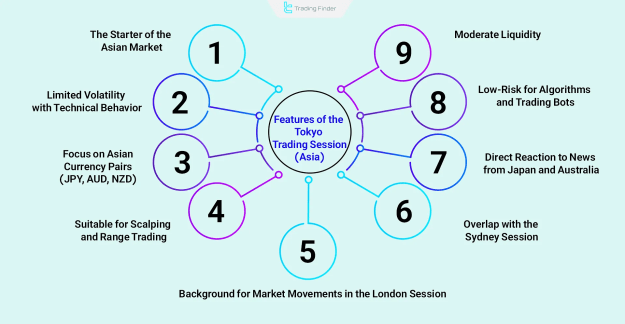
The Tokyo session is the primary initiator of liquidity flow in the forex market, with its main focus on Asian currency pairs.
Key capabilities of this trading meeting include:
- Official Start of the Asian Market: It marks the beginning of daily trading activity.
- Limited Volatility and Technical Behavior: Its range-bound nature is ideal for technical and algorithmic strategies.
- Focus on Key Currency Pairs: The most active currencies are the JPY, AUD, and NZD.
- Suitable for Scalping and Range Trading Strategies: The established Asian range is often used as a framework for low-risk strategies.
- Precursor to Market Moves in the London Session: The range established here frequently serves as the breakout level for the European open.
- Initial Overlap with the Sydney Session: This overlap creates the first period of increased liquidity.
- Direct Reaction to Japanese and Australian Economic News: Data from these regions elicits immediate, targeted market reactions.
- Low-Risk Environment for Algorithms and Trading Robots: Predictable movements are favorable for automated systems.
- Medium Liquidity with Predictable Behavior: Sufficient liquidity for trade execution without the extreme volatility of other sessions.
Peak Volatility Hours in the Tokyo Session
While generally known for lower volatility, the session has specific windows where price action significantly accelerates, typically around key events and overlaps.
- Market Open and Economic Data Releases: The very start of the session, coinciding with early Asian data releases, often sees a burst of activity.
- Overlap with Sydney: Increased trading in AUD and NZD pairs is common during the early hours.
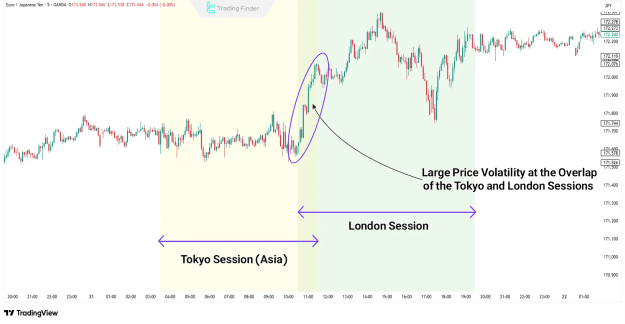
- Overlap with London: The final two hours of the Asian session, when the London market opens, creates a major surge in volume. This overlap is particularly volatile for EUR/JPY and GBP/JPY pairs.
Tradable Currency Pairs In the Tokyo Session
Tokyo session pairs can be broadly categorized based on their typical volatility.
- Highly Volatile Pairs: These typically include Yen Crosses such as EUR/JPY, AUD/JPY, NZD/JPY, and GBP/JPY.
- Low-Volatility Pairs: These often include major pairs with reduced liquidity during this time, such as EUR/USD, GBP/USD, USD/CHF, USD/CAD, EUR/GBP, and AUD/NZD.
JPY crosses (pairs where the JPY is either the base or quote currency) exhibit the greatest depth and responsiveness. Pairs involving the Australian Dollar (AUD) and New Zealand Dollar (NZD) are heavily influenced by macro data from Australia and China.
The most important pairs to watch:
- USD/JPY: The most active and liquid pair, closely tied to the opening of Japan’s equity market.
- AUD/JPY: Higher volatility due to Australia's reliance on exports and reactions to Reserve Bank of Australia (RBA) policy.
- EUR/JPY & GBP/JPY: These pairs, while sometimes quiet during the mid-session, often make sudden, explosive moves during the Tokyo-London overlap.
The Impact of Economic Data on the Tokyo Session
Economic data is a primary driver of price action in the Asian session, with reactions being fast and often setting short-term trends.
- Japan (BoJ and Inflation): Releases like CPI, PPI, and BoJ policy decisions (especially regarding Yield Curve Control, or YCC) create immediate, strong volatility in Yen pairs. Even minor changes in rate expectations can trigger shifts in global capital flows.
- Australia (RBA and Employment): Employment data and RBA statements are the main drivers for the AUD, also influencing commodity markets.
- China (PMI and Trade): China's macro indicators, particularly the Purchasing Managers' Index (PMI), directly affect commodity currencies (AUD, NZD) and broader risk assets. Deviations from expectations often cause sharp, immediate moves.
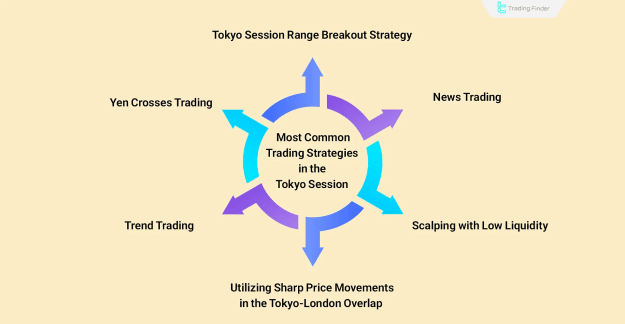
Common Trading Strategies in the Tokyo Session
The unique liquidity and volatility characteristics of the Asian session favor specific strategies:
- Range Breakout (Tokyo Breakout): The market often consolidates within a narrow range during the first few hours. Traders define the high and low of this range to prepare for entries when the price breaks out, often signaling the start of the day’s trend.
- News Trading: Fast and volatile reactions to key releases (BoJ, China PMI, etc.) make this strategy attractive to scalpers using tight stop losses.
- Yen Crosses Trading: Focusing on pairs like AUD/JPY and EUR/JPY, which are highly sensitive to Asian capital flow, can exploit their tendency for faster swings due to lower liquidity compared to major pairs.
- Scalping with Lower Liquidity: Tighter spreads in highly liquid pairs like USD/JPY create favorable conditions for exploiting small ranges and short-term moves.
- Tokyo–London Overlap: This period is used to trade strong moves and valid breakouts fueled by the injection of European liquidity and the release of European economic data.
Risk-Management Notes for Trading in the Tokyo Session
Effective risk management during this session requires an understanding of its distinct, limited volatility structure.
- Adaptive Position Size: Position size should be set based on the relatively lower volatility, often measured using the Average True Range (ATR).
- Smart Stop Loss Placement: Stops should be placed strategically beyond clear liquidity pockets or outside the established Asian range, rather than using fixed numerical values.
- Realistic Take-Profit Targets: Given the typical range-bound nature, traders should target smaller price moves, often 10–25 pips, with a sensible risk-reward ratio (e.g., 1:1.2 to 1:1.5).
- Avoid Overtrading: Due to the lower-volatility conditions, a focus on high-probability setups over volume is crucial.
Comparison of the Tokyo Session with London and New York
Each of the three main forex sessions operates with unique characteristics, which are outlined below for comparison:
- Tokyo Session (00:00 – 09:00 UTC):
- Liquidity: Low to medium.
- Volatility: Limited (Range-bound).
- Dominant Pairs: JPY, AUD, NZD.
- Main Drivers: Japan, China, and Australia economic data.
- Common Trading Styles: Range trading and low-risk strategies.
- Overlaps: With Sydney.
- London Session (07:00 – 16:00 UTC):
- Liquidity: Very high.
- Volatility: Wide (Volatile).
- Dominant Pairs: EUR, GBP, CHF.
- Main Drivers: Europe and UK economic data.
- Common Trading Styles: Scalping and breakouts.
- Overlaps: With Tokyo and New York.
- New York Session (12:00 – 21:00 UTC):
- Liquidity: High.
- Volatility: High, especially during the London overlap.
- Dominant Pairs: USD, CAD.
- Main Drivers: US and Canada economic data.
- Common Trading Styles: News-driven and trend-following.
- Overlaps: With London.
The Impact of Japanese Holidays on the Tokyo Session
When Japanese banks and financial institutions are closed for public holidays, the market dynamic shifts significantly:
- Liquidity Reduction: The closure of major institutions leads to a much shallower market.
- Artificial Volatility: The lack of institutional liquidity means smaller orders can have an outsized impact, creating sporadic, less reliable price swings.
- Greater Reliance on China and Australia: Market focus shifts to macro data and its impact on pairs like AUD/USD, AUD/JPY, and NZD/JPY.
- Setup for the London Session: The session typically trades in an even narrower range, increasing the likelihood of strong moves or false breakouts once European markets open.
Using Tools for Trading The Tokyo Session
Specialized tools are available to help traders effectively navigate the Asian session's unique timing:
- Session Box Indicator (MT4/MT5): This advanced tool visualizes the time ranges of the three main sessions (Asia, London, New York) by drawing color-coded boxes on the chart. Its key feature is marking the High and Low of each session, which is highly valuable for identifying liquidity levels and preparing for potential breakouts, especially during the Tokyo Breakout strategy.
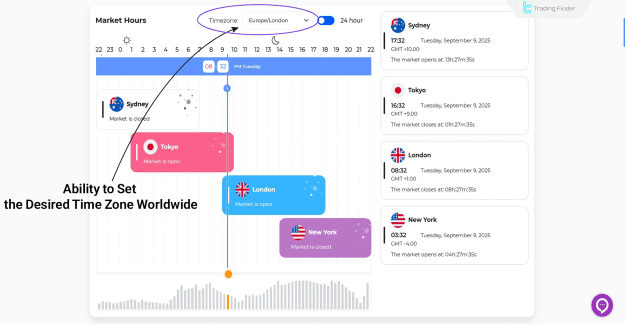
- Forex Market Hours & Trading Sessions Tool: These practical tools display the open/close status of all sessions, provide countdowns, and highlight peak-volume hours adjusted to the user’s local time zone, simplifying global trade management.
Conclusion
The Tokyo session (Asia) provides a foundation for the entire forex trading day with its characteristic stable liquidity, controlled volatility, and emphasis on technical behavior. Its limited range is ideally suited for focused strategies like scalping, algorithmic trading, and disciplined day strategies. Success in this session depends on a precise understanding of its timing, the most active currency pairs (JPY, AUD, NZD), and the direct impact of Asia-region economic news.