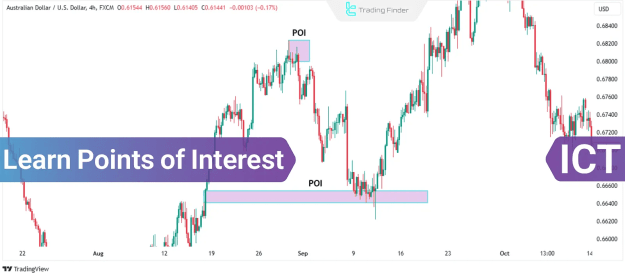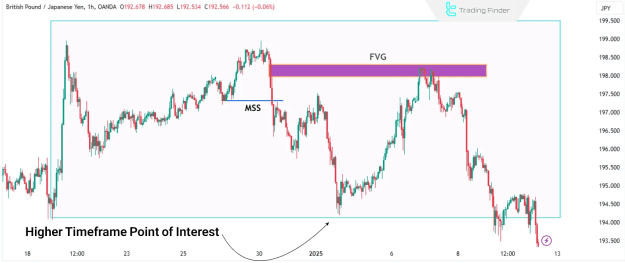


POIs function differently across timeframes:
- Higher Timeframes (HTF): Used for trend analysis and identifying key reversal/continuation zones.
- Lower Timeframes (LTF): Applied for precise trade entries and risk management.
Price tends to gravitate toward significant POIs, making them essential for forecasting market movements.
Prop Firm DrawDown Protector : Prop Firm Capital Protection Expert MT5 |Forex Money Management: Forex Trade Management Expert MT5 | ICT Concepts Indicator MT5 |Smart Money Concepts Expert MT5 | Smart Money Trap Scanner | Get a free Expert Advisor license via Telegram and WhatsApp
Advanced POI Trading Techniques
1. Price Movement Toward POIs and Subsequent Reactions
When price approaches a POI, traders observe:
- Absorption or rejection at the level.
- Breakouts or reversals based on liquidity and order flow.
- Confirmation signals (e.g., Fair Value Gaps, order blocks).
Understanding these reactions enhances trade timing and accuracy.
What Is a Point of Interest (POI) in ICT Trading?
A POI is a price level where institutional traders (smart money) are likely to intervene. These include:
- Support & Resistance (historical swing highs/lows).
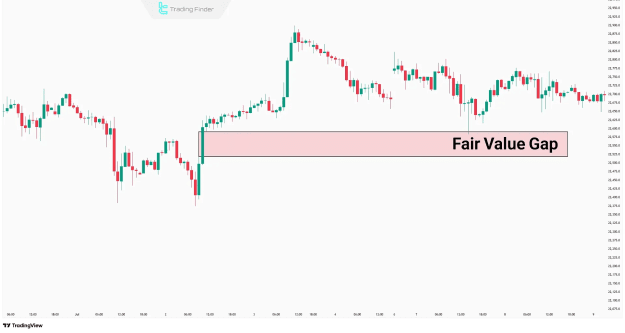
- Fair Value Gaps (FVG) – Imbalance zones where price may retrace.
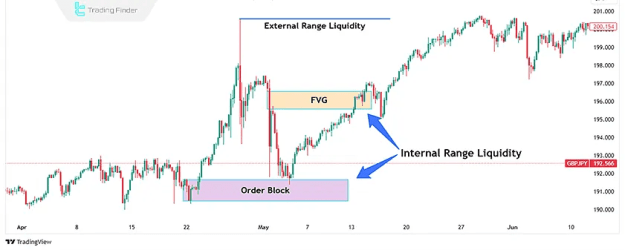
- Order Blocks (OB) – Institutional accumulation/distribution areas.
- Optimal Trade Entry (OTE) – Fibonacci-based entry zones (61.8% - 79%).
- Liquidity Pools – Internal (within range) and external (breakout targets).
Identifying these zones allows traders to align with institutional order flow.
How to Identify POIs in Higher Timeframes
1. Swing Highs & Lows
- Key levels where price reverses or accelerates.
- Broken highs/lows act as magnets for future price action.
2. Fair Value Gaps (FVG)
- Gaps formed by rapid price movements, often retested.
- Serve as entry zones for reversals or continuations.
3. Order Blocks (OB)
- Areas where institutional orders cluster.
- Price often reverses or consolidates near OBs.
4. Optimal Trade Entry (OTE)
- Fib retracement zones (61.8% - 79%) from prior swings.
- Confirms high-probability entries in trend pullbacks.
5. Liquidity Zones
- Internal Range Liquidity: Trapped orders within a range.
- External Range Liquidity: Stops beyond key levels (breakout targets).
Using POIs for Precision Entries in Lower Timeframes
After identifying HTF POIs, traders refine entries using LTF analysis:
1. Evaluating Break of Highs/Lows
- A break and retest of a POI confirms strength/weakness.
- False breaks signal potential reversals.
2. Locating Fair Value Gaps (FVG) in LTFs
- Smaller FVGs act as entry triggers.
- Price often fills these gaps before continuing.
3. Identifying Local Order Blocks
- LTF OBs provide precise entry/exit zones.
- Confirmation via candlestick patterns (e.g., engulfing, pin bars).
4. Market Structure Shifts
- Break of structure (BOS) or change of character (CHOCH) signals trend shifts.
- Validates POI-based reversals/breakouts.
5. Applying Optimal Trade Entry (OTE) in LTFs
- Fib retracement within a trend leg enhances entry accuracy.
- Combines with POIs for high-probability setups.
Conclusion
ICT-style trading relies on multi-timeframe analysis, where:
- HTF POIs define trend direction and key reaction zones.
- LTF POIs refine entries with precision.
By mastering Fair Value Gaps, Order Blocks, Liquidity Zones, and OTEs, traders gain an edge in anticipating institutional order flow and executing high-probability trades.