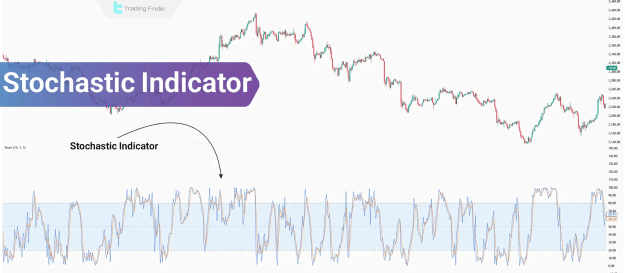


- Overbought Condition: When the indicator rises above 80, it suggests a potential downward reversal.
- Oversold Condition: When it falls below 20, it indicates a possible upward reversal.
Prop Firm DrawDown Protector : Prop Firm Capital Protection Expert MT5 | Forex Money Management: Forex Trade Management Expert MT5 | ICT Concepts Indicator MT5 |Smart Money Concepts Expert MT5 |Get a free Expert Advisor license via Telegram and WhatsApp
Pros and Cons of the Stochastic Indicator
Advantages
- High Sensitivity – Generates frequent trading signals.
- Simple Interpretation – Easy to understand with clear buy/sell triggers.
- Universal Application – Works across all financial markets (stocks, forex, crypto).
- Quick Learning Curve – Beginner-friendly with straightforward mechanics.
Disadvantages
- False Signals – High sensitivity can lead to misleading indications.
- Lagging Component – May delay in signaling rapid price changes.
- Requires Confirmation – Best used alongside other indicators (RSI, MACD, moving averages).
Key Components of the Stochastic Oscillator
The Stochastic Indicator consists of two primary lines:
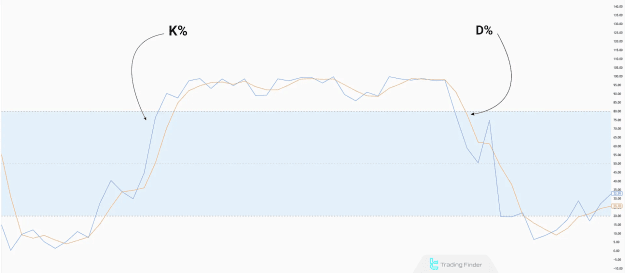
- %K Line (Fast Line) – Measures the current closing price relative to the high-low range.
- %D Line (Slow Line) – A moving average of %K, smoothing out price fluctuations.
How the Stochastic Oscillator Works
- Buy Signal: When %K crosses above %D from below.
- Sell Signal: When %K crosses below %D from above.
The indicator is divided into three zones:
- Above 80 (Overbought Zone) – Potential bearish reversal.
- Below 20 (Oversold Zone) – Potential bullish reversal.
- Between 20-80 (Neutral Zone) – Indicates ranging momentum.
Stochastic Indicator Formula
The default calculation for the Stochastic Oscillator is:
%K=100×((Current Close−Lowest Low14)(Highest High14−Lowest Low14))/((Highest High14−Lowest Low14)(Current Close−Lowest Low14))
Where:
- Current Close = Latest closing price.
- Highest High_{14} = Highest price in the last 14 periods.
- Lowest Low_{14} = Lowest price in the last 14 periods.
Detecting Divergence with the Stochastic Indicator
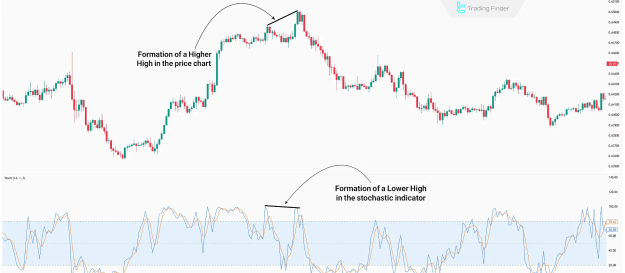
1. Regular Divergence (Trend Reversal Signal)
- Bearish Divergence: Price makes higher highs (HH), but Stochastic shows lower highs (LH).
- Bullish Divergence: Price makes lower lows (LL), but Stochastic shows higher lows (HL).
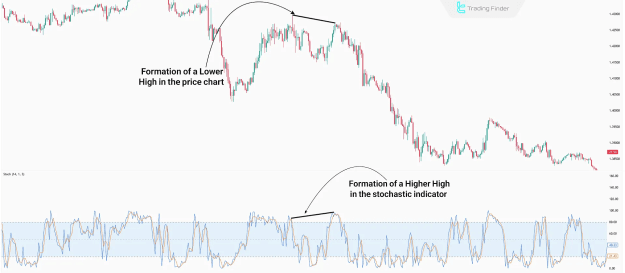
2. Hidden Divergence (Trend Continuation Signal)
- Bullish Hidden Divergence: Price forms higher lows (HL), but Stochastic shows lower lows (LL).
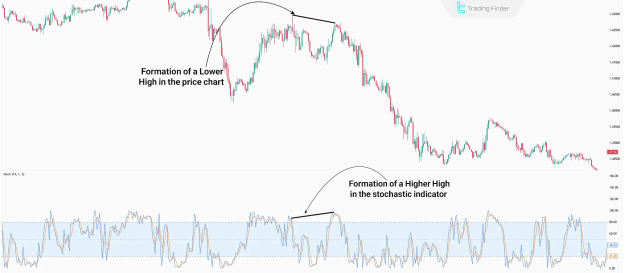
- Bearish Hidden Divergence: Price forms lower highs (LH), but Stochastic shows higher highs (HH).
Trading Strategy: Stochastic + Candlestick Patterns
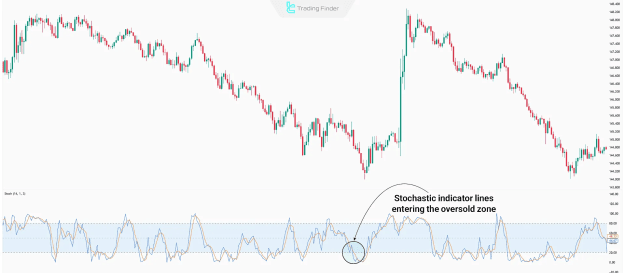
Step 1: Identify Overbought/Oversold Zones
- Buy Setup: Stochastic enters oversold (<20).
- Sell Setup: Stochastic enters overbought (>80).
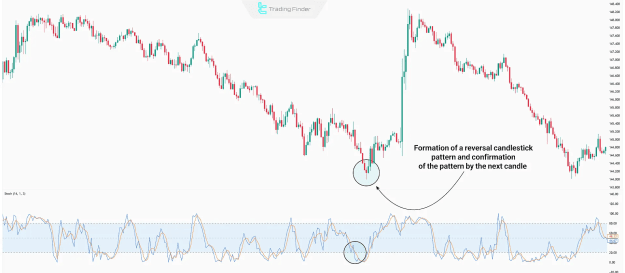
Step 2: Confirm with Candlestick Reversal Patterns
- Hammer, Engulfing, Doji – Must be confirmed by the next candle.
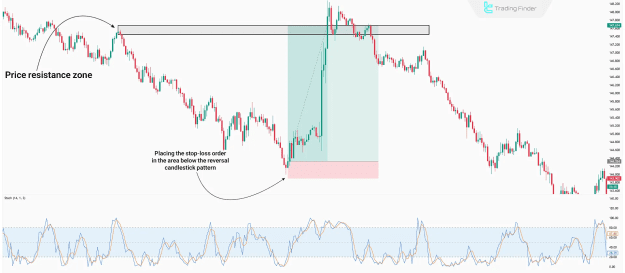
Step 3: Execute Trade with Risk Management
- Stop-Loss: Below the low (for buys) / Above the high (for sells).
- Take-Profit: At nearest support/resistance level.
Enhancing Stochastic Signals with Other Indicators
1. Stochastic + Moving Average (MA)
- Use a 200-period MA for trend confirmation.
- Buy Signal: Stochastic bullish + Price above MA.
- Sell Signal: Stochastic bearish + Price below MA.
2. Stochastic + Relative Strength Index (RSI)
- Double Confirmation: If both Stochastic and RSI show overbought/oversold.
- Divergence Check: Compare divergences on both indicators.
3. Stochastic + MACD
- Stronger Signals: When both Stochastic and MACD show divergence.
- Avoid False Signals: Ignore Stochastic signals not confirmed by MACD.
Final Thoughts
The Stochastic Oscillator is a powerful momentum indicator that helps traders identify overbought/oversold levels and potential trend reversals. However, its effectiveness increases when combined with:
- Candlestick Patterns (e.g., Hammer, Engulfing)
- Technical Indicators (RSI, MACD, Moving Averages)
- Divergence Analysis (Regular & Hidden)
By integrating these tools, traders can filter false signals and improve their trading accuracy in various financial markets.