

Prop Firm DrawDown Protector : Prop Firm Capital Protection Expert MT4 |Forex Money Management: Forex Trade Management Expert MT4 |ICT Concepts Indicator MT4 | Smart Money Concepts Expert MT4| Get a free Expert Advisor license via Telegram and WhatsApp
What Is Swing Trading?
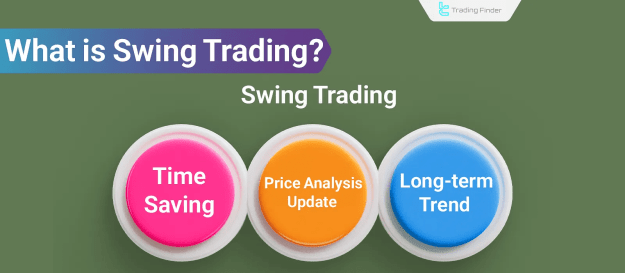
Swing trading is a trading strategy focused on capturing profits from complete price trends. These positions generally last from a few days up to one month, distinguishing them from shorter-term day trades and longer-term investing.
Advantages and Disadvantages of Swing Trading
Swing trading offers distinct benefits and drawbacks. Its focus on significant market trends allows for a less stressful trade management environment, free from the constant pressure of short-term price fluctuations. However, swing positions are inherently exposed to weekend price gaps and overnight holding costs.
Advantages of Swing Trading:
- Reduced Stress Trade Management: Focus on major trends mitigates the impact of minor intraday volatility.
- Time-Efficient: Does not demand constant, real-time market monitoring.
- Higher Risk-to-Reward Potential: Aims to capture larger price movements compared to very short-term strategies.
- Blends Technical and Fundamental Analysis: Integrates both analytical approaches for comprehensive trade decisions.
Disadvantages of Swing Trading:
- Weekend Gap Risk: Vulnerability to significant price changes between Friday close and Monday open.
- Requires Fundamental Knowledge: Success often depends on understanding the underlying asset's fundamentals.
- Overnight Holding Fees: Potential costs associated with holding positions overnight or over weekends.
- Vulnerability to Sudden News Releases: Unexpected news can swiftly invalidate pre-existing analyses.
Swing Trading Strategies
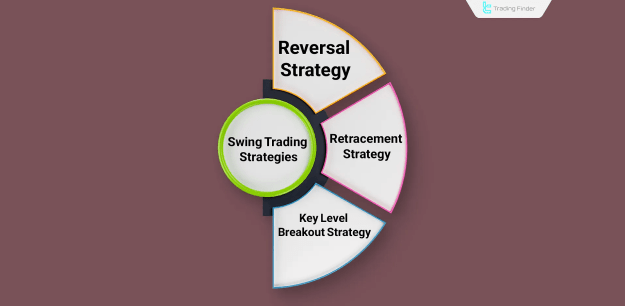
Swing trading strategies can be implemented through various approaches, including price reversals and retracements. Regardless of the chosen strategy, fundamental analysis of the underlying asset is crucial for effective execution.
Reversal Strategy:
This strategy involves evaluating price momentum. When a shift in momentum is identified, traders seek additional confirmations to pinpoint a potential trend reversal. For instance, in an uptrend, diminishing bullish momentum combined with the price reaching a key reversal zone may signal a bearish reversal, with classic chart patterns providing further validation for a short entry.
Retracement Strategy:
A retracement signifies a temporary movement against the prevailing trend. In this strategy, traders anticipate the price pulling back to previously breached levels. Swing trading can also involve taking positions against the primary trend to profit from these temporary retracements. It is vital to differentiate between a retracement and a complete trend reversal, which requires a deep understanding of price behavior and fundamental insights into the traded asset.
Breakout of Key Levels Strategy:
This strategy centers on identifying significant price zones on higher timeframes, such as support and resistance levels or order blocks. Price reactions to these critical zones serve as triggers for trade entries and exits. For example, in a downtrend, a decisive break below a strong support level, followed by continuation patterns, confirms a bearish continuation and justifies a short entry.
Key Considerations in Swing Trading
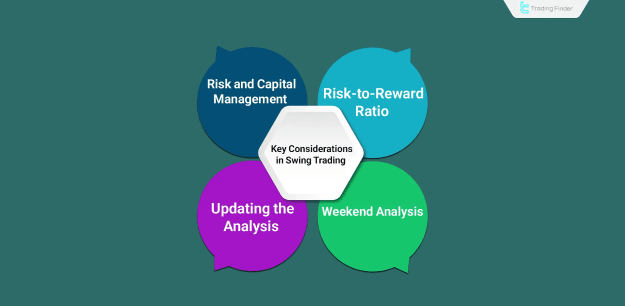
Due to the prolonged holding periods inherent in swing trades, adhering to the initial analysis and meticulously documenting trade entry rationales are essential for effective long-term trade management.
Essential Notes in Swing Trading:
- Risk-to-Reward Ratio: Given the lower frequency of trades, a favorable risk-to-reward ratio is critical to maintain account profitability.
- Risk and Capital Management: The extended duration of swing trades increases the likelihood of initial analyses becoming invalid, making robust risk and money management indispensable.
- Updating the Analysis: Traders must regularly review and adjust their initial trade analysis at the end of each trading day, incorporating the latest price action and market conditions.
- Weekend Analysis: Before the trading week concludes, traders are advised to assess market conditions to decide whether to maintain positions over the weekend or close them to avoid potential weekend gap risks.
Steps to Execute a Swing Trading Strategy
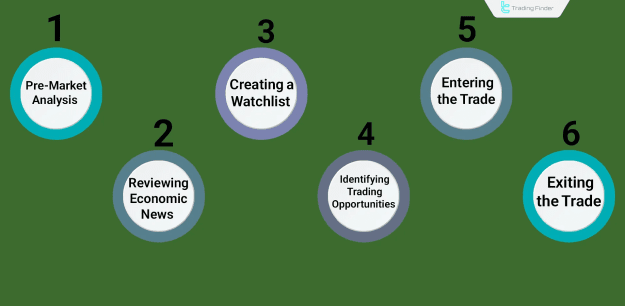
Executing a swing trading strategy involves a structured series of steps, from initial market analysis to trade execution and exit.
#1 Pre-Market Analysis:
Price fluctuations typically intensify during the London and New York trading sessions. Therefore, reviewing charts before the London session begins assists traders in forming an initial market outlook, aiding in the identification of potential swing trade setups.
#2 Reviewing Economic News:
This step involves examining the latest economic data and impactful news related to selected assets from credible sources. This assessment helps gauge overall market sentiment before proceeding with technical analysis.
#3 Creating a Watchlist:
Based on the preliminary analysis and economic news review, a concise watchlist of selected assets is formulated. These assets' price action and volatility are then closely monitored throughout the trading day.
#4 Identifying Trading Opportunities:
With the watchlist prepared, traders define precise entry criteria for their trades, outlining the rules based on their chosen swing trading strategy. The trader then patiently waits for these criteria to manifest on the chart.
#5 Entering the Trade:
Upon the presence of sufficient entry signals, final considerations such as the risk-to-reward ratio, take-profit (TP), and stop-loss (SL) zones are evaluated. If the risk-to-reward is favorable, the trade is entered, with strict adherence to sound money management principles and appropriate TP and SL order placements.
#6 Exiting the Trade:
There are two primary methods for exiting a swing trade:
- Manual Exit: The trader actively evaluates the market and updates their analysis. If circumstances warrant, the trade may be manually closed before the predetermined TP or SL orders are triggered.
- Exit via TP or SL Orders: This occurs when the price experiences a strong movement, either in alignment with or against the initial analysis, resulting in the automatic activation of either the take-profit or stop-loss order.
Comparison Between Swing Trading and Day Trading
Swing trading and day trading differ significantly across several dimensions, including trade duration, target volatility, and required expertise. The choice between these styles depends on an individual's circumstances and trading personality.
Technical Analysis Tools Suitable for Swing Trading
Various technical analysis tools, including indicators and price action concepts, can significantly enhance the success rate of swing trades. A foundational understanding of these commonly used tools is essential for aspiring swing traders.
Indicators for Swing Trading:
Utilizing technical indicators like MACD (Moving Average Convergence Divergence), RSI (Relative Strength Index), and ATR (Average True Range) provides traders with clearer insights into price momentum, facilitating more effective analysis.
Common Indicators for Swing Trading:
- MACD (Moving Average Convergence Divergence)
- RSI (Relative Strength Index)
- ATR (Average True Range)
- Ichimoku
- Fibonacci
Price Action Concepts for Swing Trading:
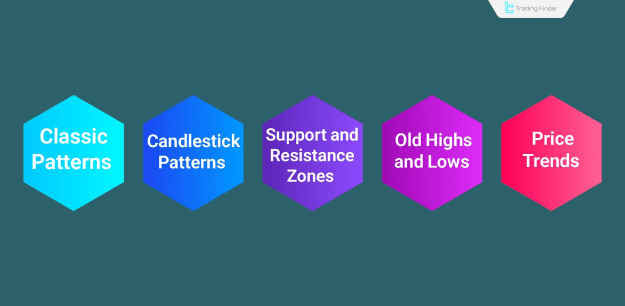
In swing trading, price action methods such as classic chart patterns, candlestick formations, support and resistance zones, and trends are employed to confirm price analysis and validate entry signals.
Key Price Action Concepts:
- Classic Patterns
- Candlestick Patterns
- Support and Resistance
- Old Highs and Lows
- Trends
Conclusion
Swing trading is a distinct trading style where traders aim to capture profits from entire price trends, with trades typically lasting from over two days up to a month. Price behavior in swing trading is analyzed through a blend of technical and fundamental analysis, frequently utilizing higher timeframes (above one hour). Consequently, continuous analysis updates, news monitoring, and economic data review throughout the trade duration are vital for this strategy.