



Traditional financial systems, reliant on central authorities for transaction verification, face inherent limitations including geographical and time-based restrictions. Bitcoin revolutionized finance , emerging as a groundbreaking innovation that directly addressed these long-standing issues within the digital financial landscape.
Prop Firm DrawDown Protector : Prop Firm Capital Protection Expert MT5 | Forex Money Management: Forex Trade Management Expert MT4 | ICT Concepts Indicator MT5 |Smart Money Concepts Expert MT5 |Get a free Expert Advisor license via Telegram and WhatsApp
Core Problems Bitcoin Solved
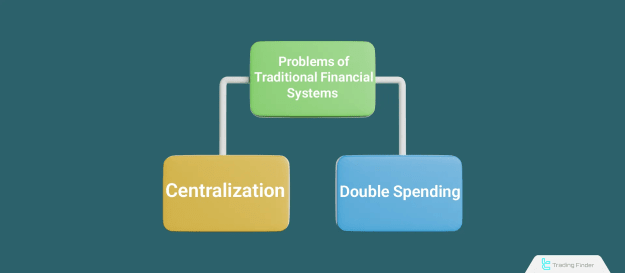
Prior to Bitcoin, digital financial systems grappled with two significant challenges: centralization and double-spending. To mitigate these, individuals were forced to depend on intermediaries like banks to process their transactions, creating bottlenecks and vulnerabilities.
Bitcoin's Answer to Centralization and Double-Spending
The double-spending problem refers to the critical flaw in digital assets where the same unit could theoretically be spent multiple times. For instance, a digital image of a dollar bill could be endlessly copied and reused across various platforms. To counteract this, a central authority, typically a bank, was entrusted to prevent such occurrences. This reliance on a central entity inherently led to centralization.
Bitcoin revolutionized this by introducing the Distributed Ledger Technology (DLT). This innovative approach allows financial transactions to occur directly between peers, eliminating the need for central authority approval. This decentralized process effectively prevents double-spending without requiring trust in a single entity.
How Bitcoin’s Distributed Ledger Works
Bitcoin's Distributed Ledger, powered by blockchain technology , records all transactions in a tamper-proof file. This file is replicated and distributed across thousands of computers globally, making it virtually impossible to alter or manipulate. All versions of this ledger are continuously synchronized, providing all users with the ability to view and verify transaction records with complete transparency.
Additional Problems Addressed by Bitcoin
The presence of a central authority as the sole validator of transactions in traditional finance fostered a range of other issues.
Systemic Issues in Traditional Finance vs. Bitcoin's Solutions:
Prop Firm DrawDown Protector : Prop Firm Capital Protection Expert MT5 | Forex Money Management: Forex Trade Management Expert MT4 | ICT Concepts Indicator MT5 |Smart Money Concepts Expert MT5 |Get a free Expert Advisor license via Telegram and WhatsApp
Core Problems Bitcoin Solved
Prior to Bitcoin, digital financial systems grappled with two significant challenges: centralization and double-spending. To mitigate these, individuals were forced to depend on intermediaries like banks to process their transactions, creating bottlenecks and vulnerabilities.
Bitcoin's Answer to Centralization and Double-Spending
The double-spending problem refers to the critical flaw in digital assets where the same unit could theoretically be spent multiple times. For instance, a digital image of a dollar bill could be endlessly copied and reused across various platforms. To counteract this, a central authority, typically a bank, was entrusted to prevent such occurrences. This reliance on a central entity inherently led to centralization.
Bitcoin revolutionized this by introducing the Distributed Ledger Technology (DLT). This innovative approach allows financial transactions to occur directly between peers, eliminating the need for central authority approval. This decentralized process effectively prevents double-spending without requiring trust in a single entity.
How Bitcoin’s Distributed Ledger Works
Bitcoin's Distributed Ledger, powered by blockchain technology , records all transactions in a tamper-proof file. This file is replicated and distributed across thousands of computers globally, making it virtually impossible to alter or manipulate. All versions of this ledger are continuously synchronized, providing all users with the ability to view and verify transaction records with complete transparency.
Additional Problems Addressed by Bitcoin
The presence of a central authority as the sole validator of transactions in traditional finance fostered a range of other issues.
Systemic Issues in Traditional Finance vs. Bitcoin's Solutions:
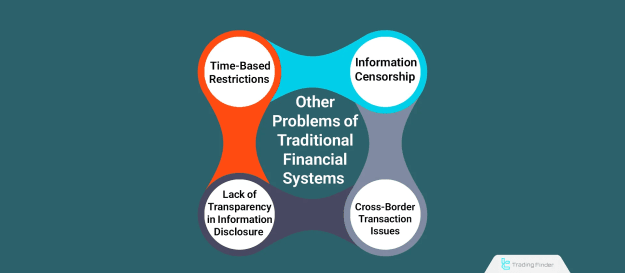
- Censorship and Manipulation of Information: Traditional systems are susceptible to censorship due to centralized data storage. Bitcoin's data, distributed across thousands of computers worldwide, is immune to censorship.
- Time-Based Limitations in Accessing Financial Services: Traditional banking operates within restricted hours. Bitcoin services offer 24/7 accessibility without any downtime.
- High Costs and Legal Hurdles for Cross-Border Transactions: International transfers in traditional finance are often costly and complex. Bitcoin's system operates without geographical borders, simplifying cross-border transactions.
- Lack of Transparency in Financial Transactions: Traditional financial transactions often lack clear oversight. Bitcoin ensures full transparency with open access to review the history of all transactions.
Conclusion
Governments, especially during economic downturns, may resort to printing more money to stimulate the economy. This often leads to inflation, where the value of money declines, purchasing power is reduced, and the supply-demand balance is disrupted.
In stark contrast to fiat currencies, which can be infinitely issued, Bitcoin has a fixed supply cap of 21 million units. No authority, organization, or individual can increase this limit. This inherent scarcity positions Bitcoin as a deflationary asset, preserving its value over time.
Attached Image(s) (click to enlarge)

Attached File(s)
