

Prop Firm DrawDown Protector : Prop Firm Capital Protection Expert MT4 |Forex Money Management: Forex Trade Management Expert MT4 |ICT Concepts Indicator MT4 | Smart Money Concepts Expert MT4| Get a free Expert Advisor license via Telegram and WhatsApp
What Is a Social Trading Platform?
Social trading platforms function as specialized social networks meticulously designed for the dissemination and replication of trading strategies. These sophisticated platforms offer a comprehensive suite of tools that enable users to meticulously review trader performance, assess strategy success rates, evaluate trading plans, and gain deeper insights into market dynamics. High-performing traders on these platforms are compensated for making their strategies accessible to the broader community, creating a symbiotic ecosystem.
Pros and Cons of Social Trading
While leveraging the extensive experience and specialized expertise of a diverse range of traders can significantly amplify individual performance, an over-reliance without dedicated personal development may foster dependency. Here's a concise overview of the advantages and disadvantages:
Pros
- Access to Professional Expertise: Gain direct access to the skills and insights of accomplished traders.
- Performance Validation: The ability to scrutinize historical trading data and validate the credibility of potential signal providers.
- Time Efficiency: Significantly reduces the time commitment required for individual market analysis.
- Networking Opportunities: Facilitates the creation of valuable connections within the global financial markets.
- Strategy Refinement: Enables the enhancement of personal trading strategies through the integration of external analyses.
Cons
- Risk of Dependency: Potential for developing an over-reliance on external signals, hindering personal growth.
- Qualification Concerns: Signal providers may not always possess formal professional qualifications.
- Lack of Transparent Risk Management: Potential for insufficient or unclear risk management practices from signal providers.
- Non-Individualized Risk Tolerance: Risk parameters may not be fully aligned with individual risk appetites.
- Execution Latency: Potential for delays in trade execution, impacting real-time performance.
How to Choose a Social Trading Platform?
Social trading platforms typically levy fees for their services, which include facilitating the sharing of trading strategies. The selection of an optimal platform necessitates a thorough evaluation of several critical factors.
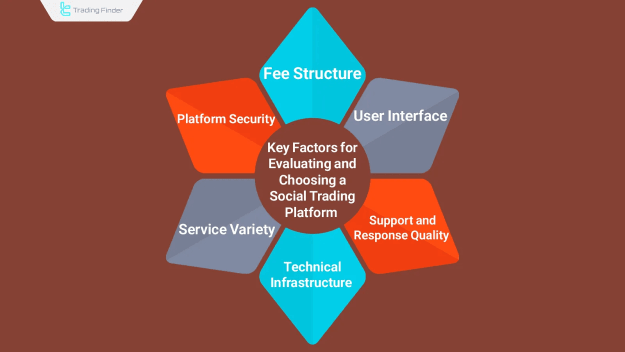
Criteria for Choosing a Social Trading Platform
A meticulous review of a social trading platform's technical infrastructure is paramount for making an informed decision. Key factors to consider include:
- Commission Fees: A comprehensive comparison of activity-related costs across various platforms.
- Platform Security: An assessment of the platform's reputation and user feedback to ascertain its reliability and data integrity.
- Service Variety: An examination of the diverse range of social trading services offered, such as copy trading or mirror trading.
- Technical Infrastructure: An evaluation of the platform's performance capabilities during periods of peak activity and high trading volume.
- Support: An assessment of the responsiveness and availability of customer support, particularly during urgent scenarios.
- User Interface: A review of the platform's ease of navigation and overall user-friendliness.
Popular Social Trading Methods
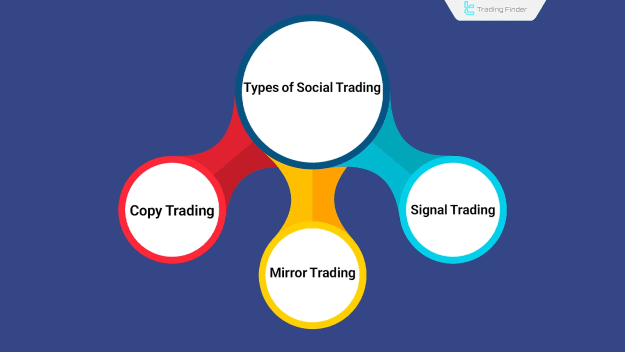
Social trading encompasses a variety of distinct methodologies, each possessing unique characteristics. Prominent methods include copy trading, mirror trading, and signal trading.
Copy Trading
In copy trading, the entire trading plan of a designated signal provider is automatically replicated and executed within the investor's linked trading account. Every action initiated by the signal provider is mirrored precisely in the investor's account without any modifications.
Mirror Trading
Mirror trading involves the selection and replication of a specific trading strategy. Here, the investor pre-defines their acceptable loss tolerance and anticipated return. Subsequently, when a trading opportunity arises that precisely aligns with the chosen strategy, the system automatically opens a corresponding position in the investor's account.
Signal Trading
With signal trading, traders meticulously review and analyze the insights and analyses shared by others. However, these actions are not automatically duplicated. Instead, the individual trader manually places trades based on a synthesis of both external analyses and their own personal market insights.
Getting Started with Social Trading
To embark on a social trading journey, a foundational understanding of basic financial market concepts and the social trading model is essential. Furthermore, a firm grasp of risk and capital management principles is crucial. The sequential steps to initiate social trading are:
- Acquire Fundamental Knowledge: Learn the core concepts of financial trading.
- Platform Selection: Research and choose a suitable social trading platform that aligns with your needs.
- Terms and Conditions Review: Thoroughly read and comprehend the platform's terms and conditions.
- Account Opening: Establish and open a trading account on the chosen platform.
- Trader Evaluation: Scrutinize trader histories and select signal providers based on their documented performance.
- Account Connection and Monitoring: Link your account and continuously monitor trading activities.
Top Social Trading Platforms
Numerous platforms provide social trading services, each distinguished by its unique fee structure and service offerings.
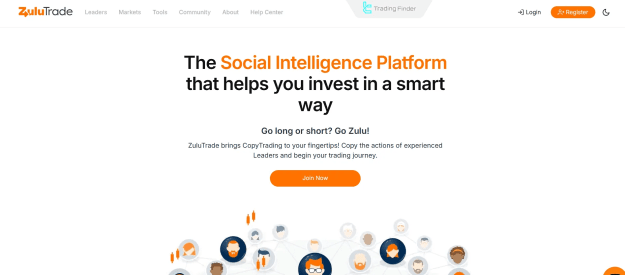
- ZuluTrade: Hosts over 10,000 signal providers with transparent trading histories. Offers demo accounts for performance testing. Supports trading in Forex, cryptocurrencies, and stocks with a minimum deposit of $100.
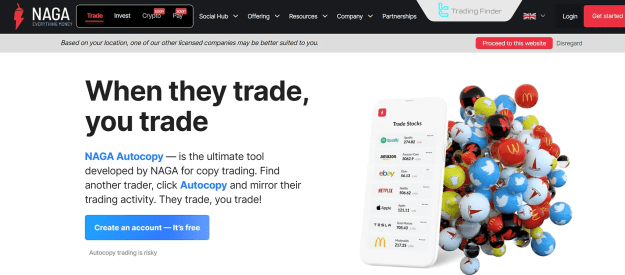
- NAGA: Structured as a social network, enabling users to share analyses and trades. Features an "Auto-Trade" function for automatic replication of analytical posts.
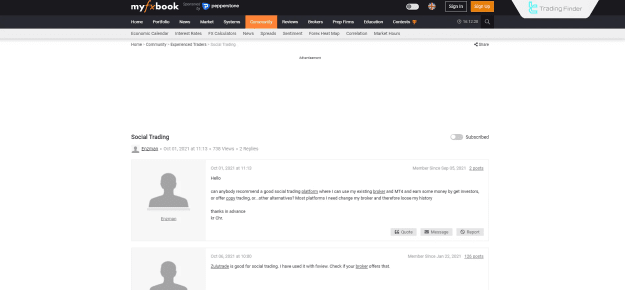
- Myfxbook: A comprehensive financial market platform with robust social trading features, offering real-time updates for charts and price indicators.
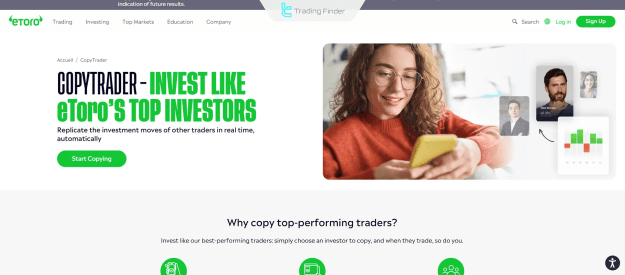
- eToro: Regulated by prominent authorities such as ASIC, FCA, and CySEC, bolstering platform security. Provides detailed performance metrics for traders, including returns, risk levels, and strategies. Minimum investment of $200.
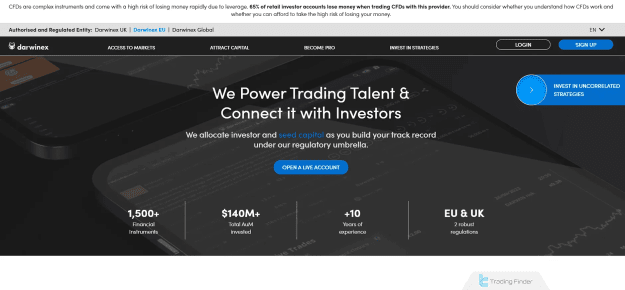
- Darwinex: Established in 2014, offers a range of social trading services. Allows detailed risk metric viewing for traders and supports trading bots. Mobile applications are available for both Android and iOS.
- AvaTrade: Features a user-friendly interface suitable for all trader experience levels. Collaborates with ZuluTrade for social trading services. Boasts a strong history since 2006, offering trading in over 200 instruments.
- TradingView: Primarily recognized for chart analysis, it includes a section for viewing other traders' analyses, aiding in signal identification. Traders are ranked by performance history for long-term assessment.
What Are the Key Considerations in Social Trading?
While social trading methods offer benefits like time savings and access to expert insights, neglecting crucial factors such as a trader's history or the platform's infrastructure can escalate the risk of losses. Essential considerations include:
- Signal Provider Vetting: Meticulously review the trading journal and historical performance of the signal provider.
- Platform Reliability: Assess the quality and reliability of the platform's underlying technical infrastructure.
- Continuous Monitoring: Maintain constant oversight of all linked trades.
- Risk and Capital Management: Implement proper risk and capital management principles across all trading activities.
- Core Market Knowledge: Acquire fundamental trading knowledge pertinent to your target market.
- Defined Trading Plan: Develop a clear and adaptable trading plan for various market conditions.
Difference Between Social Trading and Copy Trading
Social trading broadly refers to group-based trading and the utilization of collective insights to optimize personal strategies. In social trading, users retain the ability to modify and personalize the strategies derived from others. Conversely, copy trading, which is a specialized subset of social trading, involves the complete duplication of all actions of the designated signal provider into the linked trading account without any alterations.
Copy trading is often considered a passive investment approach. However, an excessive reliance on this method can potentially diminish a trader's confidence and foster dependency. In contrast, this issue is less pronounced in general social trading, as the trader remains actively involved in decision-making processes.
Conclusion
Social trading empowers traders to integrate the insights and analyses of others into their individual trading frameworks. Across various platforms, traders actively share their perspectives on price movements, thereby contributing to an overall improvement in collective market performance.
Social trading provides exposure to a diverse array of strategies and trading styles, simultaneously fostering valuable networking opportunities within the financial markets. Nevertheless, a prolonged reliance on this approach without the simultaneous development of personal strategies or skills can lead to a detrimental dependency on external sources for trade execution.
Given the extensive range of platforms offering social trading services, a judicious selection process hinges on a meticulous review of critical factors such as commission fees, platform security, and technical performance.