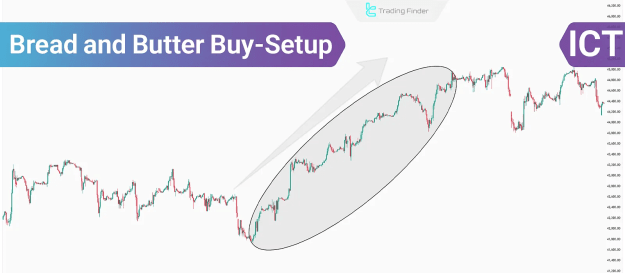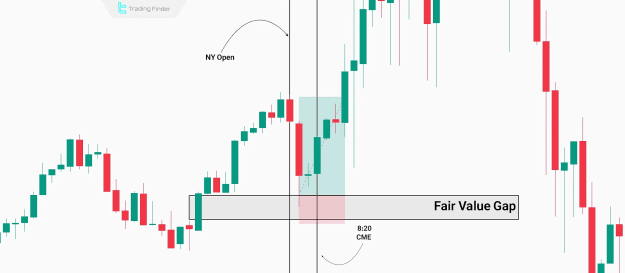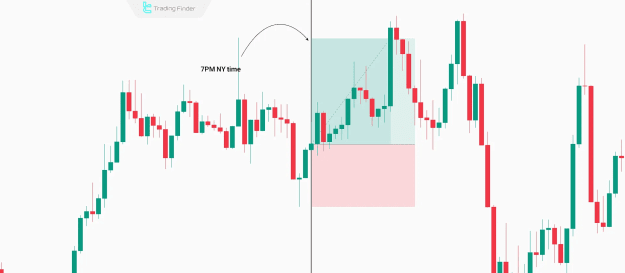


The setup capitalizes on liquidity grabs below the day’s low, aligning with the bullish trend to maximize trading efficiency.
TP & SL Tool: Risk Reward Ratio Calculator RRR MT5 | Prop Firm Protector: Trade Assist Prop Firm Plus TF Expert MT5 | Money Management + DrawDown Protector: Trade Panel Prop Firm Drawdawn Limiter Pro MT5 |Get a free Expert Advisor license via Telegram and WhatsApp
Understanding the Bread and Butter Buy Trading Setup
In a bullish HTF market structure, price often opens near the daily low, creating an opportunity for a liquidity sweep. The ICT Bread and Butter Buy-Setup
identifies optimal entries by analyzing:
- Liquidity behavior (stop hunts below key levels)
- Judas Swing formations (false breaks inducing retail traps)
- Fair Value Gaps (FVGs) for re-accumulation
This strategy is ideal for traders seeking short-term trades (1-2 hours) with a target of 30-50 pips per setup.
Pros and Cons of the ICT Bread and Butter Strategy
Advantages
 Multiple signals per day across major trading sessions (London, New York, Asia).
Aligns with the daily trend, increasing win probability.
Uses multi-timeframe analysis for precise entries.
Challenges
 Requires deep liquidity understanding (experience is crucial).
Lower risk-to-reward ratio due to short-term nature.
Dependent on session-specific price behavior.
IPDA Delivery Algorithm in the Buy-Setup
The Interbank Price Delivery Algorithm (IPDA) operates in two modes for bullish setups:
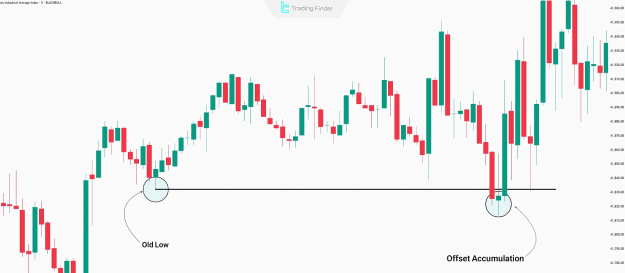
1. Offset Accumulation
- Price pushes below support, triggering buy stop-losses.
- New buyers enter at discounted prices, fueling upward momentum.
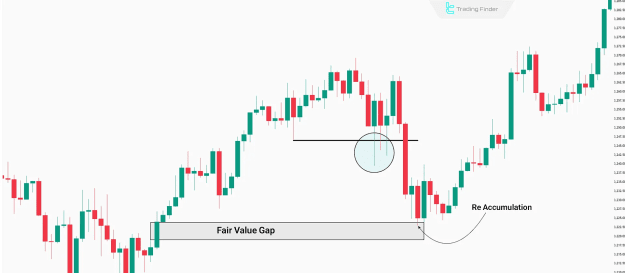
2. Re-Accumulation
- Price retraces into high-liquidity zones (e.g., FVGs).
- Induces fear among late buyers, allowing smart money to re-enter.
Entry Signals in the ICT Bread and Butter Buy-Setup
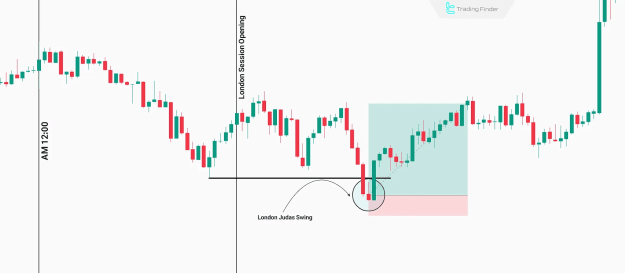
London Session Entry
- LOW of the Day (LOD) often forms during London hours.
- A Judas Swing below the previous low signals a buy opportunity.
- Target: Premium Array (next resistance zone).
New York Session Entry
- After London confirms bullish bias, NY traders extend the trend.
- Look for discount zones and a NY Judas Swing for entry.
- CME opening (8:20 AM NY time) increases volatility.
Asia Session Entry
- If bullish momentum holds, enter near 7:00 PM NY time.
- Low liquidity means smaller targets (15-20 pips).
Key Features of the ICT Bread and Butter Buy-Setup
- Timeframe: M5 chart for execution (HTF confirmation on H1/H4).
- Trade Duration: 1-2 hours per setup.
- Risk Management: 0.5%-1% capital risk per trade.
- Daily Trades: 1-3 high-probability setups.
Conclusion
The ICT Bread and Butter Buy-Setup is a powerful day trading strategy for bullish markets. By combining HTF bias confirmation, liquidity analysis, and Judas Swing patterns, traders can identify high-quality entries.
For best results:
Confirm bullish HTF structure (H1/H4).
Watch for liquidity sweeps and FVGs.
Execute during optimal session hours.