



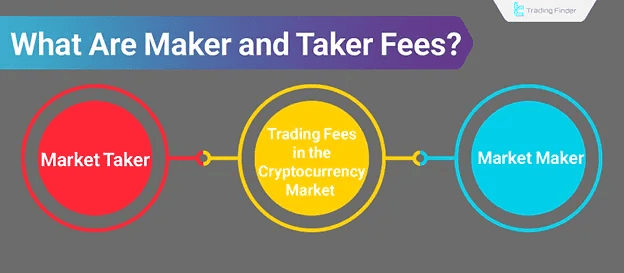
When engaging in the buying and selling of cryptocurrencies on a trading platform, users invariably encounter transaction fees. Forex Education often highlights similar fee structures in traditional financial markets. These crypto exchange trading fees are typically categorized into two primary types: Maker Fees and Taker Fees. Generally, the Maker Fee is lower than the Taker Fee.
TP & SL Tool: Risk Reward Ratio Calculator RRR MT4 | Prop Firm Protector: Trade Assist Prop Firm Plus TF Expert MT4 | Money Management + DrawDown Protector: Trade Panel Prop Firm Drawdawn Limiter Pro MT4 |Get a free Expert Advisor license via Telegram and WhatsApp
What Are Maker and Taker Fees in Crypto Exchange Orders?
What Is a Maker Fee?
A Maker Fee is levied on a trader who contributes liquidity to the market. This occurs when a user places a limit order that is not executed immediately. Instead, this order remains in the order book until it is subsequently filled by another party.
In essence, a Maker Fee is applied when a posted order does not instantly match with an existing, opposing order. Consequently, Maker orders typically do not execute immediately on exchanges. Many crypto exchanges strategically offer lower Maker Fees than Taker Fees to attract more users, thereby incentivizing the provision of liquidity to the market.
What Is a Taker Fee?
A Taker Fee is imposed on users who consume liquidity by immediately filling existing orders from the order book. Simply put, when you place an order that is instantly matched and executed against another order already present in the market, you are acting as a Taker and are therefore subject to the Taker Fee.
Difference Between Maker and Taker Orders
Both market makers and market takers play crucial roles in fostering an active and liquid trading environment. However, it's important to note that Maker and Taker Fees can vary significantly across different platforms.
TP & SL Tool: Risk Reward Ratio Calculator RRR MT4 | Prop Firm Protector: Trade Assist Prop Firm Plus TF Expert MT4 | Money Management + DrawDown Protector: Trade Panel Prop Firm Drawdawn Limiter Pro MT4 |Get a free Expert Advisor license via Telegram and WhatsApp
What Are Maker and Taker Fees in Crypto Exchange Orders?
What Is a Maker Fee?
A Maker Fee is levied on a trader who contributes liquidity to the market. This occurs when a user places a limit order that is not executed immediately. Instead, this order remains in the order book until it is subsequently filled by another party.
In essence, a Maker Fee is applied when a posted order does not instantly match with an existing, opposing order. Consequently, Maker orders typically do not execute immediately on exchanges. Many crypto exchanges strategically offer lower Maker Fees than Taker Fees to attract more users, thereby incentivizing the provision of liquidity to the market.
What Is a Taker Fee?
A Taker Fee is imposed on users who consume liquidity by immediately filling existing orders from the order book. Simply put, when you place an order that is instantly matched and executed against another order already present in the market, you are acting as a Taker and are therefore subject to the Taker Fee.
Difference Between Maker and Taker Orders
Both market makers and market takers play crucial roles in fostering an active and liquid trading environment. However, it's important to note that Maker and Taker Fees can vary significantly across different platforms.
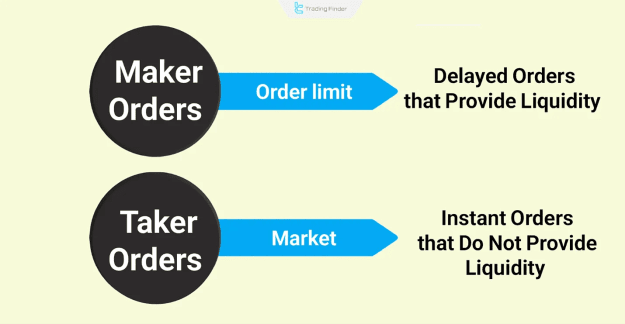
- Maker orders are typically limit orders that require time to be filled, actively adding to market liquidity.
- Taker orders are generally market orders that execute instantly, effectively removing liquidity from the market.
Who Are Market Makers and Market Takers?
In the context of crypto trading:
- Makers place limit orders that do not fill instantly, thereby contributing to market liquidity.
- Takers execute market orders that fill immediately, consequently removing liquidity from the market.
Conclusion
Transaction fees on cryptocurrency exchanges are charged based on the specific type of order placed.
- If a user submits a pending order that does not execute immediately and is subsequently added to the Order Book, a Maker Fee is applied. This is because such orders inherently help to add liquidity to the market.
- Conversely, if an order is matched and executed instantly against existing orders, the user is considered a Taker and must pay the Taker Fee, as this type of order removes liquidity from the market.
While Maker and Taker Fees vary across different exchanges, Taker Fees are typically higher than Maker Fees due to the immediate consumption of liquidity.
Attached Image(s) (click to enlarge)
Attached File(s)
