

TP & SL Tool: Risk Reward Ratio Calculator RRR MT4 | Prop Firm Protector: Trade Assist Prop Firm Plus TF Expert MT4 | Money Management + DrawDown Protector: Trade Panel Prop Firm Drawdawn Limiter Pro MT4 |Get a free Expert Advisor license via Telegram and WhatsApp
Understanding Demo Accounts
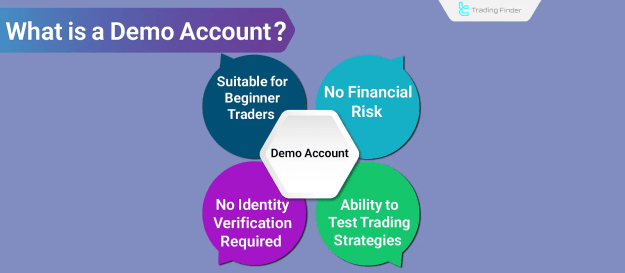
A demo account, also referred to as a practice or trial account, is a simulated trading environment offered by brokers. It enables users to evaluate their trading strategies and familiarize themselves with a platform's functionalities.
- All market conditions are accurately replicated within a demo trading account, with trades executed using virtual capital, eliminating the need for real funds.
- Demo accounts are directly linked to live trading platforms, fully replicating all features of a real account to create a highly realistic simulation.
Pros and Cons of Demo Accounts
While demo accounts are invaluable for skill development and strategy testing, their extended use can present certain drawbacks due to the absence of real capital.
Advantages of Using a Demo Account
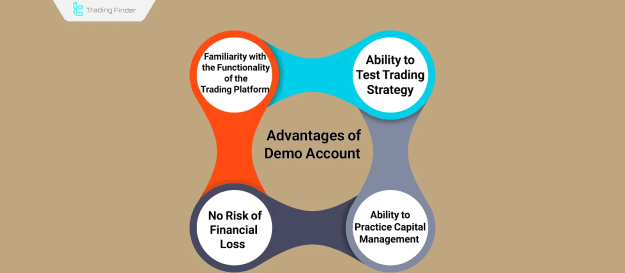
Beyond strategy practice, demo accounts significantly aid traders in becoming proficient with the trading platform and its features. Key benefits include:
- Platform Familiarization: Users gain a comprehensive understanding of how the trading platform operates.
- Strategy Testing: Provides a safe space to test and refine trading strategies without financial risk.
Disadvantages of Using a Demo Account
Prolonged reliance on a demo account can hinder a trader's transition to a real account and may impact self-confidence.
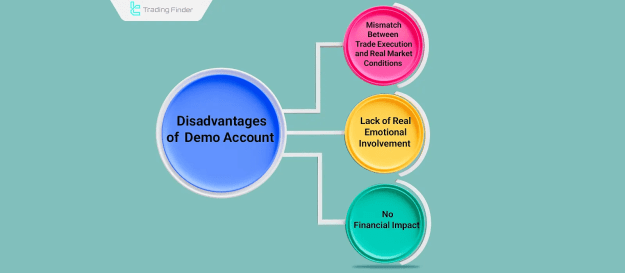
- Emotional Detachment: The absence of real money leads to a lack of emotional pressure, which can impede the development of crucial emotional management skills essential for real trades.
- Lack of Real Market Execution: Unlike real trading, demo accounts often feature instant order fills and no transaction costs.
- No Financial Impact: The absence of actual losses limits a trader's development in financial risk assessment and sound money management.
- Limited Reflection of Real-World Conditions: Demo account trades may not fully mirror the complexities of real-world trading, such as slippage and varying spreads.
The Importance of Demo Account Trading
Relying solely on backtesting can be unreliable due to its inability to simulate real-time volatility. Consequently, demo trading offers a more realistic environment for evaluating strategies under conditions analogous to live markets.
- It helps traders become proficient with various tools and features, minimizing confusion when transitioning to a live account.
How to Create a Demo Account
Given that demo accounts do not involve real money, most platforms simplify the account creation process, often without requiring complete identity verification.
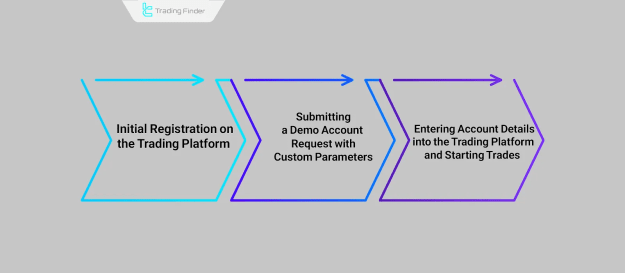
- Choose a Platform: Select a preferred trading platform and register.
- Select Demo Option: Opt for the demo trading feature.
- Enter Details: Provide necessary details such as desired balance and leverage.
- Receive Credentials: Upon receiving account credentials, connect to platforms like MetaTrader 4 or MetaTrader 5 to commence trading.
- Free Access: Demo accounts are generally offered free of charge.
Key Tips for Demo Trading
Due to the absence of financial risk, money management is often overlooked in demo trading.
- Traders frequently prioritize entry and exit strategies, neglecting critical risk management factors such as position sizing and stop-loss orders. To maximize the benefit of a demo account, it's crucial to practice these aspects as if real capital were involved.
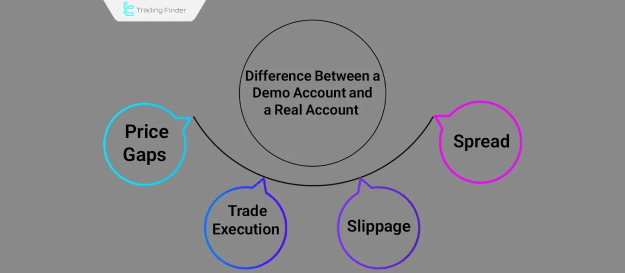
Differences Between Demo and Real Accounts
Although demo accounts connect to live market servers and display real price fluctuations, the lack of real liquidity introduces notable differences in critical areas.
- Spread: Often fixed or not accurately calculated in demo environments.
- Slippage: Orders execute precisely at the chosen price in demo accounts due to the absence of liquidity concerns. This contrasts with real accounts where slippage can occur.
- Execution Speed: Trades in demo accounts are typically instant, whereas real account execution may involve delays.
- Price Gaps: Price gaps, which can prevent order execution in real accounts, generally do not impact trades in a demo environment.
- No Price Slippage: The absence of real liquidity in demo accounts means price slippage is not a factor.
Are Demo Accounts Available in Crypto Markets?
While more prevalent among Forex brokers, an increasing number of cryptocurrency exchanges now offer virtual trading environments.
- These demo setups usually require only an email for access and do not necessitate identity verification.
- Leading exchanges offering demo trading include: Binance, KuCoin, Kraken, Whitebit, and Coinbase.
Conclusion
A demo account is an indispensable simulated trading environment for practicing strategies without risking real capital. However, success achieved in a demo trading setup does not guarantee equivalent profitability in a live account. While demo accounts are excellent for testing strategies and mastering platform functionalities, the lack of real financial implications can hinder the development of crucial emotional discipline and risk management skills.