

TP & SL Tool: Risk Reward Ratio Calculator RRR MT5 | Prop Firm Protector: Trade Assist Prop Firm Plus TF Expert MT5 | Money Management + DrawDown Protector: Trade Panel Prop Firm Drawdawn Limiter Pro MT5 |Get a free Expert Advisor license via Telegram and WhatsApp
Is Copy Trading Legal? A Regulatory Perspective
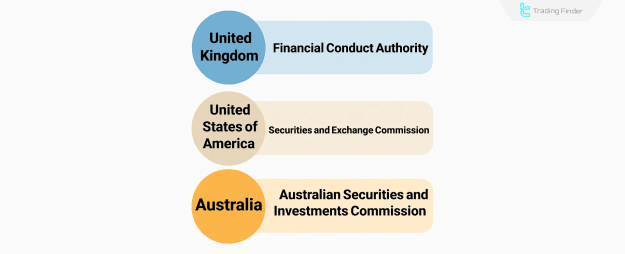
The legality of copy trading is not universally uniform; instead, it is primarily determined by the regulatory status of the platform offering these services. In numerous developed countries, such as the United Kingdom, Australia, and nations within the European Union, copy trading services are permissible when provided by platforms operating under the supervision of esteemed regulatory bodies like the Financial Conduct Authority (FCA), the Australian Securities and Investments Commission (ASIC), or the Cyprus Securities and Exchange Commission (CySEC).
Conversely, offshore platforms may offer these services without explicit regulatory approval. While they might present features akin to those of licensed platforms, users engaging with such entities lack the crucial guarantee of fund security due to the absence of regulatory oversight.
Global Legal Status of Copy Trading: A Varied Landscape
The legal landscape of copy trading exhibits significant variation across different jurisdictions:
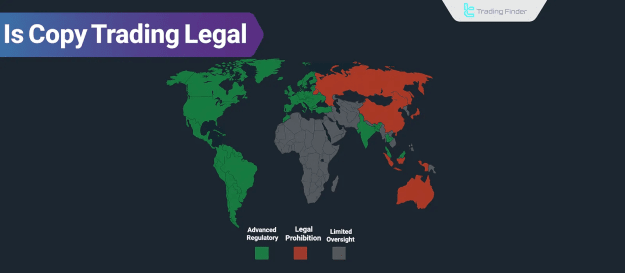
Countries with Advanced Regulatory Frameworks
In countries characterized by robust financial regulation, copy trading is generally permissible, provided that service providers obtain the necessary licenses from official regulatory bodies.
- United States: In the U.S., only firms explicitly licensed by the Securities and Exchange Commission (SEC) or the Commodity Futures Trading Commission (CFTC) are authorized to offer copy trading services.
- European Union: Within the EU, copy trading is legally sanctioned under the Markets in Financial Instruments Directive (MiFID). Brokers are mandated to adhere to comprehensive regulatory obligations, which offer several benefits:
- Full transparency in trader performance reports.
- Mandatory risk disclosures and robust anti-abuse policies.
- Established legal complaint mechanisms for users.
- Strict licensing requirements for service providers.
Countries with Weak or Limited Oversight
In many nations, including the UAE and India, the legal standing of copy trading remains ambiguous due to the absence of clear regulatory frameworks.
- India: For instance, India currently lacks official guidelines or specific licenses for copy trading, compelling users to rely on foreign platforms. This situation introduces inherent risks, such as a lack of domestic support and limited legal recourse in the event of disputes.
Key risks associated with copy trading in such jurisdictions include:
- The absence of clear legal definitions pertaining to copy trading.
- The unhindered operation of unlicensed international platforms.
- A lack of transparent mechanisms for user complaints.
- Limited or no active oversight of cross-border financial activities.
Countries with Legal Prohibition
Certain nations, including Japan, China, and South Korea, have implemented financial laws that explicitly ban or significantly restrict copy trading under specific conditions.
- Japan: In Japan, copy trading platforms are required to possess an official investment advisory license from the Financial Services Agency (FSA). Operating without this license can lead to severe penalties.
Such restrictive regulations pose several challenges:
- Direct or indirect legal prohibitions on copy trading activities.
- The necessity for highly specialized licenses to operate.
- Platform filtering and restrictions on user access.
- Potential legal action against unlicensed individuals or firms.
Dangers of Using Unlicensed Copy Trading Platforms
Engaging with copy trading services offered by unlicensed platforms carries significant risks, including potential Know Your Customer (KYC) data abuse and exposure to fraudulent schemes like Ponzi schemes. The primary concern is the lack of legal protection. Without regulatory oversight, if a platform misuses your data or funds, there is often no legal recourse available to users.
Conclusion
To succinctly answer the question, "Is copy trading legal?", the definitive answer hinges on several critical factors: the user's country of residence, the specific platform chosen, and crucially, whether that platform is officially licensed by relevant financial authorities. Ultimately, copy trading is considered legal when the platforms providing these services are duly regulated by esteemed authorities such as the FCA, SEC, or ASIC.