

TP & SL Tool: Risk Reward Ratio Calculator RRR MT5 | Prop Firm Protector: Trade Assist Prop Firm Plus TF Expert MT5 | Money Management + DrawDown Protector: Trade Panel Prop Firm Drawdawn Limiter Pro MT5 |Get a free Expert Advisor license via Telegram and WhatsApp
Understanding Forex Market Hours and Major Trading Sessions
The Forex market hours are meticulously structured around the four major trading sessions, each contributing to the market's global reach and liquidity.
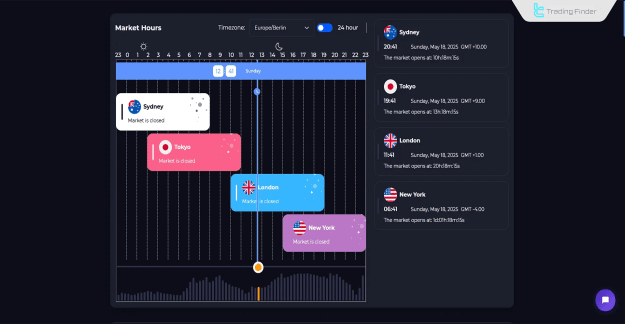
- Sydney Session: This session initiates the Forex trading week, opening at 22:00 UTC and closing at 07:00 UTC. Major financial centers include Australia and New Zealand.
- Tokyo Session: Following Sydney, the Tokyo session runs from 00:00 UTC to 09:00 UTC. Key financial centers are Japan, Singapore, and Hong Kong.
- London Session: The London session operates from 08:00 UTC to 17:00 UTC, encompassing the UK, Germany, and France.
- New York Session: Concluding the daily cycle, the New York session is active from 13:00 UTC to 22:00 UTC, covering the USA and Canada.
Impact of Daylight Saving Time (DST) on Forex Market Hours
Daylight Saving Time (DST) adjustments in regions such as the United States and Europe directly influence Forex market hours. This seasonal shift temporarily alters the opening and closing times of certain trading sessions, requiring traders, particularly those in the Middle East and Asia, to adjust their schedules accordingly.
During Summer Time (DST) UTC, the session timings are:
- Sydney: 21:00 – 06:00
- Tokyo: 23:00 – 08:00
- London: 07:00 – 16:00
- New York: 12:00 – 21:00
In Winter Time (Standard) UTC, the timings revert to:
- Sydney: 22:00 – 07:00
- Tokyo: 00:00 – 09:00
- London: 08:00 – 17:00
- New York: 13:00 – 22:00
Overview of Forex Market Trading Sessions
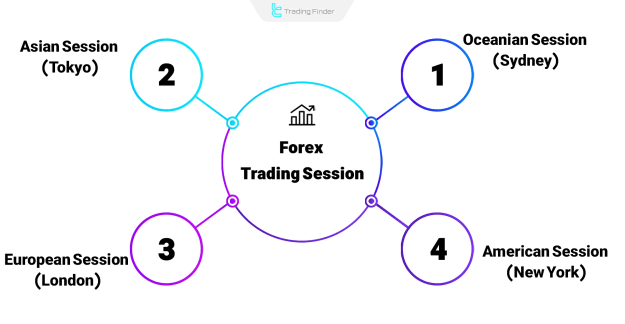
Each of the Forex trading sessions—Sydney, Tokyo, London, and New York—possesses unique characteristics regarding trading volume, price volatility, active currency pairs, and responsiveness to economic news.
- Oceanian Session (Sydney): Kicking off the trading week at 22:00 UTC, the Sydney session typically exhibits relatively low liquidity. It is often favored by traders employing scalping strategies or those who prefer lower-risk approaches.
- Asian Session (Tokyo): As the Sydney session concludes, the Tokyo session commences, influenced by major Asian economies including Japan, China, and Australia. This session is generally characterized by moderate and stable volatility.
- European Session (London): This is the most liquid segment of the Forex market hours, accounting for over 35% of daily trading volume. Its robust activity is driven by the significant participation of banks, financial institutions, and professional traders. The overlap with the New York session makes it a period of heightened volatility and liquidity.
- American Session (New York): The New York session concludes the daily Forex cycle and is heavily impacted by crucial U.S. economic data releases, such as Non-Farm Payrolls (NFP), Consumer Price Index (CPI), and interest rate decisions. Volatility is typically high at the session's opening, especially during its overlap with London, which signifies the day's peak trading volume. However, volatility tends to diminish in the final hours.
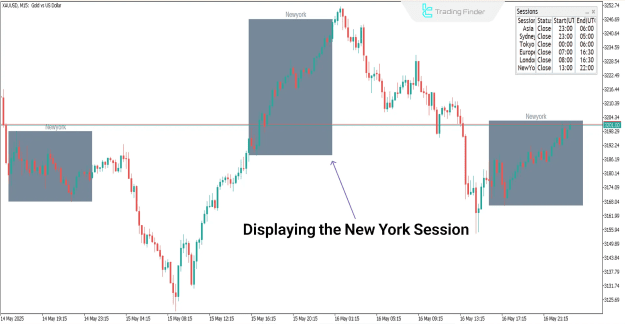
Traders can utilize tools like the Session Box Indicator for MetaTrader 4 and 5 to visualize these session timings directly on their charts.
Overlap of Trading Sessions and Increased Market Volatility
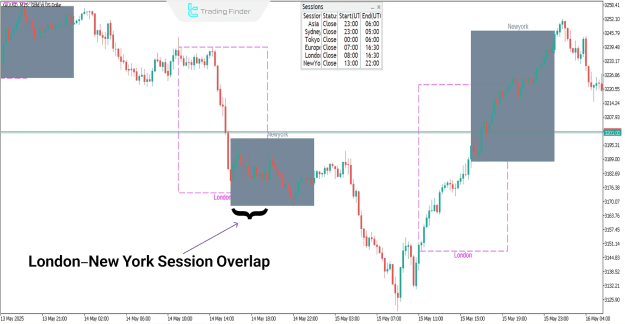
In the Forex market time, periods where two sessions are simultaneously active are known as Overlaps. During these overlaps, liquidity surges, spreads narrow, and price volatility intensifies, creating prime opportunities for short-term trades and scalping.
- London – New York Overlap: This is the most significant and active time frame within Forex market hours, occurring from 13:00 to 17:00 UTC. The concurrent presence of European and American institutions substantially boosts liquidity and volatility, leading to maximum trading volume and significant reactions to economic news.
- Tokyo – London Overlap: This brief yet impactful overlap, from 08:00 to 09:00 UTC, marks the transition from Asian to European market activity. It often features initial price movements in major currency pairs.
- Sydney – Tokyo Overlap: Occurring from 00:00 to 07:00 UTC, this overlap generally experiences low volatility, making it suitable for scalping Asian currency pairs.
Best Time to Trade in the Forex Market
The best time to trade Forex is when liquidity is high and meaningful price fluctuations are evident. This optimal condition typically occurs during the London – New York overlap, between 13:00 and 17:00 UTC. During this peak period, spreads are narrower, order execution is more precise, and a greater number of trading opportunities tend to emerge.
Key Tips for Managing Time in the Forex Market
Effective time management in Forex is crucial for distinguishing between impulsive trading and precise, strategic approaches, forming the bedrock of a profitable and consistent trading system.
- Gain a comprehensive understanding of the four primary trading sessions.
- Diligently monitor session overlaps, as these periods offer enhanced trading conditions.
- Always account for Daylight Saving Time (DST) adjustments to maintain accurate trading schedules.
- Avoid trading during low-volatility hours, as these periods often yield fewer opportunities and wider spreads.
- Align your trading times with your specific trading strategy style for optimal results.
- Consistently track economic news using a reliable calendar to anticipate market reactions.
Conclusion
The Forex market's 24-hour structure provides traders with continuous opportunities. By thoroughly analyzing global session schedules, considering seasonal DST changes, and understanding overlap periods, traders can effectively identify and leverage the most optimal trading times for their strategies.