

TP & SL Tool: Risk Reward Ratio Calculator RRR MT4 | Prop Firm Protector: Trade Assist Prop Firm Plus TF Expert MT4 | Money Management + DrawDown Protector: Trade Panel Prop Firm Drawdawn Limiter Pro MT4 |Get a free Expert Advisor license via Telegram and WhatsApp
What Is a Trading Position?
In financial markets, a trading position signifies an investor's active stance on the anticipated price movement of a financial asset. This stance is primarily expressed through either a Long Position (buy) or a Short Position (sell), indicating the trader's expectation of the market's future direction.
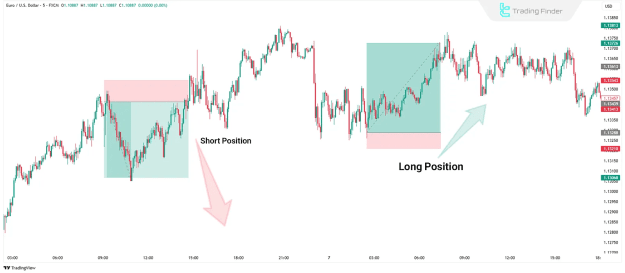
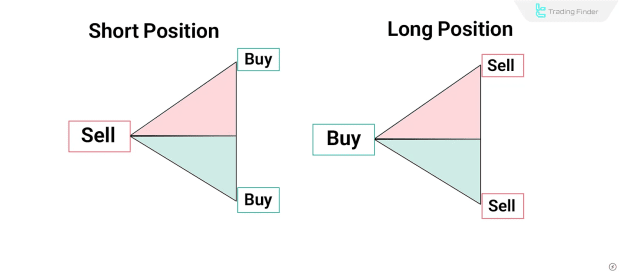
- A long position is taken when a trader buys an asset, expecting its price to appreciate.
- Conversely, a short position is initiated when a trader sells an asset, anticipating a price decline.
A position represents an open and active trade that remains in effect until it is closed. Each trading position is defined by four fundamental elements:
- Direction: Whether the trade is a Buy or a Sell.
- Size: The volume of the trade or the number of asset units involved.
- Entry Price: The price at which the position was opened.
- Exit Price or Pending Plan: The predetermined price or strategy for closing the position.
Opening a position is always informed by analysis, typically employing either technical or fundamental analysis. Selecting the appropriate type and size of a position is critical for effective risk control. The impact of a position on the account balance and free margin is particularly significant in leveraged markets such as Forex and Cryptocurrencies.
Types of Trading Positions
Trading positions can be categorized based on their directional intent and their holding duration.
Types of Positions Based on Trade Direction
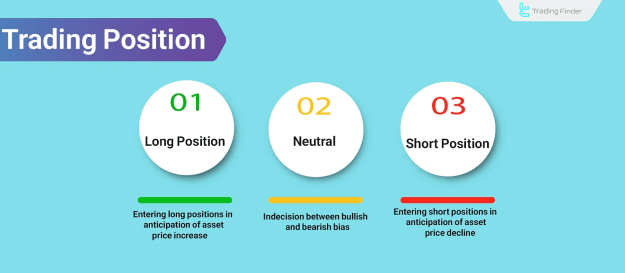
The direction of a position reflects a trader's forecast of price movement. There are three primary types based on direction:
- Long Position: A trader takes a long position when they anticipate an asset's price will increase. The goal is to buy the asset at a lower price and sell it later at a higher price to secure a profit.
- Short Position: This position is adopted when a trader expects a price decrease. The trader borrows the asset, sells it at the current market price, and aims to repurchase it later at a lower price, profiting from the decline.
- Neutral Position: In a neutral position, the trader is uncertain about the market's future direction. This approach often involves strategies like hedging or arbitrage, aiming to reduce or eliminate risk from price volatility. Neutral strategies are predominantly utilized by professional or algorithmic traders.
Types of Positions Based on Holding Duration
The holding period of a position is crucial for defining a trader's style. These are generally classified into four types:
- Scalping: This is a very short-term trading style where positions are held for mere seconds to minutes. The objective is to capture numerous small, frequent profits. It demands speed, minimal spreads, and precise execution, making it suitable for volatile and liquid markets.
- Intraday Trading: All positions are opened and closed within the same trading day, without any overnight carry-over. Day traders heavily rely on technical analysis and prioritize robust risk management.
- Swing Trading: Positions in this style are held for several days to weeks, aiming to profit from larger price movements during established trends or market waves. Swing traders integrate technical, fundamental, and price action analysis and do not require constant market monitoring.
- Position Trading: This represents a long-term strategy where positions may be maintained for months or even years. It relies on fundamental analysis, macroeconomic perspectives, and long-term outlooks, closely resembling traditional investing. This strategy demands significant patience and a long-term perspective.
Position Management
Position management in financial markets encompasses a series of control decisions made after a position is opened. The goal is to maintain a balance between potential profit, risk, and overall portfolio stability. Traders engage in this process not only during trade entry but throughout the entire duration of the position. The four core elements of position management include:
- Position Sizing: This involves determining the appropriate trade volume based on the account balance, acceptable risk, and the distance to the stop loss. Proper sizing is a critical tool for risk control, helping to prevent substantial losses during abrupt market movements.
- Scaling In/Scaling Out: Scaling allows a trader to gradually enter or exit a position. Scaling In increases the position size, while Scaling Out decreases it to preserve profits or manage risk.
- Hedging Strategy: Hedging involves opening an opposing position to mitigate or neutralize potential risk. This strategy is particularly valuable in volatile markets or during significant economic news releases, helping to protect portfolio value.
- Trailing Stop: A trailing stop is a dynamic stop-loss order that automatically adjusts with the price in a favorable direction. If the price reverses, it triggers the stop at a predefined level, proving highly effective for locking in profits during strong trends without continuous monitoring.
Positions in Different Markets
The nature and structure of trading positions vary across different financial markets, influencing risk management practices, leverage utilization, holding times, and the specific trading tools employed.
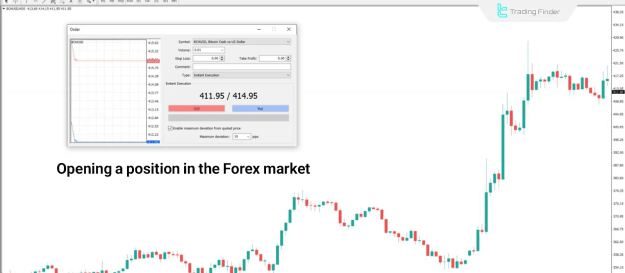
- Forex Market: In Forex, positions are typically opened using high leverage, with the ability to go both long and short on all currency pairs. Given the rapid price movements and high trading volume, effective position management necessitates careful selection of lot size, stop loss, and exit strategy.
- Cryptocurrency Market: Positioning in the crypto market shares similarities with Forex but is characterized by higher volatility and often lower liquidity. High leverage is common on derivative platforms, demanding tighter emotional and technical control for effective management.
- Futures and Options Market: Positions in these markets can be more intricate than spot trades, as they involve instruments like futures contracts with expiration dates, financial leverage, and complex combination strategies. Professional traders frequently utilize strategies such as spreads, straddles, or hedging to capitalize on volatility or protect assets from unforeseen risks.
Positioning Strategies
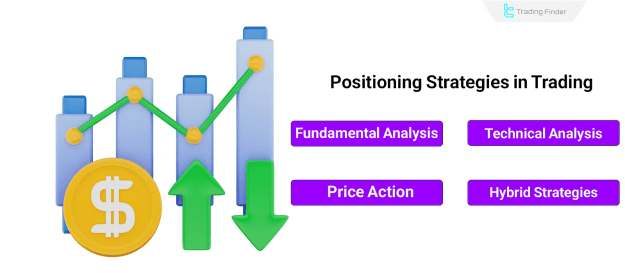
The timing and direction of trade entry are guided by positioning strategies. These are the analytical frameworks traders use to assess markets and make decisions regarding opening, closing, or managing trades. The four core approaches include:
- Technical Analysis: Traders employing this approach use charts, price patterns, indicators, and historical price structures to forecast potential trends. It is widely applied in short-to-medium-term trades, such as scalping or swing trading.
- Fundamental Analysis: This strategy focuses on economic, financial, or news-related factors that impact asset value, including earnings reports, interest rates, inflation, or government policies. It is primarily used in medium and long-term strategies.
- Price Action: Price action analysis involves studying pure price movement without relying on indicators. It utilizes candlestick patterns, support and resistance zones, and price behavior at key levels. This minimalist and fast-reacting method is ideal for short-term traders.
- Hybrid Strategies: Many professional traders combine both technical and fundamental analysis for enhanced accuracy. For instance, a trader might have a long-term fundamental outlook but use technical tools for precise entry and exit timing. This integrated approach helps reduce errors and improve position-taking decisions.
Psychological Management of Positions
Psychological management refers to a trader's ability to control emotions during trading. Emotions like fear can lead to premature exits, while greed can result in overextended holds. A successful trader adheres to their meticulously planned trading strategy rather than reacting impulsively to market fluctuations. Precisely executing stop-loss and take-profit orders, along with meticulously planning entry and exit points, is crucial for achieving consistent profitability.
Key Concepts Related to Trading Positions
To effectively manage a trading position, understanding several key concepts is essential:
- Position Size: Indicates the amount of capital committed to a specific trade.
- Leverage: Allows traders to control a larger amount of capital than their actual account balance, thereby magnifying both potential profits and losses.
- Margin: The initial capital required to open a leveraged position. It is held as collateral and determines a trader's capacity in leveraged markets.
- Risk/Reward Ratio: Illustrates the potential profit relative to the potential loss for a given trade. This ratio helps traders make more rational and controllable decisions.
- Stop Loss/Take Profit: These are crucial tools for exit planning, designed to prevent emotional decisions. They define predetermined exit points to limit potential losses (stop loss) or secure profits (take profit).
Conclusion
A trading position forms the cornerstone of decision-making in financial markets, reflecting a trader's perspective on an asset's price direction. A comprehensive understanding of position types, holding durations, trade sizes, and precise entry/exit points is vital for constructing a robust trading strategy. Beyond merely opening and closing trades, effective position management encompasses judiciously choosing appropriate position sizes, prudently utilizing leverage, setting strategic stop-loss and take-profit levels, and applying advanced strategies such as hedging and scaling to optimize the balance between risk and return.