

TP & SL Tool: Risk Reward Ratio Calculator RRR MT5 | Prop Firm Protector: Trade Assist Prop Firm Plus TF Expert MT5 | Money Management + DrawDown Protector: Trade Panel Prop Firm Drawdawn Limiter Pro MT5 |Get a free Expert Advisor license via Telegram and WhatsApp
What is Leverage?
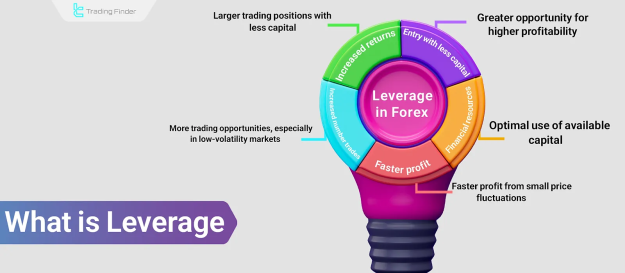
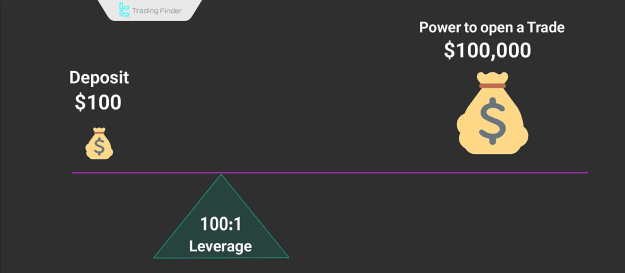
Leverage signifies the use of borrowed funds to execute trades exceeding a trader's actual capital. This means a trader borrows a multiple of their capital from a broker, proprietary trading firm, or exchange to open positions beyond their inherent financial capacity. Leverage is expressed as a ratio; for example, a leverage of 100:1 implies that for every $1 of actual capital, a trader can open a $100 position. While leverage can facilitate substantial short-term returns, it inherently carries significant risk.
How Leverage Works in Forex
In Forex, traders can employ leverage to initiate positions considerably larger than their available account balance. For instance, with a $1,000 account and 100:1 leverage, a trader can effectively open a $100,000 trade.
Calculating Leverage
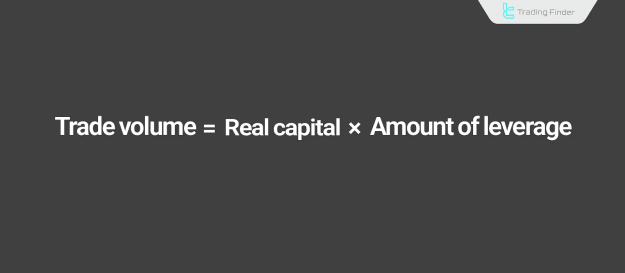
To calculate leverage, one must consider the ratio between the trade volume and the real capital (account balance). Trade volume refers to the monetary amount committed to a position, while real capital represents the actual deposited funds.
The Leverage Formula is:
Leverage×Real Capital=Trade Volume
Leverage Calculation Example
If a trader utilizes 100:1 leverage and possesses $3,000 in their account, the resulting trade volume would be:
100×$3,000=$300,000
Advantages and Disadvantages of Leverage in Forex
Leverage in the Forex market presents distinct advantages and disadvantages, particularly for short-term traders:
Advantages of Leverage
- Increased Trade Size: Enables larger trade executions with less initial capital.
- Higher Profit Potential: Offers the ability to generate greater profits from smaller investments.
- More Opportunities: Facilitates entry into a broader range of trades due to enhanced buying power.
- Capital Efficiency: Allows for the coverage of more positions with limited funds.
- Faster Gains: Accelerates profit accumulation with accurate market analysis.
Disadvantages of Leverage
- Increased Risk: Magnifies losses if market movements are unfavorable.
- Margin Call Risk: Poses the threat of automatic position closure by the broker to prevent further losses.
- High Volatility: Amplifies the impact of natural market swings.
- Total Loss: Mismanagement of leverage can lead to the depletion of an entire account balance.
- Complex Risk Management: Renders risk management more challenging and precarious.
Effective Use of Leverage in Forex Trading
To utilize leverage effectively in the Forex market, traders should adhere to several crucial guidelines:
- Appropriate Leverage Selection: Employ high leverage (e.g., 100:1) exclusively if experienced. Lower leverage (10:1–20:1) is generally safer for novice traders.
- Robust Risk Management: Always establish clear Stop Loss and Take Profit levels for each trade to limit potential losses and mitigate emotional decision-making.
- Market Analysis and Volatility Awareness: Effective leverage application necessitates comprehensive knowledge of market conditions, as it intensifies losses. Strict adherence to a trading strategy is paramount.
- Demo Account Practice: Prior to engaging with real leverage, it is advisable to practice using a demo account. This allows for experimentation with various tools and strategies without risking actual capital.
Leverage in Forex Trading Strategies
Leverage plays a pivotal role in augmenting returns across numerous Forex trading strategies:
Scalping Strategies
In scalping, traders aim to profit from minimal price movements. Leverage significantly enhances the profitability of these rapid trades.
Swing Trading
In swing trading, positions are held for periods ranging from a few days to several weeks. Leverage enables traders to control larger positions with a fraction of their own funds, thereby amplifying mid-term gains.
Trend Following
In trend trading, traders seek to profit from the sustained long-term direction of the market. Leverage facilitates entry into larger trades, increasing their profit potential from prolonged price movements.
Top Forex Brokers Offering High Leverage
The range of leverage offered by Forex brokers varies based on factors such as broker type, geographical region, account type, and regulatory frameworks. Some prominent high-leverage brokers available to traders include:
- Exness
- Land Prime
- ZFX Broker
- Headway
- FBS Broker
Leverage in Islamic Accounts
Islamic accounts in Forex, also known as swap-free accounts, are structured to comply with Islamic finance principles. A primary concern in Islamic finance is interest (Riba), which typically manifests as overnight swap fees. Islamic accounts eliminate these fees to ensure adherence to Sharia law.
Determining Suitable Leverage in Forex
The selection of appropriate leverage depends on an individual's trading strategy, available capital, experience level, and risk tolerance. Generally:
- Low leverage (1:10 to 1:50) is more suitable for beginners and long-term traders.
- Higher leverage (1:50 to 1:500) is better suited for experienced traders and scalpers.
Conclusion
Leverage in the Forex market is a potent instrument that significantly influences the risk-to-reward ratio. It permits traders to execute trades with volumes substantially greater than their actual capital. While leverage can considerably amplify profits, it possesses an equal capacity to magnify losses.