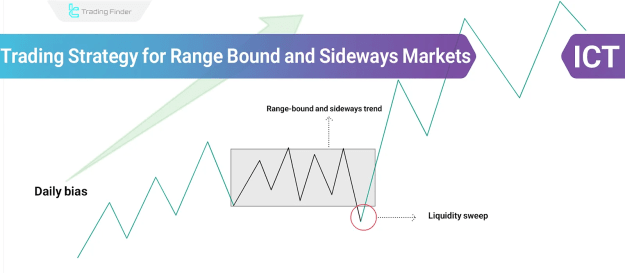


The ICT range trading strategy, in forex education, provides a systematic approach to identifying high-probability setups within these zones, focusing on the interplay between retail trader psychology and institutional order flow.
TP & SL Tool: Risk Reward Ratio Calculator RRR MT5 | Prop Firm Protector: Trade Assist Prop Firm Plus TF Expert MT5 | Money Management + DrawDown Protector: Trade Panel Prop Firm Drawdawn Limiter Pro MT5 |Get a free Expert Advisor license via Telegram and WhatsApp
Core Components of the ICT Range Methodology
- Liquidity Analysis Framework: Identifying where stop orders cluster beyond obvious support/resistance
- False Breakout Recognition: Detecting institutional traps designed to trigger retail stops
- Multi-Timeframe Alignment: Establishing directional bias from higher timeframes before engaging range setups
- Precision Execution: Timing entries based on liquidity sweeps and subsequent reversals
Step-by-Step Implementation Guide
1. Contextual Analysis
Begin with daily and 4-hour charts to establish:
- Prevailing market bias (bullish/bearish/neutral)
- Key support/resistance levels
- Areas of potential liquidity concentration
2. Range Identification
On lower timeframes (15M-1H), mark consolidation zones showing:
- Multiple tests of price boundaries
- Declining volume and volatility
- Clear support/resistance with minimal overlap
3. Liquidity Run Monitoring
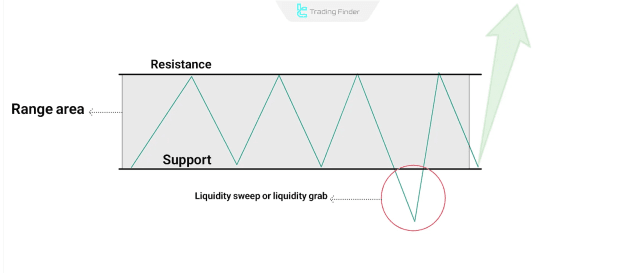
Watch for institutional liquidity grabs featuring:
- Sharp, short-lived breakouts beyond range extremes
- Long wicks into stop order clusters
- Rapid rejection back into the consolidation zone
4. Trade Execution Protocol
Enter positions when observing:
- Completion of liquidity runs in direction of higher timeframe bias
- Clear price rejection signals at key levels
- Structural confirmation on the entry timeframe
5. Risk Management Framework
Implement professional-grade position management:
- Stop placement beyond recent swing points
- Tiered profit-taking at logical targets
- Continuous monitoring for trend continuation signals
Market Psychology in Range Conditions
The strategy capitalizes on predictable market dynamics:
- Retail traders typically fade range extremes with tight stops
- Institutions intentionally trigger these stops before reversing
- Most initial breakouts fail as liquidity runs complete
- Sustainable moves often begin after these false breaks
Practical Application Scenarios
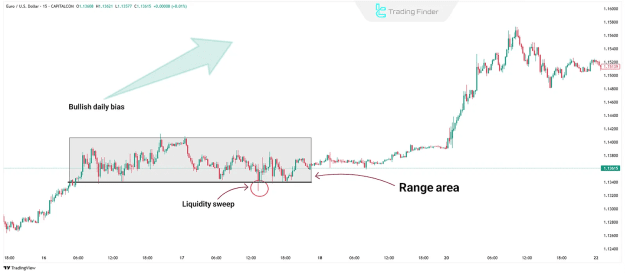
Bullish Context Execution
When higher timeframes indicate upward bias:
- Watch for bear traps below range support
- Enter long after stop runs complete
- Target previous range highs as initial objectives
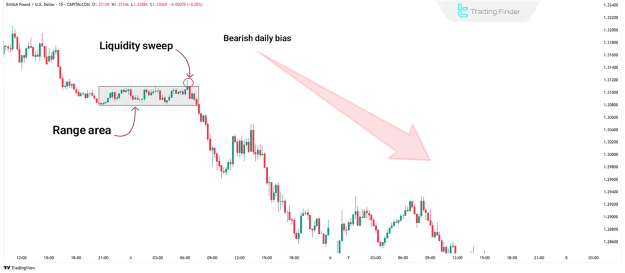
Bearish Context Execution
When daily charts show downward pressure:
- Monitor for bull traps above resistance
- Initiate shorts after failed breakouts
- Project moves toward range support levels
Strategic Benefits
This approach offers traders:
- High-probability setups with defined risk parameters
- Alignment with institutional order flow
- Reduced exposure to false breakout traps
- Clear criteria for entry/exit decisions
Critical Success Factors
Effective implementation requires:
- Patience to wait for optimal setups
- Discipline to follow the trading plan
- Rigorous backtesting of parameters
- Consistent risk management execution