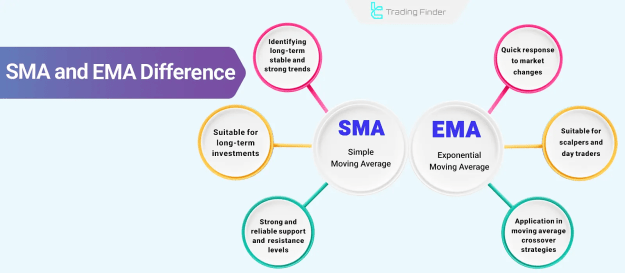


The Exponential Moving Average (EMA) reacts quickly to short-term fluctuations, making it ideal for short-term strategies and scalping in forex education and trading.
The Simple Moving Average (SMA) responds more slowly to price changes and is commonly used for long-term and mid-term analyses in forex education to identify broader market trends.
TP & SL Tool: Risk Reward Ratio Calculator RRR MT4 | Prop Firm Protector: Trade Assist Prop Firm Plus TF Expert MT4 | Money Management + DrawDown Protector: Trade Panel Prop Firm Drawdawn Limiter Pro MT4 |Get a free Expert Advisor license via Telegram and WhatsApp
Simple Moving Average (SMA): A Steady Approach
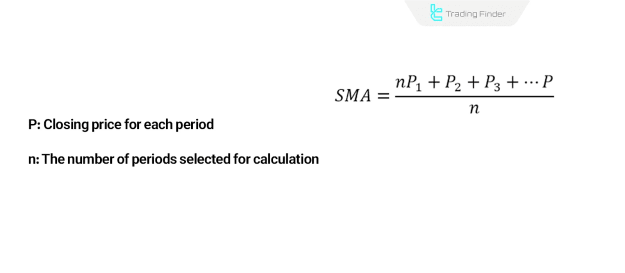
The SMA calculates the average price over a set period, offering a clear view of the market’s general direction.
Key Features of SMA
- Equal Weighting: Every price point in the selected period has the same impact.
- Smooth Trend Line: Since it doesn’t prioritize recent data, the SMA moves gradually, filtering out short-term noise.
- Long-Term Focus: Best for identifying sustained trends rather than quick price shifts.
Strengths of SMA
 Works well for long-term investment strategies
Simple to understand and apply
Effective in spotting major support and resistance levels
Limitations of SMA
 Slow to respond to sudden market movements
Less effective in highly volatile conditions
May lag behind rapid price changes
Exponential Moving Average (EMA): Quick Reaction to Price Shifts
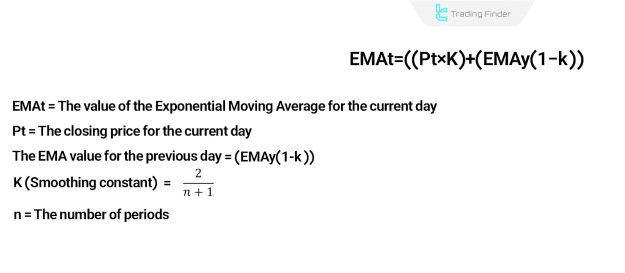
The EMA places more importance on recent prices, allowing it to adapt faster to market changes.
Key Features of EMA
- Greater Weight on Recent Data: New price movements have a stronger influence on the average.
- Faster Signals: Reacts quickly to shifts, making it valuable for short-term trades.
- Useful for Active Traders: Often used in day trading and scalping strategies.
Strengths of EMA
Better for spotting short-term trends
Effective in fast-moving markets
Helps with precise entry and exit timing
Limitations of EMA
More sensitive, leading to potential false signals
Requires careful adjustment for different strategies
Can be overly reactive in choppy markets
Comparing SMA and EMA
Trend Detection
- SMA excels in long-term trend analysis.
- EMA is better for short-term trend spotting.
Best Timeframes
- SMA performs well on higher timeframes (hourly, daily).
- EMA is more effective on lower timeframes (minutes to 30-minute charts).
Market Conditions
- SMA works best in stable, trending markets.
- EMA is more suitable for volatile conditions.
Conclusion
Choosing the Right Moving Average
The SMA is ideal for traders who focus on long-term trends and prefer stability. The EMA is better for those who need quick reactions to price movements, such as day traders and scalpers.
By understanding the differences between these two averages, traders can select the best tool for their strategy and market conditions.