

TP & SL Tool: Risk Reward Ratio Calculator RRR MT5 | Prop Firm Protector: Trade Assist Prop Firm Plus TF Expert MT5 | Money Management + DrawDown Protector: Trade Panel Prop Firm Drawdawn Limiter Pro MT5 |Get a free Expert Advisor license via Telegram and WhatsApp
What Is a Time Frame?
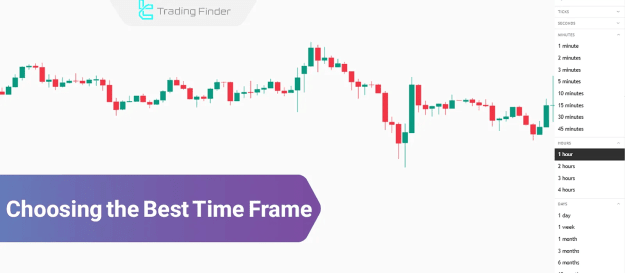
A time frame in financial markets denotes the duration represented by each candlestick on a price chart. It defines the period from a candlestick's opening to its closing. The validity of market data and the efficacy of a given trading strategy are intrinsically linked to the chosen time frame.
Types of Time Frames
Time frames are generally categorized into three main types, each aligning with distinct trading styles and exhibiting unique market characteristics:
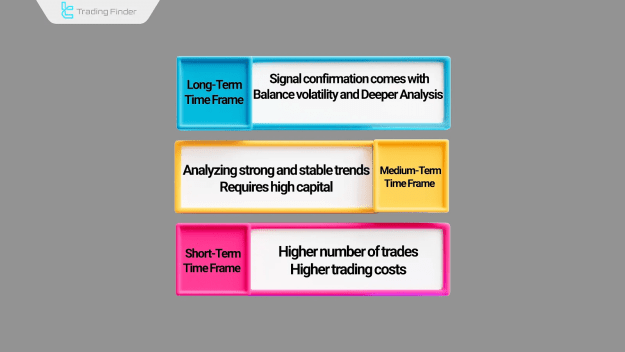
- Long-Term: Spanning daily charts and beyond, these time frames are ideal for swing trading and position trading. They feature minimal market noise, clearly defined trends, gradual but reliable price reactions, deep market structures, and high reliability in breakout levels. This leads to fewer trading opportunities but often offers higher potential take-profit levels and superior risk-to-reward ratios. Analysis in these time frames typically involves market sentiment, macroeconomic data, and identifying long-term support and resistance levels.
- Medium-Term: Ranging from 1 to 4 hours, these time frames are best suited for day trading. They strike a balance between market noise and trend clarity, characterized by valid level breakouts, distinct market structures, and dependable pattern formations. This allows for a moderate frequency of trades with balanced risk-to-reward profiles. Traders utilizing these time frames often focus on price action, order blocks, divergences, and trendlines.
- Short-Term: Encompassing 1 to 15-minute charts, these time frames are primarily used for scalping strategies. They are highly susceptible to market noise and breaking news, exhibiting sharp, unpredictable price movements, compressed market structures, and rapid level breakouts. While enabling frequent, small profit trades, they typically present lower risk-to-reward ratios. Analysis in short-term time frames heavily relies on technical indicators and fast price action.
The selection of the best time frame for trading is ultimately dictated by a trader's individual objectives and specific requirements within these three categories.
Selecting the Best Time Frame for Trading Strategies
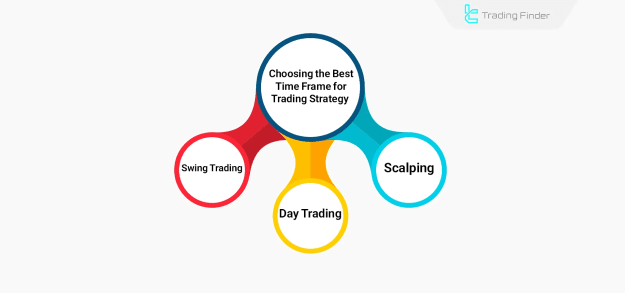
Choosing the best time frame for your trading strategy depends on several critical aspects, including your preferred trade duration, profit goals, and acceptable volatility range. Aligning the time frame with your strategy is paramount for reducing extraneous market noise, enhancing signal quality, and improving the overall effectiveness of your technical analysis tools. Inconsistent time frame alignment can lead to inaccurate and unreliable market structure analysis.
Best Time Frame for Scalping
Scalping involves executing numerous rapid trades to capture small profit margins. Beyond execution speed and the quality of your broker/platform, selecting the correct time frame is vital. The ideal time frame for scalping, typically between 1 and 15 minutes, should exhibit:
- High trading volume
- Tight spreads
The primary objective is to capitalize on micro price fluctuations, making volume and spreads the most crucial considerations.
Best Time Frame for Day Trading
In day trading, all analysis, entry, and exit points occur within the same trading day. The best time frame for day trading usually ranges from 15 minutes to 1 hour. Since all take-profit or stop-loss orders must trigger within the trading day, this time frame must adequately support both price and time-based analysis.
Best Time Frame for Swing Trading
Swing trading aims to capture significant price movements, often holding trades for periods ranging from a few hours to several days. The clear formation of technical patterns, such as classical chart patterns, is critical for this strategy. Therefore, the market structure must be distinctly visible in your chosen time frame, which typically spans from 1 hour to daily charts.
Conclusion
Effectively selecting the best time frame for trading significantly reduces market noise, enhances the reliability of trading signals, and improves the overall performance of technical indicators. Without proper time frame alignment, market structure analysis will inherently lack consistency and accuracy, underscoring the importance of this foundational decision in any trading approach.