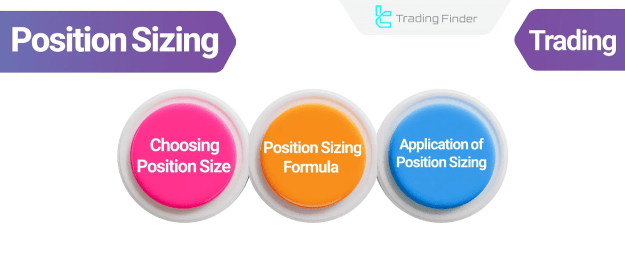


Proper position sizing is the cornerstone of effective risk and money management in forex education, ensuring traders maintain consistency and longevity while managing each forex position according to their strategic objectives.
TP & SL Tool: Risk Reward Ratio Calculator RRR MT4 | Prop Firm Protector: Trade Assist Prop Firm Plus TF Expert MT4 | Money Management + DrawDown Protector: Trade Panel Prop Firm Drawdawn Limiter Pro MT4 |Get a free Expert Advisor license via Telegram and WhatsApp
How Position Sizing Impacts Trading Performance
Position size determines both potential profits and losses in a trade. Selecting an appropriate size requires careful consideration of:
- Risk-to-Reward Ratio
- Stop-Loss Placement
- Take-Profit Targets
An incorrectly sized position can lead to excessive risk exposure or missed profit opportunities.
Calculating Forex Position Size
Key Components for Position Sizing
To compute position size accurately, traders must understand:
- Lot Types and Their Values
- Standard Lot (100,000 units): $10 per pip
- Mini Lot (10,000 units): $1 per pip
- Micro Lot (1,000 units): $0.10 per pip
- Nano Lot (100 units): $0.01 per pip
- Risk Per Trade (in dollars)
- Distance from Entry to Stop Loss (in pips)
The Position Sizing Formula
The formula for determining position size is:
Position Size = (Risk Amount in $) / (Stop Loss in Pips × Pip Value per Lot)
For quick calculations, traders can utilize specialized position size calculators to streamline the process.
Selecting the Optimal Position Sizing Strategy
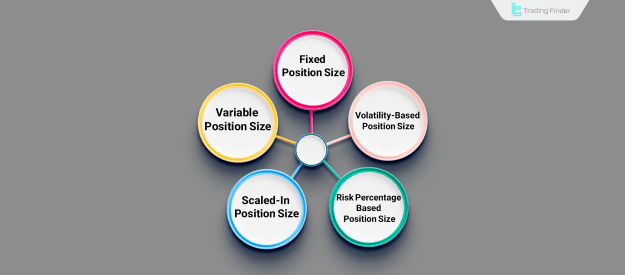
Different trading strategies demand varying approaches to position sizing. Below are the most common methods:
1. Fixed Position Sizing
- Maintains a constant trade volume regardless of risk percentage or stop-loss distance.
- Simplest method but may increase risk in high-volatility trades.
2. Percentage-Based Risk Sizing
- Allocates a fixed percentage of the trading account (typically 1-2%) per trade.
- Balances risk but requires precise calculations.
3. Variable Position Sizing
- Adjusts trade size based on market conditions and trade quality.
- Offers flexibility but requires experience to avoid overexposure.
4. Scaled-In Position Sizing
- Gradually enters trades in portions, reducing missed opportunities.
- Common in swing and position trading but may lower overall profitability.
5. Volatility-Based Sizing
- Uses indicators like Average True Range (ATR) to adjust position size according to market volatility.
- Enhances risk-reward alignment but may be less effective in scalping.
Risks of Poor Position Sizing
Ignoring proper position sizing can lead to:
- Margin calls due to overleveraging
- Increased capital volatility
- Emotional decision-making
- Inconsistent trading performance
- Misalignment with market structure
Benefits of Effective Position Sizing
A disciplined approach to position sizing offers:
 Controlled risk exposure per trade
Consistent strategy execution
Adaptability to market volatility
Improved risk-to-reward ratios
Reduced emotional trading errors
Final Thoughts
Position sizing is the backbone of capital preservation and risk management. Whether using fixed, percentage-based, or volatility-adjusted sizing, traders must align their approach with their strategy and market conditions.
By mastering position sizing, traders enhance long-term profitability while minimizing unnecessary risks.