

TP & SL Tool: Risk Reward Ratio Calculator RRR MT5 | Prop Firm Protector: Trade Assist Prop Firm Plus TF Expert MT5 | Money Management + DrawDown Protector: Trade Panel Prop Firm Drawdawn Limiter Pro MT5 |Get a free Expert Advisor license via Telegram and WhatsApp
What is a Margin Call and How Does It Happen?
A Margin Call signifies that your account is approaching a critical state due where your equity (real-time balance including profits/losses) is no longer adequate to maintain your open positions, particularly given the leverage you're using.
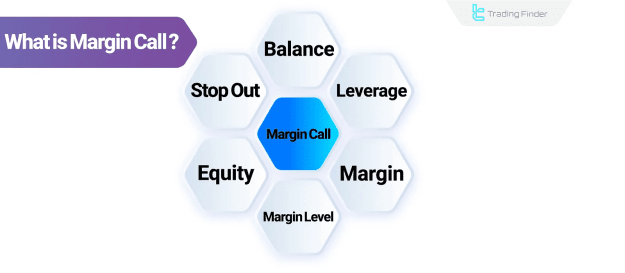
Several key concepts are crucial to understanding a Margin Call:
- Balance: The total funds you've deposited into your trading account.
- Leverage: The borrowed capital from your broker, allowing you to control larger trade volumes than your actual account balance. While it amplifies potential profits, it also magnifies potential losses.
- Margin: The portion of your account balance that the broker locks as collateral for your open trades.
- Margin Level: Expressed as a percentage, this metric indicates the ratio of your equity to your used margin. It's a vital indicator of your account's risk and the sustainability of your open positions. A lower Margin Level indicates higher risk.
- Equity: Your real-time account value, reflecting your initial balance adjusted by the floating profits or losses of all open trades.
- Stop Out: The automatic closure of your open trades by the broker when your account equity falls below a predetermined margin level, typically 20-50%. This occurs when your balance cannot cover the losses.
Signs of Approaching a Margin Call
A Margin Call is triggered when your account's Margin Level drops to a critical point, signifying that your available funds are insufficient to cover the potential losses of your open trades.
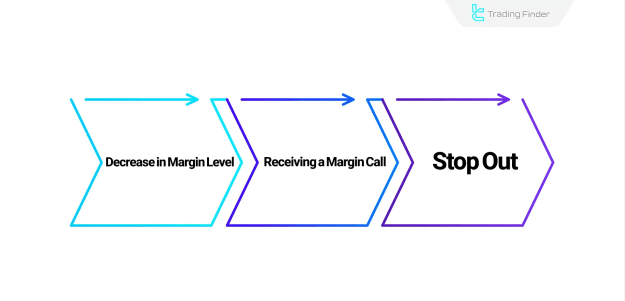
Here's how the process typically unfolds:
- Decrease in Margin Level to Critical Levels: When your Margin Level approaches a critical threshold (often 100%), it means your equity is barely covering the margin required for your open positions. At 100% Margin Level, your equity is equal to your used margin, meaning you have no free margin to absorb further losses.
- Receiving a Warning from the Broker: As your Margin Level hits these critical levels, your broker will issue a Margin Call warning. This alert prompts you to take corrective action, either by depositing more funds or reducing your exposure to high-risk trades. If you fail to address the Margin Call and losses continue to mount, a Stop Out becomes inevitable, and your broker will automatically close your open positions to prevent further losses.
Ways to Prevent a Margin Call
Preventing a Margin Call is about proactive risk management and disciplined trading. It's a warning, not an end, and can be avoided by adhering to sound trading practices:
- Effective Capital Management: Implement strict capital management strategies for all your trades. This involves determining appropriate position sizes, setting realistic risk-reward ratios, and only risking a small percentage of your total capital on any single trade.
- Using Appropriate Leverage: While leverage can amplify profits, excessive leverage significantly increases your exposure to risk and the likelihood of a Margin Call. Choose a leverage level that aligns with your risk tolerance and trading strategy.
- Emotional Management: Trading during critical market moments can be emotionally charged. Maintaining emotional discipline is crucial to prevent irrational decisions that could lead to oversized positions or neglecting warning signs, ultimately resulting in a Margin Call. Stick to your trading plan and avoid impulsive actions.
Ways to Exit a Margin Call Situation
If you receive a Margin Call warning, taking swift and decisive action can help you exit the critical state and protect your capital.
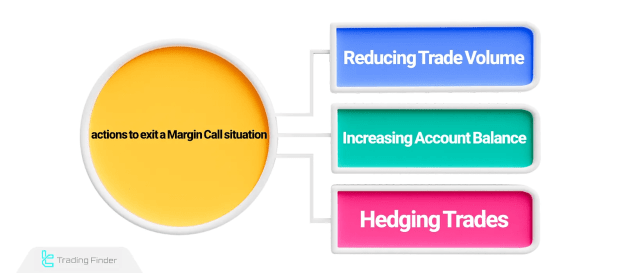
Here are the primary solutions:
- Reducing Trade Volume: This is one of the most effective ways to increase your Margin Level. You can achieve this by:
- Closing high-loss trades: This immediately reduces your floating losses and frees up margin.
- Partially closing profitable trades: While counter-intuitive, this can also free up margin and improve your Margin Level without fully exiting a potentially good trade.
- Increasing Account Balance: Depositing additional funds into your trading account directly increases your equity, which in turn raises your Margin Level and moves your account away from the Margin Call zone.
- Hedging Trades: Opening a trade in the opposite direction of your existing losing position can hedge your exposure. This can stabilize your floating losses and Margin Level by offsetting further adverse price movements. However, be cautious as hedging can also tie up additional margin and might not always be the most efficient solution for exiting a Margin Call.
Conclusion
By implementing robust risk management practices such as reducing trade volume, selecting appropriate leverage, and strategically using stop-loss orders, traders can significantly reduce the probability of encountering a Margin Call. If a Margin Call does occur, immediate actions like increasing the account balance or hedging trades are crucial to prevent a Stop Out and preserve your trading capital.