

TP & SL Tool: Risk Reward Ratio Calculator RRR MT5 | Prop Firm Protector: Trade Assist Prop Firm Plus TF Expert MT5 | Money Management + DrawDown Protector: Trade Panel Prop Firm Drawdawn Limiter Pro MT5 |Get a free Expert Advisor license via Telegram and WhatsApp
What is the Forex Market?
The Forex market, short for Foreign Exchange, is the largest and most liquid financial market globally. It facilitates the trading of currency pairs, where the value of one currency is exchanged for another. For instance, EUR/USD represents the exchange rate between the Euro and the US Dollar. When you buy EUR/USD, you are essentially buying the Euro and simultaneously selling the US Dollar.
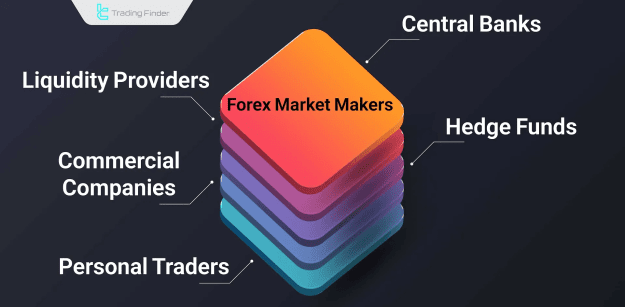
A key characteristic of Forex trading is the use of Contracts for Difference (CFDs). This means traders speculate on price movements without actually owning the underlying currencies. Profits are generated from the fluctuations in currency pair values. The market's immense liquidity is a result of the participation of various "market makers," including:
- Central banks
- Liquidity providers
- Hedge funds
- Commercial companies
- Retail traders
What is the Stock Market?
In contrast to Forex, the stock market is a platform for buying and selling company shares. When you purchase shares in a company, like Apple, you acquire a fractional ownership of that company. This ownership entitles you to a share in its profits and losses, proportionate to the number of shares you hold. Essentially, in the stock market, you become an owner of an asset.
Key Differences Between the Stock Market and Forex
While both markets offer trading opportunities, their fundamental characteristics diverge significantly across several parameters:
Nature of Trading
- Forex: Primarily involves trading currency pairs.
- Stocks: Focuses on trading company shares, allowing investors to own a piece of a business.
Trading Hours
A notable distinction lies in their operational hours:
- Forex: Operates 24 hours a day, five days a week (24/5), starting Monday 0:00 UTC and ending Friday 23:59 UTC. This continuous operation is due to the global nature of currency trading across different time zones.
- Stocks: Trading hours are fixed and determined by individual stock exchanges, typically aligning with standard business hours (e.g., 8-9:30 AM to 3-5:30 PM) in their respective countries.
Leverage
Leverage is a powerful tool that allows traders to control a large position with a relatively small amount of capital. However, it also magnifies both potential profits and losses.
- Forex: Generally offers higher leverage, often ranging from 1:50 to 1:500 or even higher, depending on the broker and regulatory jurisdiction. For example, in Europe, retail traders typically have a maximum leverage of 1:30.
- Stocks: Leverage is generally lower, usually between 1:2 and 1:10. While some CFD contracts on stocks might offer higher leverage (e.g., 1:20), it remains significantly lower than in Forex.
Liquidity and Market Depth
Liquidity refers to how easily an asset can be bought or sold without significantly affecting its price. Market depth indicates the volume of buy and sell orders at different price levels.
- Forex: Is the most liquid financial market, with a daily trading volume exceeding $7 trillion. This translates to very high liquidity across virtually all currency pairs, ensuring efficient execution of trades.
- Stocks: Liquidity varies significantly depending on the specific stock and the market it's traded on. Highly traded stocks tend to be very liquid, while less popular stocks may have lower liquidity and market depth.
Trading Costs
The costs associated with trading also differ between the two markets:
- Spread:
- Forex: Typically has lower spreads, which is the difference between the bid and ask price.
- Stocks: Spreads can vary significantly by stock and brokerage, often being higher than in Forex.
- Commission:
- Forex: Many brokers offer commission-free trading.
- Stocks: Commissions are often charged, varying based on trade volume or the number of shares purchased.
- Swap (Overnight Fees):
- Forex: Swap fees apply for positions held overnight, varying by currency pair and position type.
- Stocks: Generally no overnight fees, unless trading on margin or certain ETFs.
- Taxes: Both markets are subject to taxes in certain countries, depending on local regulations.
Asset Diversity
The range of tradable assets also varies:
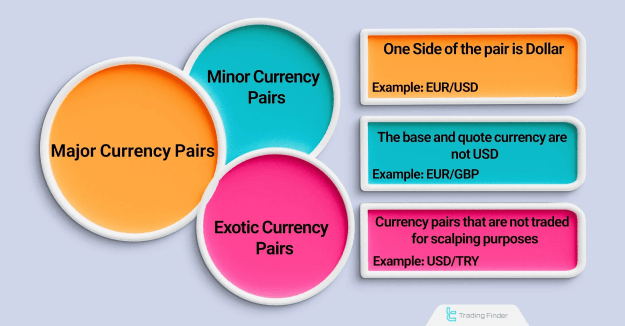
- Forex: Primarily deals with currency pairs, categorized into:
- Major pairs: Most frequently traded (e.g., EUR/USD, GBP/USD).
- Minor pairs: Less frequently traded but still liquid (e.g., EUR/JPY, GBP/CAD).
- Exotic pairs: Involve one major currency and one from a developing or smaller economy (e.g., USD/TRY, EUR/MXN).
- Stocks: Offers a broader array of assets:
- Company Shares: Direct ownership in corporations.
- Commodities: Raw materials like gold, oil, or agricultural products.
- Exchange-Traded Funds (ETFs): Diversified investment funds that track an index, commodity, or basket of assets.
Fundamental Analysis
The approach to fundamental analysis, which involves evaluating an asset's intrinsic value based on economic, financial, and qualitative factors, differs considerably:
- Forex: Fundamental analysis primarily focuses on global macroeconomic indicators. This includes economic data releases (GDP, inflation, employment figures), central bank monetary policy decisions, and geopolitical events (wars, elections) that can influence currency values. Forex trading is inherently more influenced by global economic shifts.
- Stocks: Requires a more granular approach. While macroeconomic factors, labor market conditions, and economic growth are considered, a crucial component is the analysis of a company's financial statements. This involves scrutinizing revenue, earnings per share, balance sheets, and cash flow statements to assess the company's health and intrinsic value. Stock trading is driven by both company performance and broader industry trends.
Conclusion
The choice between the stock market and the Forex market ultimately depends on your trading style, risk tolerance, and investment goals.
- If you seek a market with exceptional liquidity, 24/5 trading availability, and the potential for high leverage, the Forex market presents a compelling option.
- Conversely, if you possess the expertise in financial statement analysis and are looking for long-term investment opportunities with generally lower risk (compared to highly leveraged Forex trading), the stock market is a suitable platform.
Understanding these fundamental differences is crucial for making informed decisions and navigating the complexities of the financial world effectively.