

TP & SL Tool: Risk Reward Ratio Calculator RRR MT5 | Prop Firm Protector: Trade Assist Prop Firm Plus TF Expert MT5 | Money Management + DrawDown Protector: Trade Panel Prop Firm Drawdawn Limiter Pro MT5 |Get a free Expert Advisor license via Telegram and WhatsApp
The Foundation of IPDA: Time and Liquidity
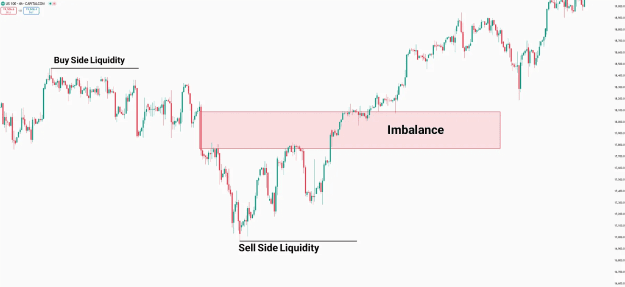
According to the ICT style, price movements in instruments like the Forex market are driven by the presence of liquidity and imbalance zones. The price is not random; instead, it is determined by the rules established by Market Makers. These rules primarily involve the accumulation of liquidity and the adjustment of market imbalances.
The IPDA concept is primarily observed across three distinct time periods:
- 20-day interval
- 40-day interval
- 60-day interval
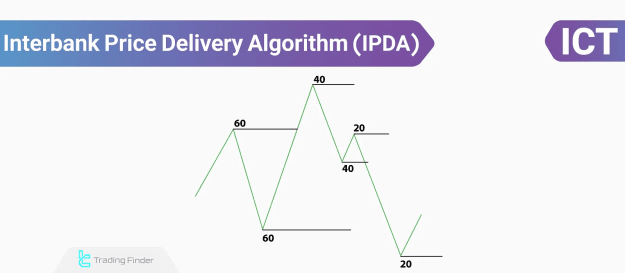
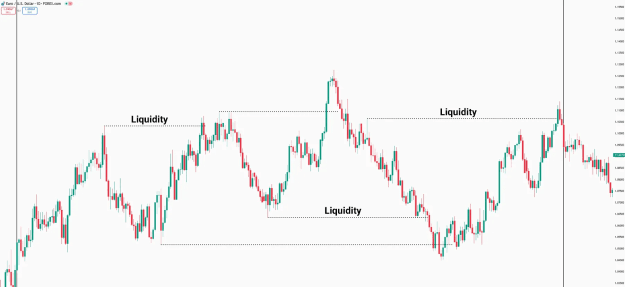
The highs and lows established within these 20-day cycles (forming the 20-day, 40-day, and 60-day periods) are considered crucial liquidity accumulation zones. These are the areas where Smart Money intervenes to influence and adjust prices.
How the Interbank Price Delivery Algorithm (IPDA) Operates
Smart Money strategically utilizes key price levels to gather the necessary liquidity for price determination. The IPDA approach involves a specific look-back mechanism, starting from the beginning of the month:
Identifying Key Levels for Liquidity Collection
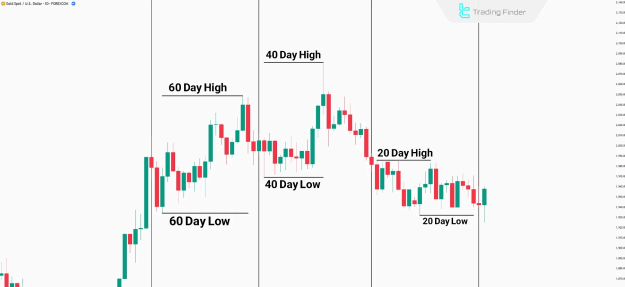
The process identifies three distinct 20-day ranges:
- The most recent 20-day period
- The 40-day interval (encompassing the last two 20-day periods)
- The 60-day interval (covering the last three 20-day periods)
The highs and lows within each of these defined ranges represent critical liquidity accumulation areas. These are the points where significant buy or sell orders are likely to reside, making them targets for Smart Money.
Operation of the Interbank Price Delivery Algorithm (IPDA)
The practical application of IPDA involves observing price interaction with these identified liquidity zones. For example, on a EURUSD currency pair chart, the 40-day highs and lows and 60-day highs and lows are key areas to monitor for liquidity collection.
Price Movement After Liquidity Collection
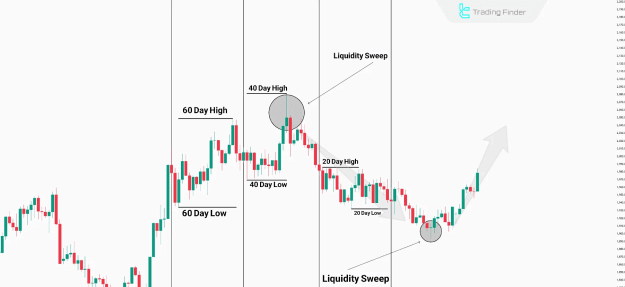
A typical sequence of price movement under IPDA, following the collection of liquidity, might unfold as follows:
- After gathering liquidity above a significant level, such as the 60-day high, price often initiates a move towards a new liquidity target, like the 40-day low.
- Subsequently, the price endeavors to adjust an imbalance zone that has been created.
- Following the imbalance adjustment, price will typically gravitate towards another liquidity target, such as the 60-day low.
- Once liquidity is collected at this new target, the price direction often reverses, moving towards the opposite side of the market.
Understanding IPDA Seasonal Shifts
An essential element for a comprehensive understanding of the Interbank Price Delivery Algorithm is recognizing seasonal shifts on higher timeframes.
These shifts typically occur every three to four months, often aligning with quarterly cycles, hence their designation as "seasonal" or "quarterly" shifts. These periods represent recurring liquidity collection cycles that offer further insights into market manipulation by Smart Money.
Conclusion
The Interbank Price Delivery Algorithm (IPDA) is a fundamental concept within the ICT trading style. It provides a framework for comprehending price movements by analyzing the interplay between liquidity and underlying market rules. By focusing on specific 20, 40, and 60-day periods and identifying their respective highs and lows, IPDA helps traders anticipate and interpret where liquidity accumulation points are, offering a valuable perspective on how Market Makers influence price action.