

TP & SL Tool: Risk Reward Ratio Calculator RRR MT5 | Prop Firm Protector: Trade Assist Prop Firm Plus TF Expert MT5 | Money Management + DrawDown Protector: Trade Panel Prop Firm Drawdawn Limiter Pro MT5 |Get a free Expert Advisor license via Telegram and WhatsApp
What is Margin?
Margin represents the amount of money a trader must maintain in their account to open a trade. It serves as collateral, demonstrating a trader's capacity to execute trades using credit extended by brokers.
- You can utilize margin tools to calculate the specific amount necessary for various positions.
What is Leverage?
Leverage empowers traders to control a larger amount of capital than their initial deposit. This capability allows for the potential of greater profits; however, it's crucial to understand that increased profit potential is accompanied by a higher level of risk.
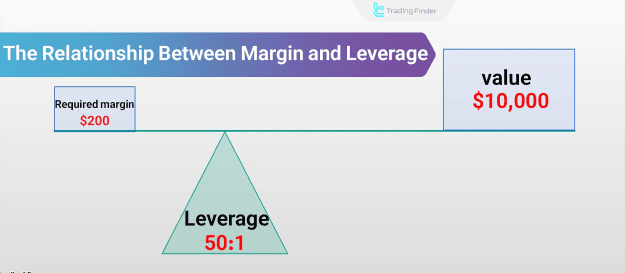
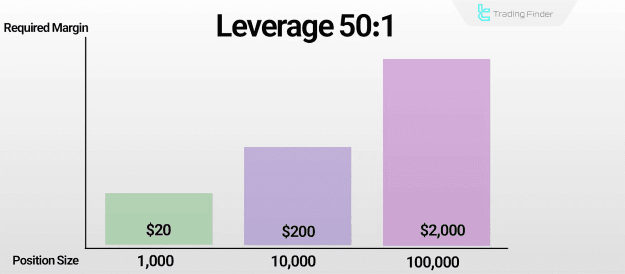
- Leverage is typically expressed as a ratio, such as x:1. For instance, a 50:1 leverage ratio signifies that a trader can open a position valued at $50 with an initial investment of just $1.
Consider these examples:
- If a trader employs 25:1 leverage with an initial capital of $4,000, the total tradable capital becomes $4,000 × 25 = $100,000.
- Similarly, with 75:1 leverage and $2,000 in capital, the tradable amount is $2,000 × 75 = $150,000.
Relationship Between Margin and Leverage in Required Margin Calculations
While distinct, margin and leverage are intrinsically linked. The relationship is inverse: a lower required margin enables a trader to utilize higher leverage. In essence, reducing the margin requirement enhances a trader's buying power.
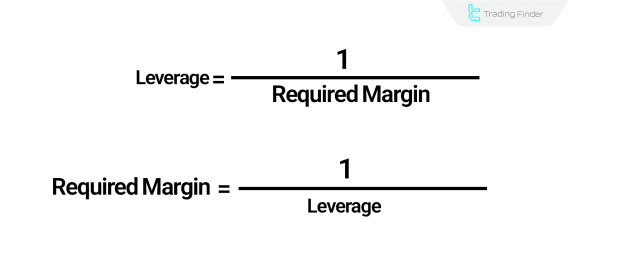
Formula for Calculating Margin and Leverage
The relationship between margin and leverage can be described through specific formulas, highlighting how a decrease in margin directly correlates with an increase in available leverage.
Difference Between Margin and Leverage
Although closely related, margin and leverage serve different functions:
- Margin: This is the capital held as collateral to initiate a position. It acts as the initial investment for trades. Its impact on profit and loss is limited to the margin amount, but the risk of losing money increases with a higher margin percentage. Margin is used across various financial markets, including Forex, stocks, and commodities.
- Leverage: This is a tool designed to amplify trading capital. It increases a trader's buying power, allowing for larger trades. Leverage significantly magnifies both profit and loss potential. Higher leverage leads to amplified profits and losses. Leverage is prevalent in markets such as Forex, stocks, and cryptocurrencies.
How Are Margin and Leverage Related?
The relationship between margin and leverage is fundamentally inverse. This implies that a reduction in the required margin directly leads to an increase in the leverage a trader can employ. Consequently, a lower margin requirement expands a trader's buying power.
Examples of Leverage and Margin Ratios in Forex Pairs
The following examples illustrate typical leverage and margin ratios for specific Forex currency pairs:
- EUR/USD: Requires a 2% margin, equating to a 50:1 leverage ratio.
- GBP/USD: Requires a 5% margin, equating to a 20:1 leverage ratio.
- USD/JPY: Requires a 4% margin, equating to a 25:1 leverage ratio.
- EUR/AUD: Requires a 3% margin, equating to a 33:1 leverage ratio.
Difference Between Margin in Forex and the Stock Market
The application of "margin" differs between the Forex and stock markets:
- In the stock market: Margin refers to funds borrowed by a trader from a broker to finance a portion of a stock purchase. This practice, known as "margin trading," constitutes a loan from the brokerage firm.
- In the Forex market: Margin represents the specific amount of money a trader must maintain in their account to open a trading position. In this context, the trader is not borrowing funds but rather utilizing the margin as collateral.
Summary
The interplay between margin and leverage is a cornerstone of effective risk management and understanding purchasing power in financial markets. Margin serves as the mandatory collateral for opening positions, while leverage empowers traders to control a larger market volume with a comparatively smaller amount of capital.
- By reducing the margin requirement, traders gain the ability to utilize higher leverage, which can contribute to more effective risk management strategies