

What Are Lower Lows and Lower Highs?
Within a bearish trend, two primary price structures consistently emerge:
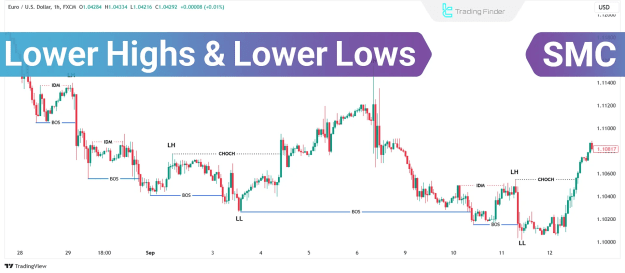
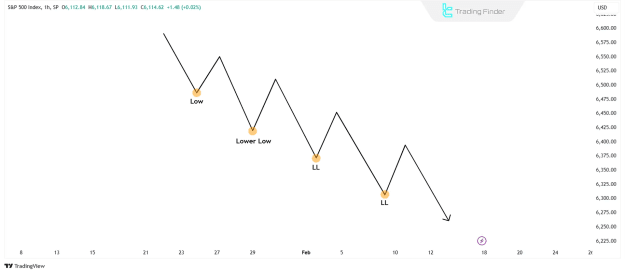
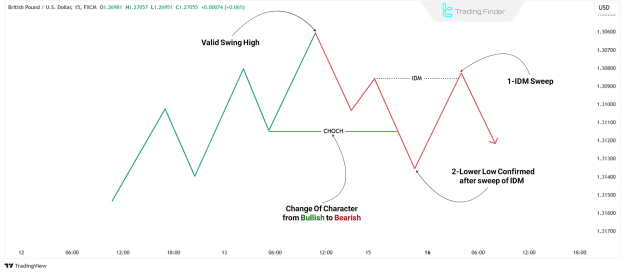
- Lower Low (LL): This occurs when a new price low is established below the preceding low. The formation of a Lower Low strongly indicates sustained selling pressure and the market's propensity for further decline.
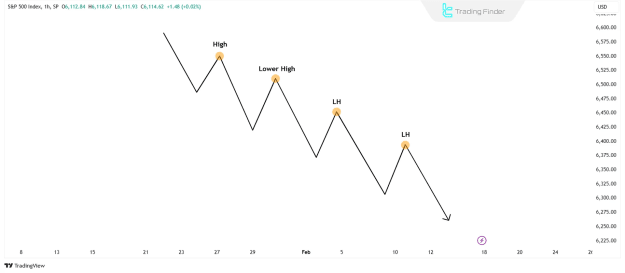
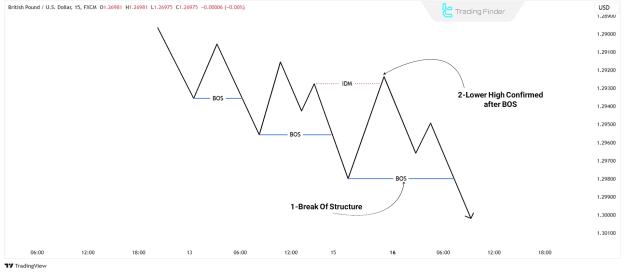
- Lower High (LH): This is characterized by a new price high that remains below the previous high. A Lower High suggests that buying efforts were insufficient to propel the price above the prior peak, thereby validating the ongoing bearish trend.
These two interlinked concepts collectively define a bearish market structure, highlighting diminished buying interest and prevalent seller dominance.
How to Identify Lower Lows in a Bearish Trend?
While a bearish trend inherently produces Lower Lows, not every low represents a valid structural low. To accurately identify a valid Lower Low within a bearish trend, adhere to the following methodical steps:
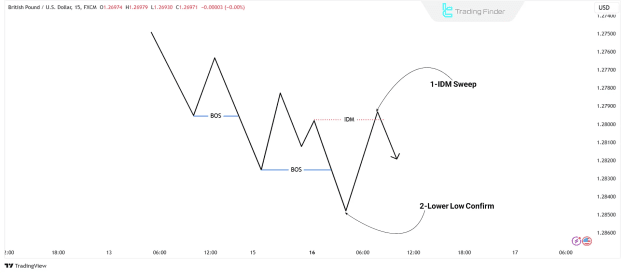
- Identify Inducement (IDM): Begin by locating liquidity zones, which are typically situated above recent swing highs.
- Formation of Swing Low: Following a downward price movement and a Break of Structure (BOS), the price generally undergoes an upward retracement, forming a temporary Swing Low (the lowest point within that specific downward move).
- Confirmation of Lower Low: As the price sweeps the Inducement liquidity during its pullback, the temporary Swing Low becomes confirmed as a valid Structural Swing Low, signifying a genuine Lower Low.
A valid Break of Structure (BOS) is confirmed when the price breaches a valid structural Swing Low. With each subsequent downward Break of Structure, monitoring Inducement sweeps is essential for locating valid Lower Lows.
How to Identify Lower Highs in a Bearish Trend?
Similarly, although Lower Highs are characteristic of a bearish trend, not every high constitutes a valid Lower High. To confirm a valid Lower High, follow these steps:
- Wait for a Price Pullback: After a significant downward price movement and a Break of Structure (BOS), the price typically retraces upward, forming a temporary Lower High.
- Examine Liquidity Zones: Observe the accumulation of liquidity above these price highs.
- Confirmation of Lower High: If the price subsequently resumes its downward trajectory after the pullback and breaches the previous valid structural low, the temporary high (the highest point in that specific pullback) is confirmed as a valid Structural Lower High.
With every downward Break of Structure, diligent observation of liquidity sweeps and the subsequent structural break is necessary to confirm the validity of a Lower High.
- Tip: Lower Highs frequently offer the most advantageous points for initiating sell trades, as they typically present an optimal risk-to-reward ratio.
How to Identify Structural Highs After a Bearish CHOCH?
To identify a structural high following a bearish Change of Character (CHOCH):
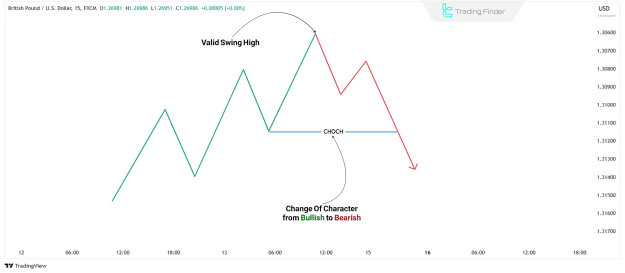
- Mark the Last Higher High: Pinpoint the last Higher High established before the CHOCH occurred.
- Upon the market's transition from a bullish to a bearish phase, the final Higher High of the preceding bullish trend is designated as the structural high, as this point marks the initiation of the bearish trend.
- Following each Break of Structure, monitor for Inducement sweeps and subsequent downward BOS to confirm the emerging Lower High.
How to Identify Structural Lows After a Bearish CHOCH?
A CHOCH signifies a fundamental alteration in market behavior. Consequently, when the market shifts from a bullish to a bearish state, Lower Lows are identified accordingly.
To pinpoint a structural low after a bearish CHOCH:
- Identify Inducement (IDM): Locate Inducement and await the formation of a swing low.
- After the swing low has formed and liquidity has been swept, that specific swing low is then designated as the valid structural low.
- As the bearish trend persists, the price is expected to continue its decline, breaking previous lows and establishing new Lower Lows.
- After every Break of Structure (BOS), observe for Inducement sweeps to confirm the validity of the Lower Low.
Key Points for Using Lower Lows and Lower Highs
- Focus on Liquidity: Price sweeping liquidity serves as one of the most reliable indicators for confirming valid bearish lows and highs.
- Risk Management: When entering sell trades in proximity to Lower Highs, it is imperative to place stop losses strategically above these highs to manage risk effectively.
- Appropriate Time Frame: For enhanced accuracy in identifying market structures, it is advisable to utilize mid-range and long-term time frames.
Conclusion
Lower Highs (LH) and Lower Lows (LL) are crucial indicators of market weakness and a strong propensity for a continued bearish trend. To accurately identify valid Lower Highs and Lower Lows, a comprehensive understanding and application of key Smart Money concepts such as Break of Structure (BOS), Change of Character (CHOCH), and Inducement (IDM) are essential.