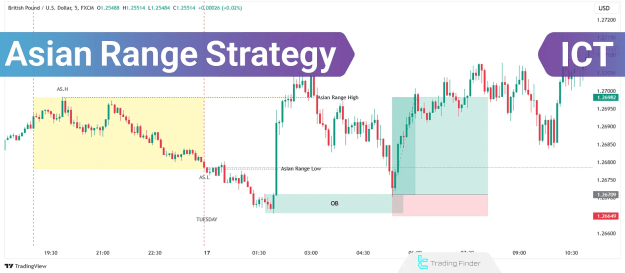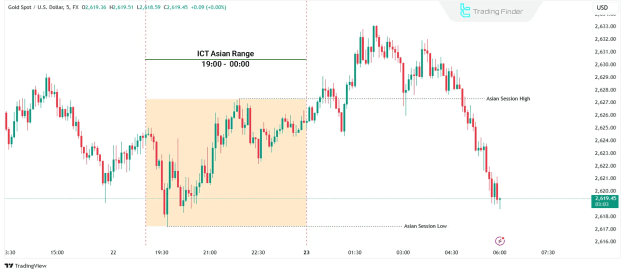


According to the ICT Asian Range trading setup, the price range established during the Asian session offers crucial insights into potential market movements in subsequent sessions.
Key Characteristics of the Asian Range Strategy:
- Timeframe: Typically spans from 7 PM to midnight New York time.
- Identification: Involves identifying the highest and lowest prices recorded within this specific period.
Why is the Asian Range Important?
Understanding the Asian Range can significantly enhance a trader's success rate. Its advantages include:
- Early Market Insights: The Asian Range often sets the tone for the daily market trend, allowing traders to anticipate market sentiment earlier.
- Liquidity Indicators: It reveals the positioning of major market participants, offering valuable clues about potential future price movements.
- Volatility Prediction: The price volatility observed during this session serves as a guide for predicting the level of volatility in subsequent trading sessions.
- Risk Management: The Asian Range provides clear levels for setting effective stop-loss and take-profit orders, aiding in robust risk management.
How to Use the ICT Asian Range Strategy?
To effectively implement the ICT Asian Range strategy, consider these steps:
- Identify the Asian Range: Carefully observe price movements during the Asian session, paying close attention to significant fluctuations.
- Mark the Range: Highlight the highest and lowest prices within this period. These levels will serve as critical reference points.
- Analyze Breakouts: Monitor price movements that extend beyond the defined range, as such breakouts often indicate potential market shifts.
- Examine Market Context: Integrate your Asian Range analysis with overall market trends and your daily bias to improve trading accuracy.
- Execute Trades: Open positions based on identified breakouts from the range or anticipated reversals.
Implementing the ICT Asian Range Strategy in Bullish Conditions
When applying the ICT Asian Range strategy in a bullish market scenario:
- Drawing the Range: Extend the Asian high and low into future sessions to frame your trading setup.
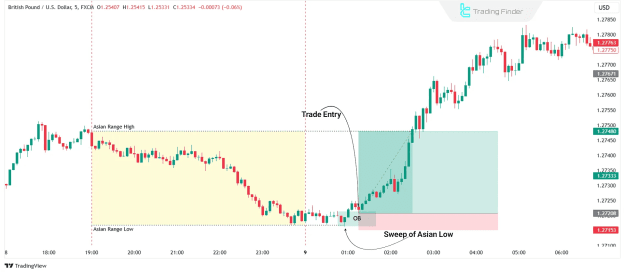
- Looking for Dips: In a bullish market, wait for the price to dip below the Asian low. This often represents a liquidity sweep designed to trap traders.
- Entry Options: After the Asian low is swept, consider these actions:
- Enter a buy position below the midnight New York session open price, but only after the Asian low has been swept.
- Buy when the price reverses and breaks above the Asian high, confirming the bullish trend.
- If the buying opportunity below the midnight open is missed, wait for the price to return to the Asian high during the New York open.
- After the Asian Range liquidity sweep, look for an ICT Market Structure Shift (MSS) to confirm the price reversal.
Implementing the ICT Asian Range Strategy in Bearish Conditions
When applying the ICT Asian Range strategy in a bearish market scenario:
- Drawing the Range: Similar to bullish conditions, extend the range into future sessions to align your trading setup.
- Looking for Breakouts: In a bearish market, wait for the price to rise above the Asian high. This frequently represents a liquidity sweep designed to trap traders.
- Entry Options: After the Asian high is swept, consider these actions:
- Enter a sell position above the midnight New York open price, but only after the Asian high has been swept.
- Sell when the price reverses; the bearish trend is confirmed when the price breaks below the Asian low.
- If the selling opportunity above the midnight open is missed, wait for the price to return to the Asian low during the New York open.
- After the Asian Range liquidity sweep, look for an ICT Market Structure Shift (MSS) to confirm the price reversal.
What Setups Complement the Asian Range Strategy?
Integrating the ICT Asian Range strategy with other setups can further enhance your trading success rate:
- Breakout Strategy:
- Enter trades when the price exits the Asian Range.
- Use volume or other indicators to confirm the breakout, increasing the probability of a successful trade.
- Fair Value Gap (FVG) Strategy:
- Identify significant price gaps formed during breakouts.
- Utilize these Fair Value Gaps as entry or exit points to capitalize on price discrepancies.
- Indicator Integration:
- Combine Asian Range analysis with tools such as RSI, MACD, or moving averages for a more comprehensive approach.
- Analyze multiple timeframes to gain a holistic understanding of prevailing market conditions and trends.
How to Manage Risk in the ICT Asian Range Strategy?
Effective risk management is paramount when employing the ICT Asian Range strategy:
- Position Sizing: Adjust your position size based on your individual risk tolerance and overall account size.
- Stop-Loss Placement: Use the clearly defined boundaries of the Asian Range to determine logical stop-loss levels.
- Risk-Reward Ratio: Execute trades with an appropriate risk-reward ratio (e.g., 1:2) to ensure favorable potential outcomes.
Key Tips for Improving the Asian Range Strategy
To refine and improve your application of the Asian Range strategy:
- Utilize Confluence: Combine this trading strategy with other analytical methods to generate stronger and more reliable signals.
- Monitor Volume: Pay attention to unusual trading volume, as it can provide additional insights and validate trade ideas.
- Risk Management: Always employ stop-loss orders to effectively manage position size and preserve trading capital.
- Maintain a Trading Journal: Document your trading results meticulously to analyze performance and iteratively refine your strategy over time.
Conclusion
The ICT Asian Range Strategy is systematically designed around price movements occurring during the Asian trading session. This ICT strategy empowers traders to identify the Asian Range, accurately analyze breakouts, and integrate the overall market context for more effective trading decisions.