

The Concept of Stop Hunting
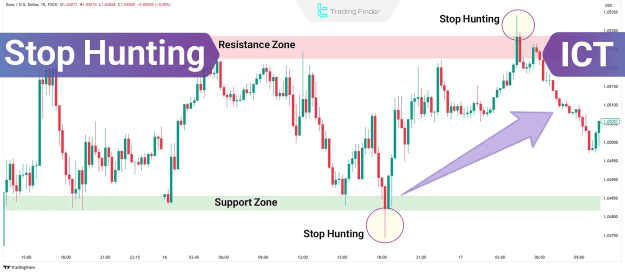
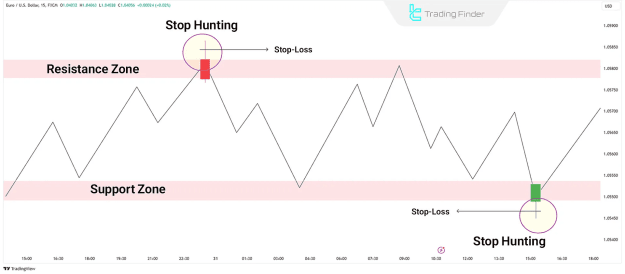
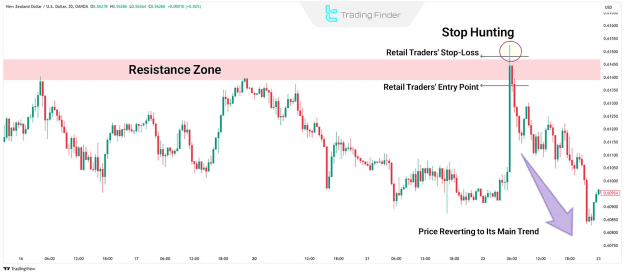
Stop hunting, often referred to as "stop-loss hunting," describes a market phenomenon where prices briefly move to activate stop-loss orders (typically characterized by a price wick or shadow), only to subsequently reverse course and move towards the initial take-profit objective.
Stop Hunting Areas of Retail Traders
Stop hunting primarily targets areas where a high concentration of retail traders' stop-loss orders are anticipated. These often include:
- Levels below established support zones.
- Levels above defined resistance levels.
- Proximity to round numbers (e.g., 1.2000, 100.00).
Objectives of Stop Hunting
Smart money participants execute stop hunting for several strategic reasons:
- Liquidity Extraction: Stop-loss levels represent areas of substantial pending order volume. Large market players leverage these aggregated orders to facilitate their own sizable trades and absorb necessary liquidity.
- Narrowing Price Spread: By generating adequate liquidity through triggered stop losses, market makers can effectively reduce the price spread, thereby lowering the transaction costs associated with entering or exiting large positions.
- Creating Volatility: Stop hunting often induces psychological stress among retail traders, leading to impulsive and emotional trading decisions. These reactive movements contribute to increased volatility in the market, which can be advantageous for market makers.
How Does Stop Hunting Work?
The process of stop hunting typically unfolds in a systematic manner:
- Identification: Market makers first identify price zones where a multitude of stop-loss orders are concentrated.
- Price Drive: They then exert significant trading volume to aggressively drive the price toward these identified areas.
- Triggering: Once prices reach these levels, the embedded stop-loss orders are triggered, releasing a substantial influx of orders into the market, particularly in Forex, thereby creating the required liquidity.
- Reversal: Following the activation of these stop losses, the price frequently reverses and resumes its original directional trend.
Identifying Key Reversal Points in Stop Hunting
Recognizing Stop Hunting Areas for Identifying Reversals and Liquidity
Recognizing stop hunting patterns is crucial for retail traders to navigate volatile market conditions and identify potential reversal points or areas where liquidity has been absorbed.
How to Identify Stop Hunting? Signs of Stop Hunt
To discern stop hunting activity on a price chart, observe the following indicators:
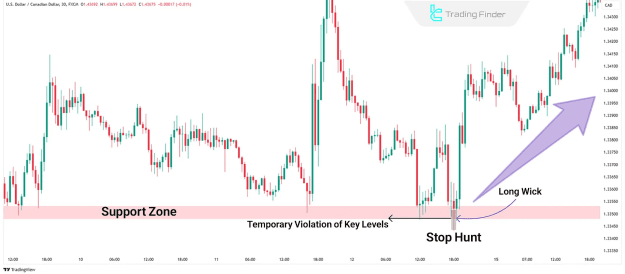
- Long Wicks: A common sign is when the price briefly touches a specific level with a pronounced wick (shadow) and then rapidly reverses its direction.
- Temporary Breaks of Key Levels: The price may temporarily breach significant support or resistance levels but quickly revert to its original trading range.
- Unexpected Volatility: Look for sudden, rapid price movements in one direction, immediately followed by an abrupt and sharp reversal.
Conclusion
Stop hunting is an ingrained phenomenon within financial markets, predominantly employed by market makers to accumulate liquidity and execute large-volume trades at more favorable prices. For retail traders, a thorough understanding and the ability to identify this mechanism are vital for mitigating risk and potentially leveraging these market dynamics to their advantage.