

Evaluating the Profitability from Copy Trading
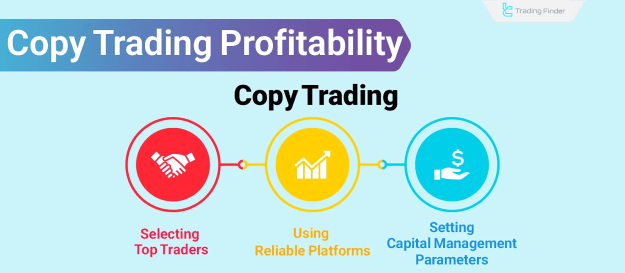
Achieving profitability in copy trading hinges on several critical factors: the selection of the right trader, the implementation of precise risk management settings, and effective capital control. It's highly recommended to initiate a trial phase on a demo account before committing to live trades to ascertain the system's effectiveness.
Once the trial demonstrates reasonable success, beginners should commence copy trading with a small and managed investment. Key strategies to bolster profitability from copy trading include:
- Selecting traders with transparent and reliable trading histories.
- Defining a maximum allowable loss and setting detailed capital management parameters.
- Utilizing reputable platforms with a large user base.
- Choosing platforms equipped with advanced tools for in-depth trading account analysis.
- Continuously monitoring the trader’s performance and the overall status of the copy account.
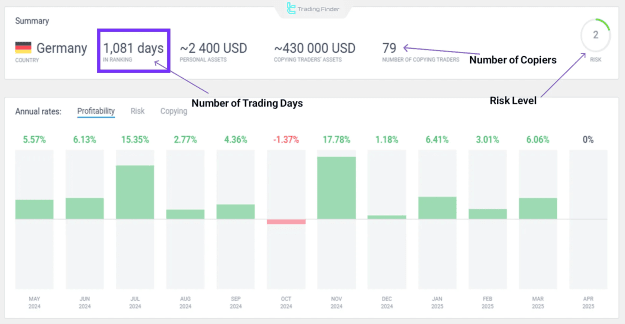
An ideal trader's profile often includes consistent profitability over several months with a controlled risk level, typically around 2%.
Copy Trading Costs
While some copy trading platforms offer complimentary services, many incorporate commissions or additional fees that vary depending on the platform and the chosen trader. These cost structures can include:
- Platforms with no subscription fee but that charge trade commissions or performance-based fees.
- Platforms requiring a monthly subscription or a profit percentage to follow specific traders.
Before committing to a platform, it is crucial to thoroughly review its fee structure. Free platforms can be a good starting point but must also be assessed for their provided tools, security, and reliability. It's important to remember that lower costs don’t always equate to better quality; the paramount considerations are the trader's performance, transparency, and the platform’s security.
How to Choose the Right Trader for Maximum Copy Trading Profitability?
The most pivotal step for success in copy trading is selecting a reliable and professional trader. A comprehensive evaluation involves considering the following factors:
- High ranking on the copy trading platform with a traceable track record among top traders.
- A clearly defined and transparent trading strategy with a well-outlined risk level and an absence of erratic behavior.
- Consistent returns over both short-term and long-term periods.
- A high volume of successful trades and stable performance across varying market conditions.
- Avoidance of repetitive trades in the same price zone, which may indicate misleading behavior.
- A high Profit Factor, accurately reflecting strategy efficiency and execution precision.
- Reviewing the profit history of users connected to the trader to validate the trader’s account data accuracy.
- Ensuring the trader's account belongs to a real person and is not operated by a trading bot.
Given market volatility and evolving risks, analyzing a trader’s short-term performance (e.g., monthly) is often a more insightful approach. This provides a better understanding of their current behavior, stability, and risk control.
Risks of Copy Trading
A common misconception is that copy trading guarantees profits without risk, especially when following a professional trader. In reality, like all trading strategies, copy trading involves inherent and structural risks that can lead to losses if disregarded:
- Even the best traders are susceptible to human errors in decision-making.
- Unreliable or opaque platforms may manipulate performance reports or lead to fund loss.
- Discrepancies in risk tolerance between the trader and investor can cause misalignment; some traders employ high-risk strategies unsuitable for all.
- Commissions, profit-sharing fees, or execution costs on certain platforms can diminish actual returns over time.
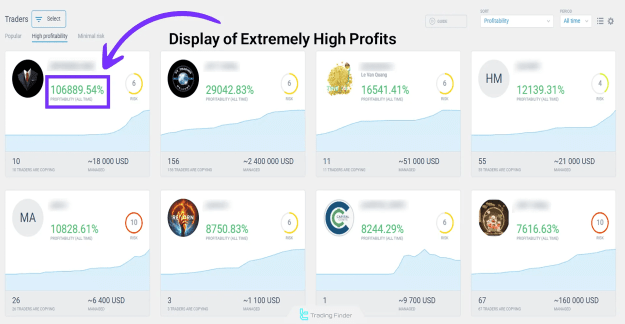
- Displaying extremely high returns on a trader’s account does not guarantee identical results for your linked account.
Therefore, a prudent entry into copy trading necessitates meticulous trader analysis, a thorough review of actual performance, selection of a trusted platform, and the establishment of stringent risk limitations.
Advantages of Copy Trading
Copy trading stands out as an investment methodology that obviates the need for direct trade execution. Its notable advantages include:
- Ideal for beginners: Facilitates market entry without prior experience or expertise.
- Low capital requirement: Eliminates the need for large initial investments.
- Learning while investing: Offers an opportunity to observe professional traders’ real strategies while mirroring them.
- Automated execution: Trades are carried out and settings applied automatically without user intervention.
- Diverse strategies and trader choices: Provides a selection from various traders employing different approaches and strategies.
- Access to multiple markets and instruments: Enables trading in diverse markets such as forex, crypto, stocks, etc.
- Passive investment: Eliminates the need for constant monitoring or real-time analysis.
- Diversification: Allows for distributing capital among different traders to reduce risk.
- Reduced psychological stress: Alleviates pressure from real-time decisions and volatile markets.
- Simplified risk management: Offers tools such as stop loss, capital limits, and emergency stops.
Conclusion
To realize profits from copy trading, the selection of experienced traders and the application of precise risk management are paramount. Continuous monitoring of trader performance and choosing platforms with transparent cost structures significantly influence Copy Trading Profitability. Additionally, to enhance the probability of success, carefully consider the trader’s strategy, return rates, and the number of successful trades during your selection process.