

Historically, currency exchange was done physically via banks or exchange offices for needs like international travel or purchasing foreign goods. Today, Forex has evolved into a decentralized electronic market handling trillions in daily transactions. As the market grows in scale and complexity Forex education plays avital role in helping traders understand market mechanisms, manage risk, and trade effectively.
The Two-Way Market Advantage
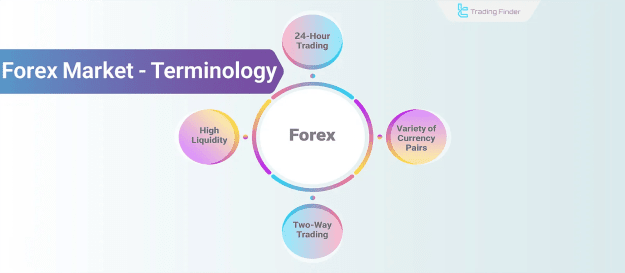
A unique feature of the Forex market (FOREX) is its two-way trading capability, allowing traders to profit from both rising and falling markets.
- Buy (BUY): If a trader expects a currency pair (e.g., EUR/USD) to appreciate, they can buy it and sell later at a higher price.
- Sell (SELL): Conversely, if a decline is anticipated, traders can sell the pair and repurchase it at a lower price to secure profits.
This flexibility ensures trading opportunities in all market conditions.
How the Forex Market Operates
Forex trading involves currency pairs, such as USD/JPY (U.S. dollar vs. Japanese yen).
- Buying USD/JPY means purchasing U.S. dollars while selling Japanese yen.
- Selling USD/JPY involves selling dollars and buying yen.
Profits and losses are determined by price fluctuations in these pairs.
Key Features of the Forex Market
- High Liquidity: With over $6.6 trillion traded daily, Forex is the most liquid financial market.
- 24/5 Trading: The market operates 24 hours a day, five days a week, across different time zones.
- Leverage Trading: Traders can control large positions with minimal capital, though excessive leverage can lead to significant losses.
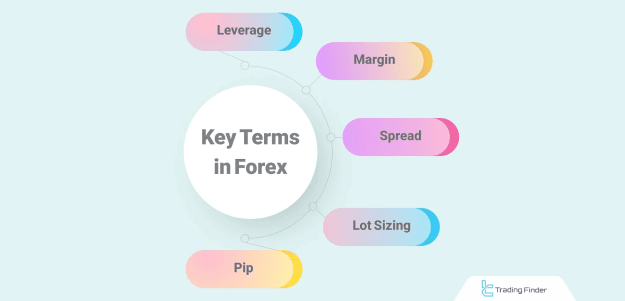
Essential Forex Terms
To navigate Forex effectively, understanding these terms is crucial:
- Buy/Ask: The price at which a trader purchases a currency pair.
- Sell/Bid: The price at which a trader sells a currency pair.
- Lot: Standardized trade size in Forex.
- Leverage: Amplifies trading power but increases risk.
- Pip (Percentage in Point): The smallest price movement in a currency pair.
- Take Profit (TP): A preset level to lock in profits.
- Stop Loss (SL): A safety net to limit losses.
- Spread: The difference between bid and ask prices (trading cost).
- Fundamental Analysis (FA): Evaluating economic and political factors.
- Technical Analysis (TA): Using charts and historical data to predict trends.
Top Forex Trading Platforms
Successful trading requires reliable software. Popular platforms include:
- MetaTrader 4 (MT4): A user-friendly platform ideal for beginners and experts.
- MetaTrader 5 (MT5): An advanced version with enhanced analytical tools.
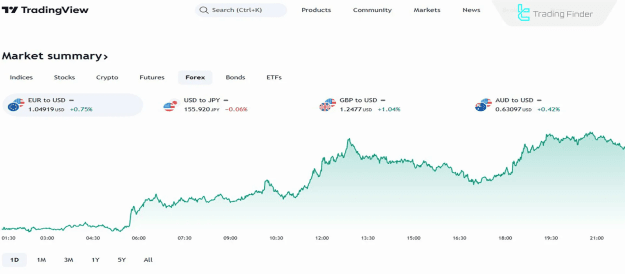
- TradingView: A powerful charting tool for in-depth technical analysis.
Each platform has unique strengths—MT4 is great for beginners, while TradingView offers superior analytical capabilities.
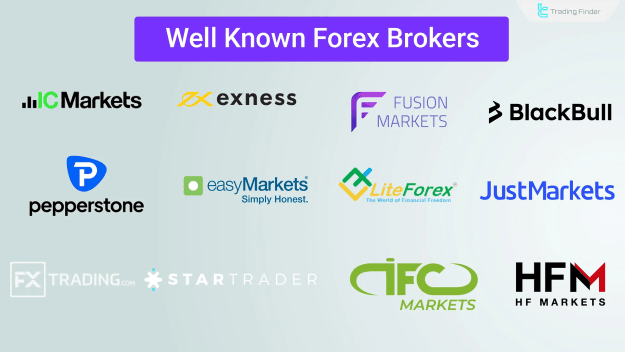
The Role of a Forex Broker
A regulated Forex broker is essential for secure trading. Key broker features include:
- Fast order execution
- Competitive spreads
- Strong customer support
Choosing a reputable broker ensures fund safety and optimal trading conditions.
Risk Management & Emotional Control
Successful traders prioritize:
- Setting Take Profit (TP) and Stop Loss (SL) to manage risk.
- Avoiding impulsive decisions driven by greed or fear.
Ignoring these principles often leads to significant losses, especially for beginners.
Final Thoughts
The Forex market is the world’s largest and most dynamic financial marketplace, offering endless opportunities through currency pairs like EUR/USD and GBP/USD. With sessions in London, New York, and Asia, traders can engage around the clock.
By mastering technical and fundamental analysis, leveraging the right trading platforms, and adhering to risk management, traders can thrive in Forex.