

Identifying the Daily Bias: Key Methodologies
Accurate identification of the ICT Daily Bias hinges on the analysis of specific market dynamics:
1. Daily Timeframe Order Flow
The daily timeframe's order flow serves as a primary indicator for discerning the market's predominant intraday direction. Institutional traders and banks frequently utilize daily charts for precise order execution, making their order flow an invaluable resource for identifying the market's overarching trend.
2. Imbalance to Rebalance
Price movements are often driven by the market's inherent need to address imbalances. Understanding this principle allows traders to pinpoint zones of market disequilibrium, where prices are expected to move either upward or downward to rebalance.
3. Draw on Liquidity
The pursuit of liquidity is another significant driver of price movement. Traders can leverage this concept by identifying prior highs or lows, as these levels frequently serve as targets for price action, aiming to capture available liquidity.
Salient Features of Daily Bias
The correct determination of Daily Bias offers several critical advantages for traders:
- Accurate Market Direction: Provides a precise understanding of the overall market trajectory, minimizing significant trading errors.
- Trend Alignment: Facilitates trading exclusively in the prevailing market direction (e.g., buying during an uptrend, selling during a downtrend).
- Precision in Trade Management: Aids in identifying optimal entry and exit points for trades.
Deciphering Order Flow in the Daily Timeframe
Order flow inherently reflects the ongoing structure of price movement in the market. Its identification involves distinct characteristics for different market conditions:
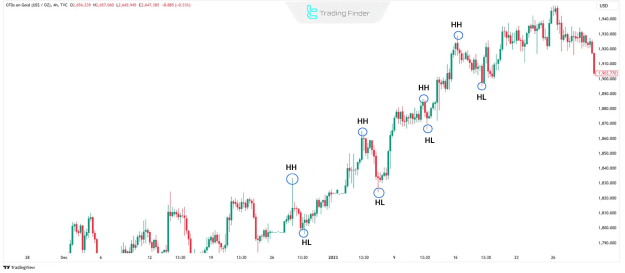
1. Bullish Order Flow
In a bullish order flow environment, prices consistently form higher highs and higher lows as they ascend, typically in pursuit of liquidity or to resolve market imbalances. Under such conditions, the focus should be on identifying buying opportunities, thereby setting the daily bias towards an upward price movement.
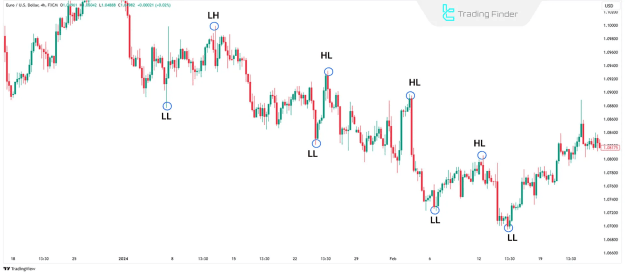
2. Bearish Order Flow
Conversely, bearish order flow is characterized by prices creating lower lows and lower highs as they decline, aiming to capture liquidity and rectify market imbalances. In these circumstances, the emphasis should shift to identifying selling opportunities, establishing a daily bias towards a downward price movement.
The Indispensable Role of Daily Bias
The concept of Daily Bias forms a cornerstone of the ICT methodology due to its profound implications for trading success:
1. Enhanced Decision-Making
By clearly identifying the market's direction (bullish or bearish), Daily Bias prevents trades that run counter to the prevailing market trend, leading to more informed decisions.
2. Superior Trade Accuracy
Focusing on the correct market direction facilitates more precise entry and exit points, thereby mitigating losses typically associated with counter-trend trading.
3. Optimized Risk Management
A comprehensive understanding of the overall market direction safeguards traders from unexpected price reversals and significantly improves risk management protocols.
4. Liquidity Alignment
The market typically gravitates towards areas of high liquidity. Daily Bias plays a crucial role in identifying these zones, allowing traders to align their strategies with expected market movements.
Navigating Bullish Daily Bias
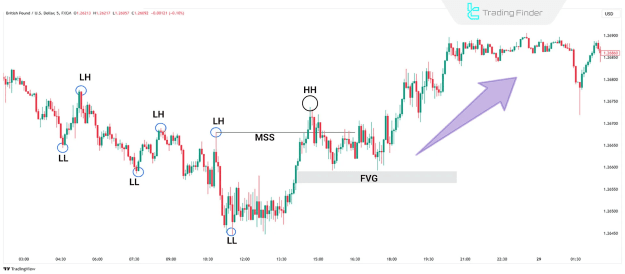
A bullish order flow or the pursuit of high liquidity signals an increased probability of upward price movement, indicating heightened buying pressure within the market. To execute trades based on a bullish daily bias, follow these steps:
- Identify the bullish bias and pinpoint key levels such as Order Blocks, Breaker Blocks, or Fair Value Gaps.
- On smaller timeframes, observe for price interaction with these key levels, coupled with a Market Structure Shift confirmation.
- Upon confirmation, initiate trades aimed at capturing liquidity or resolving identified market imbalances.
Executing Bearish Daily Bias
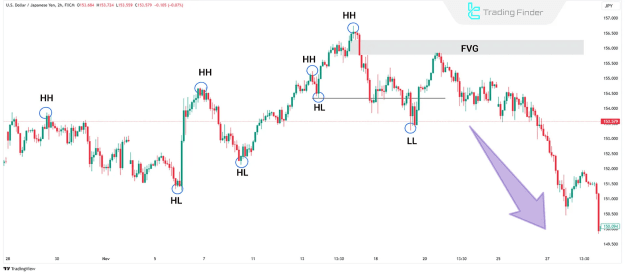
A bearish order flow or the pursuit of high liquidity suggests a higher likelihood of downward price movement, reflecting increased selling pressure in the market. To trade effectively with a bearish daily bias, adhere to these guidelines:
- Identify the bearish bias and delineate critical levels like Order Blocks, Breaker Blocks, or Fair Value Gaps.
- On smaller timeframes, await price interaction with a key level and confirm a Market Structure Shift.
- Once confirmed, execute trades designed to capture liquidity or address market imbalances.
Conclusion
The ICT Daily Bias is an integral element of the ICT trading framework, empowering traders to accurately determine the market's overall direction for any given trading day. By skillfully integrating principles such as liquidity and order flow, this methodology enables traders to harmonize their strategies with the prevailing market trend, thereby avoiding detrimental counter-trend trades.