

What is a Mitigation Block?
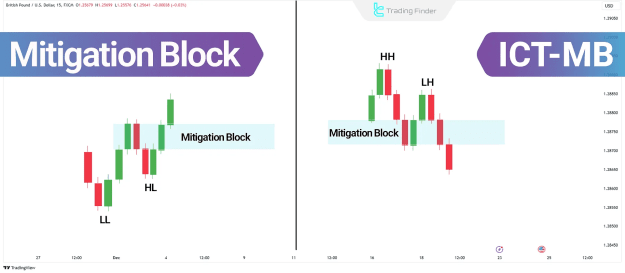
A Mitigation Block (MB) is an area where institutional players, often referred to as "smart money," adjust or "settle" their orders before a significant change in price direction. This zone frequently acts as a support or resistance level for subsequent price movements. Essentially, it represents a point of mitigation for previous market activity, allowing for a new directional bias to emerge.
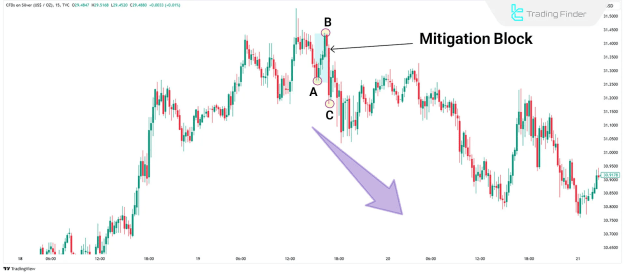
Example of a Mitigation Block
Consider a scenario in the XAG/USD 15-minute chart. Initially, the price exhibits an uptrend, characterized by the formation of higher highs (HH) and higher lows (HL). Upon encountering a bearish reference area, the price fails to establish a new high and begins to decline. This decline leads to a break of the previous low, signaling a bearish market structure shift. The area from which this decisive break occurred, following the failure to make a new high, forms the Mitigation Block. Subsequently, a return to this block often presents a favorable selling opportunity, aligning with the new bearish market bias.
How to Identify a Mitigation Block?
Identifying Mitigation Blocks involves recognizing specific price action sequences that indicate a change in market structure. These blocks are categorized into two primary types:
#1 Bearish Mitigation Block
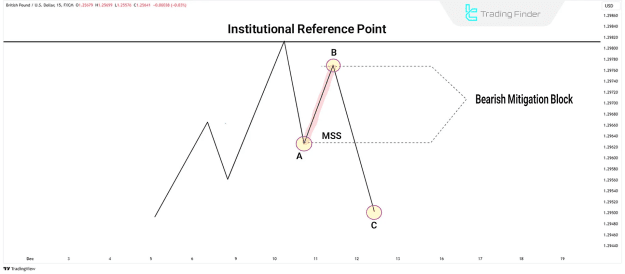
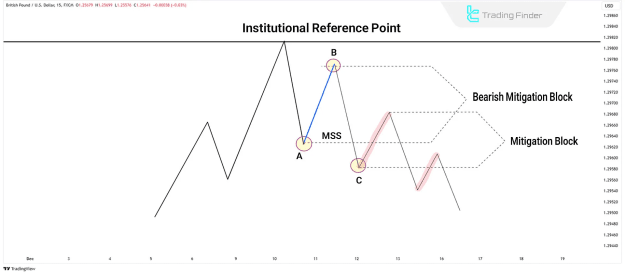
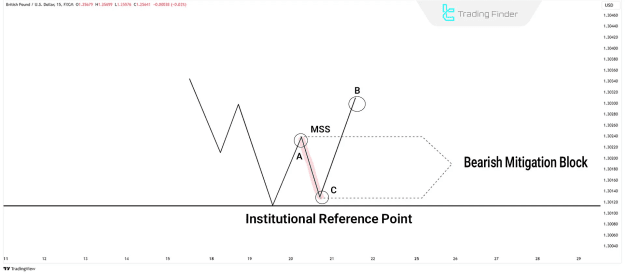
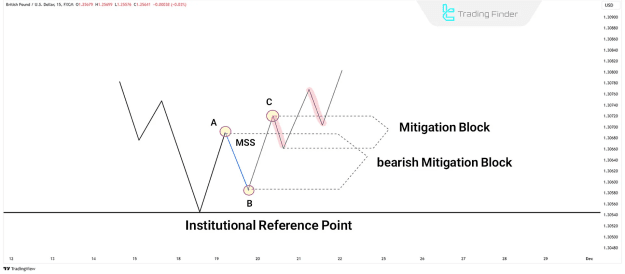
A Bearish Mitigation Block typically forms at the culmination of an uptrend.
- When the price reaches a strong bearish level, it fails to create a new higher high (HH). Instead, it forms a lower high (LH).
- Following this, the price breaks below the previous higher low (HL). This action serves as a clear signal of a market structure shift towards bearishness.
Steps to Identify a Bearish Mitigation Block
- The price approaches a key level on a higher timeframe.
- On a lower timeframe, the following sequence unfolds:
- The price first creates a Higher High (HH) and a subsequent Higher Low (HL).
- The Higher Low (HL) then fails to produce a new high, leading to the price breaking below it.
- A Break of Structure (BOS) occurs, resulting in the formation of a Lower High (LH).
Note: The critical area for the Bearish Mitigation Block is the zone between the broken high (the HL that failed to create a new HH) and the Lower High (LH). This zone represents where traders who were long during the rally reduce their positions, and "smart money" initiates selling, driving the price lower.
#2 Bullish Mitigation Block
Conversely, a Bullish Mitigation Block emerges at the conclusion of a downtrend.
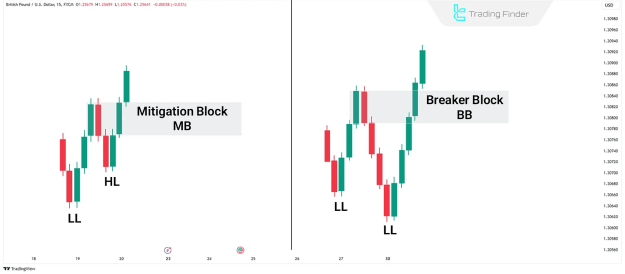
- When the price reaches a strong support level, it fails to form a new lower low (LL). Instead, it creates a higher low (HL).
- Subsequently, the price surpasses the previous lower high (LH), indicating a market structure shift towards bullishness.
Steps to Identify a Bullish Mitigation Block
- The price reaches an important support zone on a higher timeframe.
- On a lower timeframe, this specific sequence is observed:
- The price initially creates a Lower Low (LL), followed by a Lower High (LH).
- The Lower High (LH) then fails to create a new low, and the price breaks above it.
- A Break of Structure (BOS) takes place, leading to the formation of a Higher Low (HL).
Note: The Bullish Mitigation Block is identified as the zone between the broken low (the LH that failed to create a new LL) and the Higher Low (HL). Within this zone, traders who were selling during the downtrend mitigate their losses, and "smart money" begins to accumulate buying positions, pushing the price higher.
Difference Between Mitigation Block and Breaker Block
While both Mitigation Blocks and Breaker Blocks are crucial concepts in ICT trading that signal potential reversals, they possess distinct characteristics:
- Functionality:
- Mitigation Block: This is the zone where "smart money" manages and settles previously opened orders before a definitive change in price direction occurs. It's about mitigating existing exposure.
- Breaker Block: This zone signifies where the price definitively breaches a significant high or low, confirming the end of the previous trend and establishing a new directional bias. It's about breaking and continuing.
- Market Structure:
- Mitigation Block: In a Mitigation Block scenario, the price does not typically reach or sweep the absolute previous high or low. Instead, it stalls and fails to extend the existing trend (e.g., fails to make a higher high in an uptrend or a lower low in a downtrend). This failure directly precedes a market structure shift into a new direction.
- Breaker Block: A Breaker Block forms specifically when the price decisively breaks a previous high or low. This break itself is the catalyst for the market structure change, initiating a new trend.
Conclusion
The Mitigation Block is a powerful analytical tool within the ICT Style, enabling traders to identify critical zones where the market structure is undergoing a transformation. Recognizing these blocks offers valuable trading opportunities for both buying and selling, allowing traders to align their strategies with the sophisticated movements of "smart money." Mastering the identification and application of Mitigation Blocks can significantly enhance a trader's ability to navigate and profit from market reversals.