

Breaker Block and Order Block Indicator:
Breaker Block and Order Block Indicator MT4
Breaker Block and Order Block Indicator MT5
What is a Breaker Block?
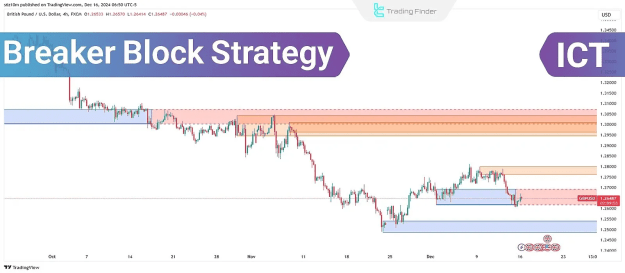
A Breaker Block is essentially an Order Block (OB) that has been decisively breached by price. Following this breach, the former Order Block reverses its function, acting as a new support or resistance zone during subsequent price retracements. This pivotal shift is typically initiated by a Liquidity Sweep followed by a Market Structure Shift (MSS).
Types of Breaker Blocks
Breaker Blocks manifest in two distinct forms:
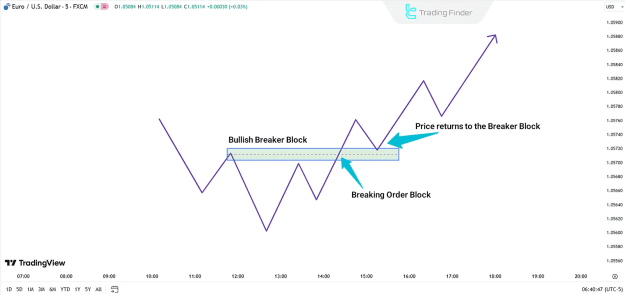
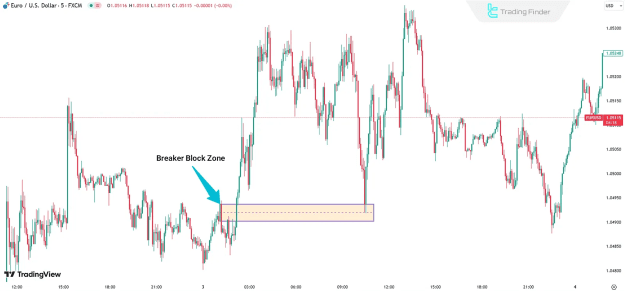
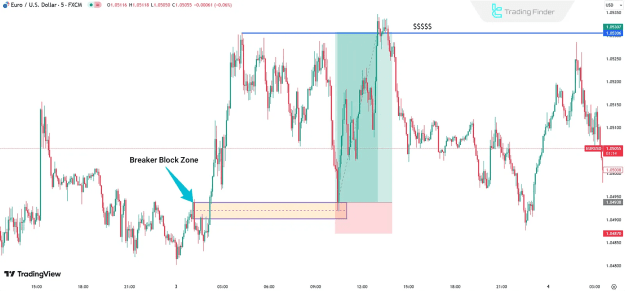
- Bullish Breaker Block: This occurs when a bearish Order Block (OB-) is broken by an upward price movement. Once broken, this former resistance zone transforms into a support level, facilitating further price ascent.
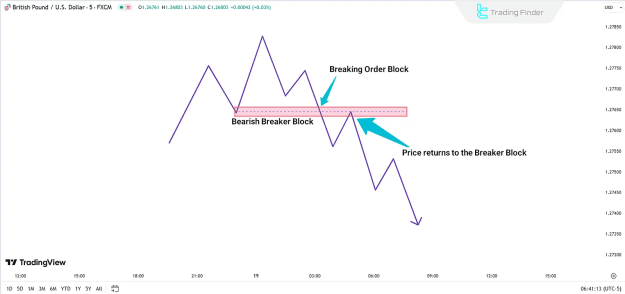
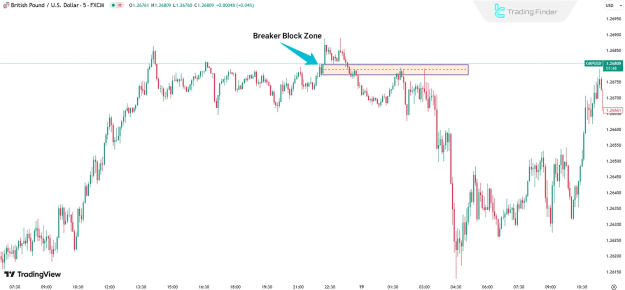
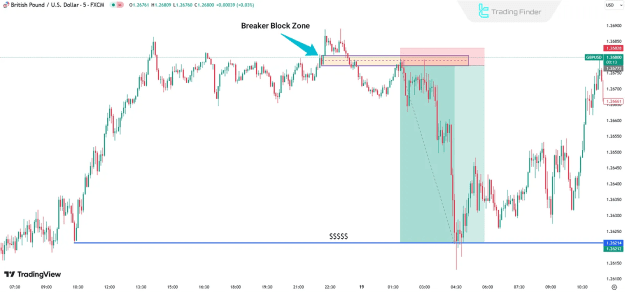
- Bearish Breaker Block: Conversely, a bullish Order Block (OB+) that is broken by a downward price movement becomes a Bearish Breaker Block. In this scenario, the former support zone shifts its role to act as a resistance level, contributing to continued price depreciation.
Principles for Identifying a Breaker Block (BB)
For a Breaker Block to be validated, the following criteria must be assessed:
- Liquidity Sweep: Price action must first capture liquidity located beyond a significant zone.
- Order Block Break: Price must decisively breach either the upper limit (for a bearish OB) or the lower limit (for a bullish OB), thereby invalidating the original Order Block.
- Market Structure Shift (MSS): A confirmed reversal in the prevailing trend, from bullish to bearish or vice versa, is essential.
Step-by-Step Guide for Trading with Breaker Blocks
To effectively implement the Breaker Block trading strategy, follow these sequential steps:
#1 Identify the Market’s Overall Trend
Begin by determining the overarching market direction using higher timeframes. This ensures that any identified Breaker Block aligns with the dominant trend, enhancing trade confluence.
#2 Wait for a Liquidity Sweep
Observe for price action to move into a liquidity pool, absorb the available liquidity, and subsequently reverse its direction. This often precedes the formation of a Breaker Block.
#3 Identify the Order Block Break (OB)
The breaking of an existing Order Block signifies its transformation into a Breaker Block:
- If price closes above a bearish Order Block, a Bullish Breaker Block is formed.
- If price closes below a bullish Order Block, a Bearish Breaker Block is formed.
#4 Enter the Trade
Once the Breaker Block zone has clearly formed, patiently await price to retrace back to this area. Entry should ideally be confirmed with additional Market Structure Shift (MSS) or Change of Character (CHoCH) signals.
Trade Parameters for Breaker Block Setups
For both bullish and bearish Breaker Block trades, consider the following parameters:
- Bullish Breaker Block:
- Entry Point: When price retraces to the newly formed Bullish Breaker Block zone.
- Stop Loss (SL): Placed slightly below the Breaker Block area to manage risk.
- Take Profit (TP): Target liquidity levels positioned on the opposite side of the price action.
- Bearish Breaker Block:
- Entry Point: When price retraces to the newly formed Bearish Breaker Block zone.
- Stop Loss (SL): Placed slightly above the Breaker Block area.
- Take Profit (TP): Target liquidity levels located on the opposite side of the price action.
Best Timeframes and Markets for Breaker Blocks
The Breaker Block strategy is most effective when applied with specific timeframes and within particular markets:
Timeframes
- Higher Timeframes (e.g., Daily): Utilize for analyzing the overall market trend and identifying key structural levels.
- Lower Timeframes (e.g., 5-minute or 15-minute): Employ for precise entry execution once the Breaker Block has formed and price has retraced.
Markets
- The Breaker Block strategy is highly applicable across a range of financial markets, including Forex, Futures, and Cryptocurrency markets.
Advantages and Limitations of the Breaker Block Strategy
Advantages
- Accurately identifies zones influenced by liquidity bias.
- Offers broad applicability across diverse financial markets.
- Enhances trading precision when combined with Market Structure Shift (MSS) confirmation.
Limitations
- Requires advanced analytical skills for accurate zone identification.
- Carries the risk of false signals particularly in highly volatile market conditions.
Comparison of Breaker Block and Order Block
The relationship between Breaker Blocks and Order Blocks is foundational to the ICT methodology:
- Order Block (OB): This is an initial zone where price is expected to either reverse or continue its movement.
- Breaker Block (BB): This is an Order Block that has been decisively broken by price, leading to a transformation of its role. A former support-acting Order Block becomes a resistance-acting Breaker Block, and vice versa.
Conclusion
The Breaker Block strategy in ICT trading offers a sophisticated approach to identifying crucial market turning points. By focusing on the transformation of broken Order Blocks and the capture of liquidity, traders can pinpoint precise entry and exit opportunities. Successful implementation of this strategy demands a thorough understanding of market structure, appropriate timeframe analysis, and the diligent use of confirmation signals. Its versatility makes it a valuable tool across various financial markets and timeframes.