



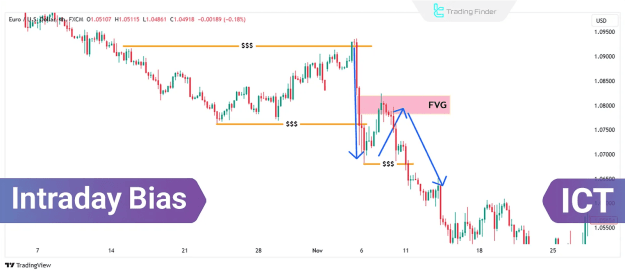
The Intraday Bias concept, rooted in the ICT (Inner Circle Trader) methodology, offers a framework for analyzing ongoing market trends within the 1-hour and 4-hour timeframes. This approach, crucial for comprehensive forex education, mirrors the principles of Daily Bias but narrows its focus to lower timeframes, leveraging market structure, liquidity zones, and Fair Value Gaps (FVGs) to pinpoint potential trend direction.
What Is Intraday Bias?
Intraday Bias is a predictive methodology employed to forecast future market trends in shorter timeframes, specifically the 4-hour and 1-hour charts. Effective application of this approach necessitates a thorough understanding of key concepts such as displacement, liquidity zones, and Fair Value Gaps (FVGs).
How to Use Intraday Bias
To accurately identify and capitalize on Intraday Bias, follow these sequential steps:
1. Identifying Liquidity Zones
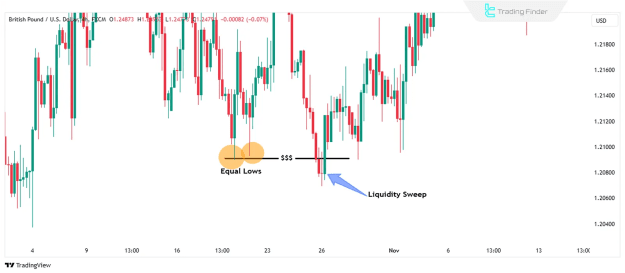
Liquidity zones are ubiquitous across all timeframes. However, for the Intraday Bias model, the critical liquidity areas within the 4-hour and 1-hour timeframes are meticulously examined. Liquidity often resides behind previous swing highs or lows, equal highs/lows, or other established support and resistance levels.
2. Finding Displacement Moves
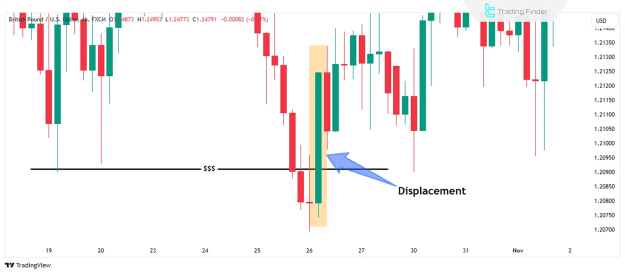
Displacement moves are characterized by a series of robust candles with large bodies, signaling a rapid market surge that triggers a structural shift. These displacements are indicative of smart money actively accumulating liquidity and a significant influx of orders into the market.
3. Identifying Fair Value Gaps (FVGs)
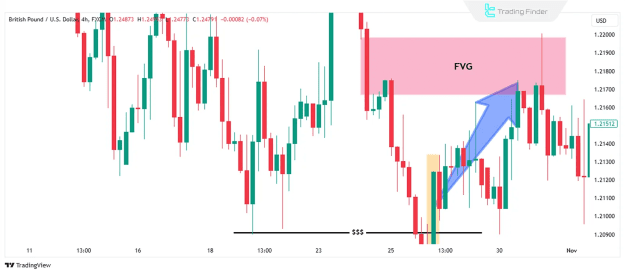
Subsequent to liquidity collection, price typically gravitates towards an imbalance or a Fair Value Gap (FVG). Consequently, FVG zones serve as pivotal drivers for price movements within this methodology.
4. Examining Recent Price Behavior
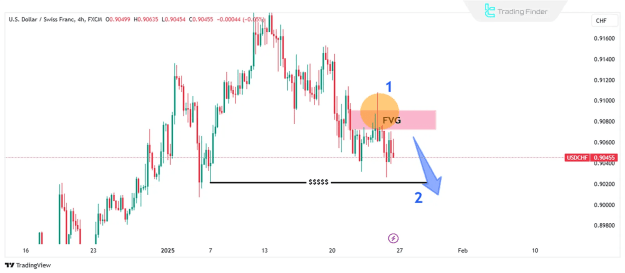
At this juncture, the most recent price action within the 4-hour or 1-hour timeframe is rigorously analyzed. If the market has recently entered an FVG zone, its subsequent target is likely to be a liquidity level. Conversely, if a liquidity sweep has occurred, the price's immediate objective will generally be to move towards an FVG.
5. Dropping to Lower Timeframes
Once the future price direction has been established, traders can then seek out specific trade setups in lower timeframes (5-minute and 1-minute). For instance, if the 4-hour timeframe indicates price is advancing towards an FVG, the next logical target is often a liquidity sweep on the opposing side. Therefore, stop loss (SL) and entry zones are optimally defined based on lower timeframes, while take profit (TP) levels are ascertained using higher timeframes.
Key Points in Using Intraday Bias
To optimize your success with this methodology, bear the following crucial points in mind:
What Is Intraday Bias?
Intraday Bias is a predictive methodology employed to forecast future market trends in shorter timeframes, specifically the 4-hour and 1-hour charts. Effective application of this approach necessitates a thorough understanding of key concepts such as displacement, liquidity zones, and Fair Value Gaps (FVGs).
How to Use Intraday Bias
To accurately identify and capitalize on Intraday Bias, follow these sequential steps:
1. Identifying Liquidity Zones
Liquidity zones are ubiquitous across all timeframes. However, for the Intraday Bias model, the critical liquidity areas within the 4-hour and 1-hour timeframes are meticulously examined. Liquidity often resides behind previous swing highs or lows, equal highs/lows, or other established support and resistance levels.
2. Finding Displacement Moves
Displacement moves are characterized by a series of robust candles with large bodies, signaling a rapid market surge that triggers a structural shift. These displacements are indicative of smart money actively accumulating liquidity and a significant influx of orders into the market.
3. Identifying Fair Value Gaps (FVGs)
Subsequent to liquidity collection, price typically gravitates towards an imbalance or a Fair Value Gap (FVG). Consequently, FVG zones serve as pivotal drivers for price movements within this methodology.
4. Examining Recent Price Behavior
At this juncture, the most recent price action within the 4-hour or 1-hour timeframe is rigorously analyzed. If the market has recently entered an FVG zone, its subsequent target is likely to be a liquidity level. Conversely, if a liquidity sweep has occurred, the price's immediate objective will generally be to move towards an FVG.
5. Dropping to Lower Timeframes
Once the future price direction has been established, traders can then seek out specific trade setups in lower timeframes (5-minute and 1-minute). For instance, if the 4-hour timeframe indicates price is advancing towards an FVG, the next logical target is often a liquidity sweep on the opposing side. Therefore, stop loss (SL) and entry zones are optimally defined based on lower timeframes, while take profit (TP) levels are ascertained using higher timeframes.
Key Points in Using Intraday Bias
To optimize your success with this methodology, bear the following crucial points in mind:
- Accurately identify liquidity zones. Precision in pinpointing these areas is paramount.
- Displacement must follow liquidity collection. This sequential order is a core tenet of the strategy.
- FVGs within displacement moves carry greater significance. Such FVGs offer stronger signals.
- Avoid trading against the higher timeframe direction. The probability of failure is considerably elevated when contradicting the overarching trend.
Conclusion
Intraday Bias concentrates on trend analysis within the 1-hour and 4-hour timeframes, emphasizing the interplay of market structure, liquidity, and Fair Value Gaps (FVGs) to determine the likely price trajectory. By adeptly identifying liquidity zones, displacement moves, and FVGs, this method empowers traders with a profound understanding of price movement dynamics.
Attached Image(s) (click to enlarge)
Attached File(s)
