

Propulsion Block (ICT) Indicator
Propulsion Block (ICT) Indicator MT4
Propulsion Block (ICT) Indicator MT5
What is an ICT Propulsion Block?
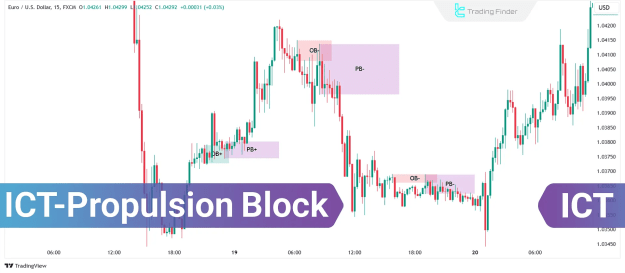
In trading, the term "propulsion" signifies a forceful movement forward. An ICT Propulsion Block refers to a single candlestick that, after trading within an existing order block, propels the price significantly away from that block. This creates a distinct point where traders can anticipate future price reactions.
Identifying Different Types of ICT Propulsion Blocks
Propulsion Blocks are categorized into two primary types: Bullish and Bearish, each with distinct characteristics and trading implications.
Bullish ICT Propulsion Block (PB+)
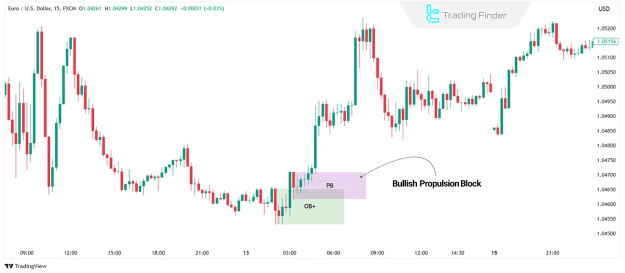
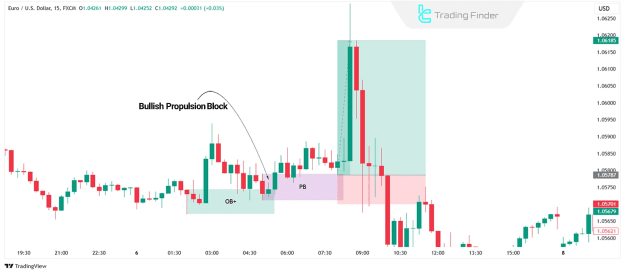
A Bullish ICT Propulsion Block (PB+) is identified as the last bearish candle that enters a bullish order block and subsequently drives the price forcefully upward. When the price re-approaches this Propulsion Candle in the future, it is expected to act as dynamic support, leading to another upward price movement.
How to Trade a Bullish ICT Propulsion Block
To effectively trade a Bullish ICT Propulsion Block, follow these systematic steps:
- Identify the Mean Threshold Level (MT):
- Utilize the Fibonacci tool to measure from the high to the low of the Propulsion Candle. The 50% retracement level represents the Mean Threshold (MT).
- Assess the Block's Quality:
- For a valid Bullish Propulsion Block, the price should not move below the block's Mean Threshold (MT) after the initial propulsion.
- Wait for Price to Return:
- Patiently await the price to return and retest the identified Propulsion Candle.
- Enter a Buy Trade:
- Once the price approaches the Mean Threshold, execute a buy trade.
- Stop-Loss: Place your stop-loss order a few pips below the low of the Propulsion Candle.
- Take-Profit: Target the next liquidity level on the buy-side or use Fibonacci extension levels to determine appropriate take-profit targets.
Bearish ICT Propulsion Block (PB-)
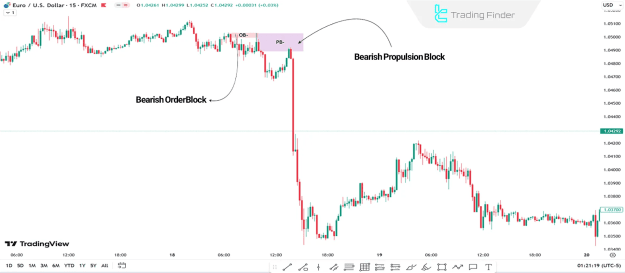
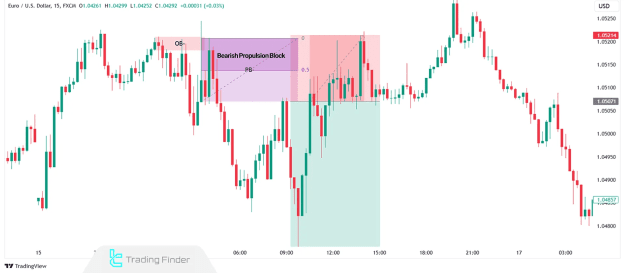
Conversely, a Bearish ICT Propulsion Block (PB-) is the last bullish candle that trades within a bearish order block before pushing the price decisively downward. Upon the price's return to this Propulsion Candle, it is anticipated to function as robust resistance, leading to a subsequent price decline.
How to Trade a Bearish ICT Propulsion Block
Trading a Bearish ICT Propulsion Block involves a similar structured approach:
- Identify the Mean Threshold Level (MT):
- Employ the Fibonacci tool to measure from the high to the low of the Propulsion Candle. The 50% retracement level will be the Mean Threshold (MT).
- Assess the Block's Quality:
- For a valid Bearish Propulsion Block, the price should not exceed the block's Mean Threshold (MT) after the initial downward propulsion.
- Wait for Price to Return:
- Allow the price to return and retest the identified Propulsion Candle.
- Enter a Sell Trade:
- As the price nears the Mean Threshold, initiate a sell trade.
- Stop-Loss: Position your stop-loss order a few pips above the high of the Propulsion Candle.
- Take-Profit: Aim for the next liquidity level on the sell-side or utilize Fibonacci extension levels for determining take-profit objectives.
Conclusion
The ICT Propulsion Block serves as a powerful tool for traders seeking to identify highly precise entry points across various trading styles, including scalping, day trading, and swing trading. Understanding the formation and application of these blocks—with Bullish PBs forming from the last bearish candle within a bullish order block and Bearish PBs from the last bullish candle within a bearish order block—can significantly enhance trading accuracy.