

Understanding the Cryptocurrency Market
The cryptocurrency market is a relatively nascent financial domain characterized by a low market cap. Despite Bitcoin's more than decade-long existence and rapid market expansion, its overall market value remains considerably smaller compared to established traditional markets, including stocks, the Forex market, and bonds.
Comparing market capitalization and trading volume across different markets reveals this disparity:
- The Forex market boasts a daily trading volume of approximately $7 trillion.
- The Global Stock Market reached $120 trillion in market capitalization by 2023.
- The Cryptocurrency Market stood at $3.20 trillion in February 2025.
- The Global Bond Market exceeded $130 trillion in 2022.
- Gold's market value was $19 trillion in February 2025.
Why Should We Pay Attention to the Crypto Market Cap?
A low market cap directly facilitates market manipulation by market makers. For instance, an asset with a market value of $1 billion could see its price double (100% increase) with an inflow of just $1 billion. Conversely, the same investment amount in an asset with a market value of $100 billion would only result in a 1% price increase. This illustrates that a higher market cap inherently makes it more challenging to significantly influence price movements, explaining why assets with low market caps exhibit extreme volatility.
The Trap of Meme Coins
Within crypto market trading, a significant hazard is falling prey to meme coin traps. Meme coins are digital assets that lack credible underlying projects, with their value driven almost exclusively by hype and social media trends.
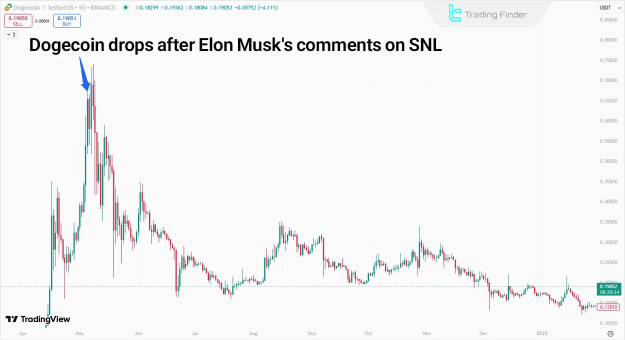
A notable example is the 2021 surge in Dogecoin's price, heavily influenced by tweets from Elon Musk, a prominent figure in financial circles. Elon Musk sought substantial demand to divest his Dogecoin holdings. On May 5, 2021, he generated significant hype by announcing his intention to discuss Dogecoin on a television program. However, contrary to public expectations, he was concurrently liquidating his positions. Following the broadcast, Dogecoin's price experienced a dramatic plummet, underscoring the inherent risks associated with meme coins in cryptocurrency trading.
External Factors Affecting Cryptocurrencies
Macroeconomic conditions, such as prevailing monetary policy trends and key economic indicators like inflation, unemployment rates, and GDP growth, significantly influence the market by altering liquidity levels. Furthermore, geopolitical risks or broader economic-political uncertainties directly impact overall market sentiment, consequently affecting price trends.
Macroeconomic Conditions
To accurately assess macroeconomic conditions, traders meticulously analyze economic data, monetary policy trends, and liquidity levels. While economic reports can induce short-term volatility, long-term market trends are predominantly shaped by monetary policy decisions. For example, if U.S. inflation data surpasses expectations, it typically strengthens the dollar and can trigger a crypto market downturn.
The Impact of Monetary Policy and Liquidity on Cryptocurrencies
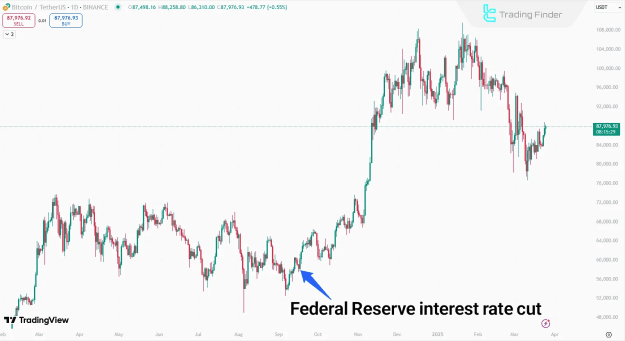
Monetary policy directly influences the cryptocurrency market by affecting liquidity. An increase in liquidity flowing into risk assets typically fuels crypto market growth. Conversely, a liquidity contraction leads to capital outflows and subsequent market declines. For instance, in September 2024, Bitcoin initiated an upward trend following the Federal Reserve's decision to cut interest rates, an expansionary policy that boosts liquidity.
Overall Market Sentiment
During periods of risk-on sentiment, risky assets like cryptocurrencies tend to rally. In contrast, risk-off sentiment typically instigates sell-offs across volatile markets. Data that aligns with dovish monetary policy and general economic optimism generally strengthens investor risk appetite.
The Importance of Risk Management in Cryptocurrency Trading
Cryptocurrencies constitute a nascent market with a very low market cap relative to established financial sectors. Given their inherent high risk and extreme volatility, effective risk management is absolutely vital in crypto trading. With proper risk management, even if a stop-loss order is triggered, only a predetermined portion of the allocated capital is lost, protecting the overall portfolio.
Reasonable Risk per Trade
While there is no universally rigid rule for the amount of risk to undertake per trade, most financial experts advise keeping it below 1% of total trading capital. Adhering to this guideline requires careful calculation of position sizes to ensure that, should a stop-loss be triggered, the loss does not exceed 1% of the overall portfolio.
Psychology in Crypto Trading
Risk and potential losses are intrinsic components of trading. While fear is a natural human emotion, it can be effectively managed through robust risk management practices. Conversely, during bull markets, greed often compels traders to pursue higher profits or utilize excessive leverage, leading to increased exposure.
Signs of Fear in Trading:
- Prematurely exiting profitable trades.
- Making poor decisions during periods of extreme volatility.
Signs of Greed in Trading:
- Employing excessive leverage.
- Increasing exposure to winning positions, thereby escalating risk.
- Disregarding pre-defined exit strategies in pursuit of larger gains.
How to Manage Fear and Greed?
A well-defined clear trading strategy coupled with disciplined capital management is essential for controlling emotions. Key Emotion Control Techniques include:
- Stick to Your Strategy: Pre-define entry and exit points, stop-losses, and risk rules before initiating any trade.
- Risk Management: Determine the maximum acceptable loss for a trade prior to entering it.
Conclusion
The extreme volatility in cryptocurrencies, largely attributable to their low market caps, positions them as both high-reward and high-risk assets. To navigate and thrive in this market, stringent risk management practices—including the diligent use of stop-losses, setting clear profit targets, and maintaining unwavering discipline—along with robust emotional control are absolutely mandatory.