

Foundations of the ICT Strategy
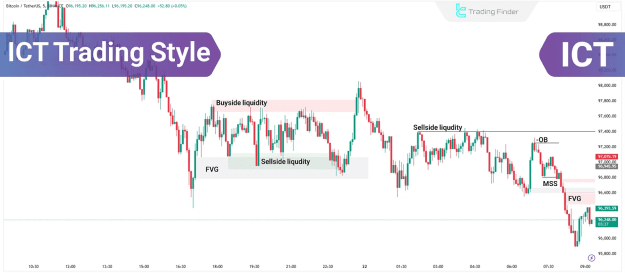
ICT trading is built upon concepts rooted in institutional order flow and price behavior. It emphasizes reading market conditions directly from the chart by focusing on how financial institutions influence price movement. Key elements of this methodology include:
- Prioritizing price action over indicator signals;
- Identifying zones of interest used by institutional traders;
- Utilizing advanced concepts such as:
- Order Blocks
- Liquidity Pools
- Fair Value Gaps (FVGs)
- Market Structure Shifts (MSS)
Who Is ICT Trading Suitable For?
ICT is best suited for traders who are serious about learning the inner workings of the forex market. It is ideal for:
- Those committed to in-depth chart study and analysis;
- Traders seeking a logic-driven, non-indicator-based strategy;
- Individuals capable of maintaining emotional control under market pressure;
- Market participants interested in institutional-level trading insights.
This strategy may not be appropriate for:
- Beginners with limited exposure to forex education;
- Traders looking for fast or automated trade signals;
- Individuals unwilling to invest time in mastering complex concepts.
Guidelines for Implementing ICT Effectively
Success with the ICT method requires discipline, practice, and a methodical approach. Consider the following when applying this trading style:
- Be patient: Understanding and applying concepts like Order Blocks and Liquidity takes time;
- Implement risk control: Establish clear risk management rules for each trade;
- Stay informed: Keep studying market behavior and update your knowledge continuously;
- Backtest setups: Evaluate the reliability of your strategy with historical data before live trading.
Key Concepts in ICT Trading
Understanding specific terminology is essential for effectively applying the ICT strategy. Below is a breakdown of the primary concepts used by ICT traders.
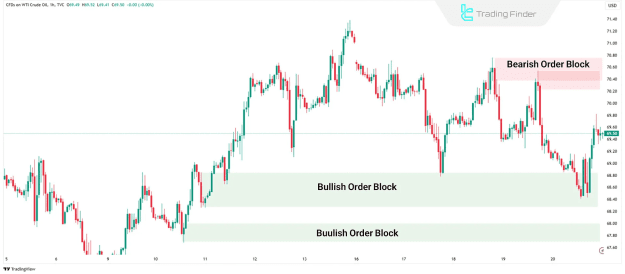
Order Block
Order Blocks represent areas where institutional orders have accumulated, often leading to major price movements. These zones act as strong levels of support or resistance and serve as reliable reference points for potential trade entries.
Smart Money
“Smart Money” refers to the capital controlled by large institutions and professional investors who influence market direction through high-volume trades. ICT methodology focuses on tracking Smart Money behavior to align retail positions with institutional intent.
Liquidity
In ICT trading, liquidity zones are price levels where clusters of stop-loss orders are likely placed. These are categorized as:
- Buy-side liquidity: Located below recent lows where sell stops accumulate;
- Sell-side liquidity: Found above recent highs where buy stops are triggered.
Market makers often push price into these zones to collect liquidity before reversing the trend.
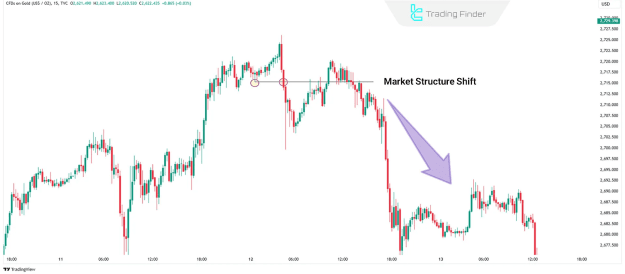
Market Structure Shift (MSS)
A Market Structure Shift indicates a reversal or break in the prevailing trend. This occurs when:
- An uptrend forms a lower high or lower low;
- A downtrend breaks with a higher high or higher low.
Such shifts suggest a change in institutional sentiment and potential trade opportunities.
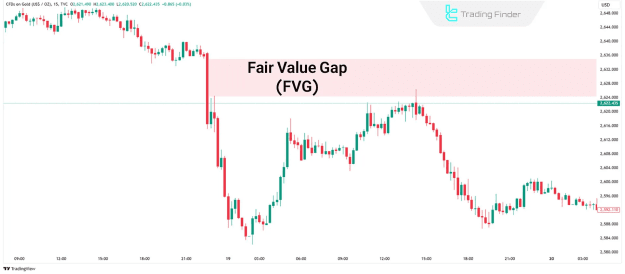
Fair Value Gap (FVG)
Fair Value Gaps arise when there is an imbalance in price between two candlesticks, typically caused by sudden volatility. These gaps highlight inefficiencies in price delivery and are often revisited, providing high-probability entry zones.
Inducement
Inducement refers to short-term price moves designed to mislead retail traders into premature entries. These moves are intended to generate liquidity for larger institutional trades and often precede significant market reversals.
Balanced Price Range
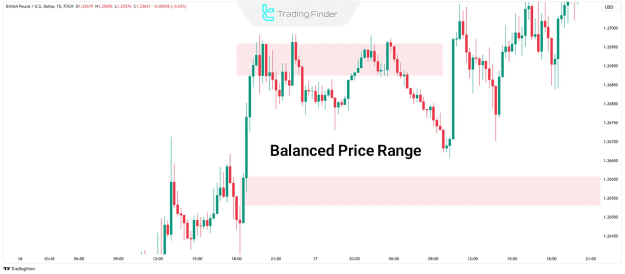
A Balanced Price Range is formed when price fluctuates rapidly between two levels, reflecting temporary equilibrium between supply and demand. These zones may resemble a dual-sided FVG and often precede directional movement.
Advantages and Challenges of ICT Trading
Benefits
- Provides deeper insight into institutional behavior;
- Encourages informed and strategic trading decisions;
- Minimizes dependency on lagging indicators;
- Supported by extensive educational material developed by industry expert Michael J. Huddleston.
Challenges
- Requires long-term commitment and practice to master;
- Involves complex market concepts not suitable for beginners;
- Prone to misinterpretation if not studied thoroughly.
Conclusion
A Professional-Level Trading Framework
The ICT trading methodology offers a comprehensive and structured framework for interpreting market behavior from an institutional perspective. As part of advanced forex education, it is designed for serious traders seeking to elevate their understanding of price action and market manipulation.
Though highly effective when applied correctly, ICT trading is complex and demands both time and dedication. For traders ready to engage in disciplined study and practice, it offers a unique and powerful approach to navigating the forex market. Those seeking quick solutions or simplified strategies may find it unsuitable for their goals.