

Key ICT Macro Times (EST and GMT)
To provide clarity regardless of your time zone, the following list outlines crucial ICT Macro Times in both Eastern Standard Time (EST) and Greenwich Mean Time (GMT):
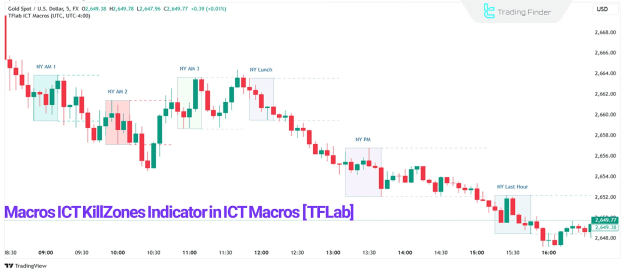
- London Macro:
- 02:33 AM to 03:00 AM EST
- 06:33 AM to 07:00 AM GMT
- London Macro:
- 04:03 AM to 04:30 AM EST
- 08:03 AM to 08:30 AM GMT
- New York AM Macro:
- 08:50 AM to 09:10 AM EST
- 12:50 PM to 01:10 PM GMT
- New York AM Macro:
- 09:50 AM to 10:10 AM EST
- 01:50 PM to 02:10 PM GMT
- New York AM Macro:
- 10:50 AM to 11:10 AM EST
- 02:50 PM to 03:10 PM GMT
- New York Lunch Macro:
- 11:50 AM to 12:10 PM EST
- 03:50 PM to 04:10 PM GMT
- New York PM Macro:
- 01:10 PM to 01:40 PM EST
- 05:10 PM to 05:40 PM GMT
- New York Last Hour Macro:
- 03:15 PM to 03:45 PM EST
- 07:15 PM to 07:45 PM GMT
Optimal Timeframes for ICT Macros
Given the short duration of ICT Macros, lower timeframes are best suited for identifying and executing these trading setups:
- Utilize the 15-minute timeframe to ascertain market direction and pinpoint areas of liquidity or price imbalances.
- For precise trade execution, transition to even shorter timeframes, such as 5-minute, 3-minute, or 1-minute charts.
Prime Trading Periods for ICT Macros
The New York AM Macro is frequently regarded as the most opportune period for trading. This is due to the inherent volatility of the New York market, its overlap with the London session, and the frequent occurrence of news releases during this window.
Specifically, the New York AM Macro (09:50 - 10:10 EST) is particularly well-suited for stock futures or indices, as it coincides with the opening of the New York stock market.
Key macro periods for trading include:
- 09:50 - 10:10 EST: This interval often presents opportunities for Silver Bullet setups and targets liquidity following stop hunts.
- 10:50 - 11:10 EST: A favorable time to target market liquidity.
- 11:50 - 12:10 EST: Valuable for liquidity targeting, especially if preceding macros have not fully absorbed available liquidity.
It is generally advisable to avoid trading during the lunch hour (12:00 - 1:30 PM EST).
Impact of Daylight Saving Time on ICT Macros
Daylight Saving Time (DST), where clocks shift forward in spring and back in fall, can affect ICT Macro times:
- If your country does not observe DST, ICT Macro times may shift by one hour locally.
- If your country adheres to DST, no adjustment is necessary.
To prevent confusion, it is recommended to use New York local time as the baseline for all ICT Macro timing.
Recommended Currency Pairs for ICT Macros
Initially, Michael Huddleston (ICT) developed and tested the ICT Macro strategy on indices such as NASDAQ (NQ Futures) and E-mini (S&P 500), where it demonstrated high effectiveness.
Over time, traders successfully adapted the ICT Macro strategy to forex markets and metals. Today, ICT Macros are effective when trading major currency pairs like GBP/USD and EUR/USD, as well as precious metals such as XAU/USD (Gold).
Integrating ICT Macros into Your Trading Strategy
ICT Macro Times are not standalone trading strategies but serve as powerful complements to existing trading methodologies, enhancing overall profitability.
For instance, combining ICT Macros with models like the Market Maker Buy/Sell Model (MMXM), the Silver Bullet setup (which can be supported by its indicator), or Fair Value Gaps (FVG) can significantly improve your trading approach.
Core Objectives
The primary objective when trading macros is to identify Liquidity Pools, Inefficiencies, and Imbalances within the market. These elements provide high-probability opportunities for trade execution.
- Focus on price movements that shift from imbalances towards liquidity within the defined macro timeframes.
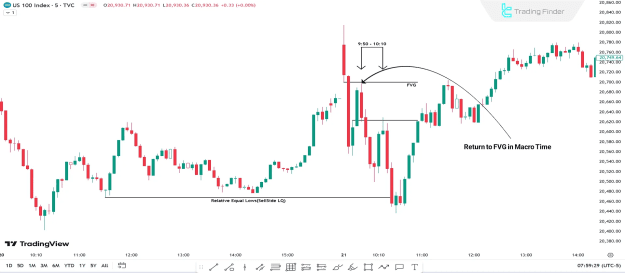
- Actively look for Fair Value Gaps (FVG) during macro periods (e.g., 09:50 - 10:10 EST) to pinpoint ideal trade entries and target liquidity pools.
Conclusion
ICT Macro Times-Based Strategy: Entry on Return to FVG
A common strategy involves entering a trade when price returns to a Fair Value Gap (FVG) during an ICT Macro Time.